


























Mike Malik, Chief Industry Officer, Cirium
On May 13th, the Emirates Group announced its best-ever financial performance. Not bad for an airline that launched in the 1980s! In its latest fiscal year, Emirates enjoyed record revenues, record profits, and record levels of cash. Net profit for the 12 months that ended in March was US$5.1 billion, up 71% from the year before. Revenues were up 15% to US$37.4 billion. It’s quite a feat after two years of crisis in our industry, brought on by the Covid-19 pandemic.
Historic Growth and Fleet Expansion
Four decades ago, when Emirates was a small startup airline in Dubai, no one could have imagined it becoming what it is today. As Cirium Diio® airline planning data shows, it’s currently the largest airline in the world outside of the United States, measured by scheduled ASKs (available seat kilometers). Only United, American, and Delta are larger by this measure. According to Cirium Ascend Fleets Analyzer® data, Emirates today has nearly 250 planes, all of them either Airbus A380s or Boeing 777s. It’s the largest operator of both models. Soon, it will start receiving Airbus A350s, followed by Boeing 787s and Boeing’s next-generation 777s.
Adapting and Innovating
Like any strong company, Emirates is changing and adapting to meet the challenges ahead.

It’s now in the process of retrofitting and upgrading the interiors on nearly 200 of its planes. This will include all-new Business Class seats and its new Premium Economy product, to go along with its famous first-class showers on A380s. As Emirates President Sir Tim Clark recently said, “We’re topping up our multi-billion-dollar investment in the retrofit program to introduce cutting-edge cabin products on more of our A380s and Boeing 777s, demonstrating a clear commitment to elevating the customer experience with a best-in-class suite of products across every cabin.”
Expanding Loyalty and Partnerships
Emirates is also expanding its Skywards loyalty plan, which now has 2.5 million members.

Earlier this year, the head of Skywards, and Divisional Senior Vice President, Dr. Nejib Ben Khedher unveiled what he called a “landmark partnership” with Visa, a world leader in digital payments. “This agreement,” he said, “is a major milestone for Emirates Skywards as it continues to lead the industry with innovative digital-first products and experiences.” One important benefit for Skywards members is free inflight Wi-Fi.
Sustainability Initiatives
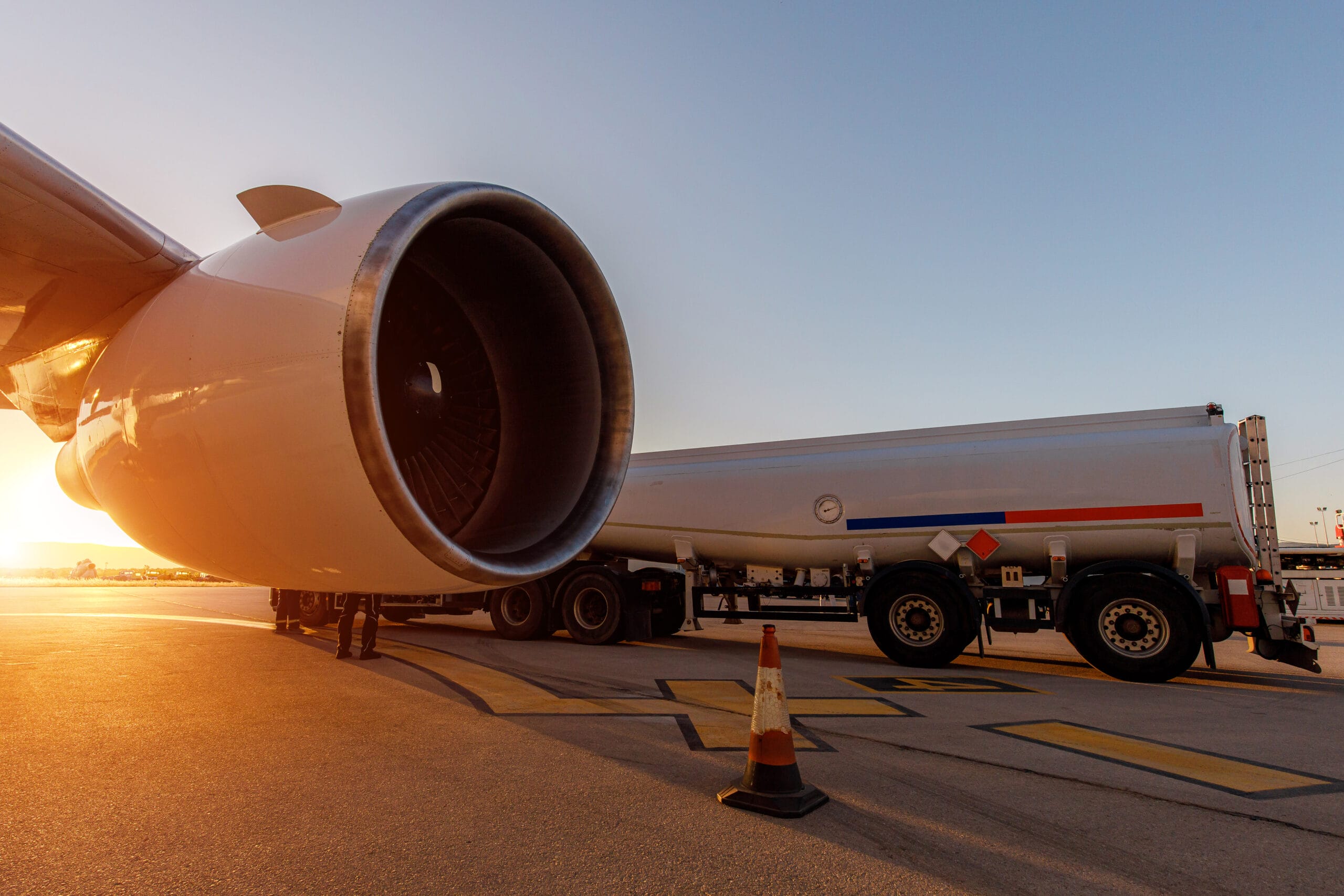
To help achieve IATA’s goal of net-zero carbon emissions by 2050, Emirates is working to improve fuel efficiency, invest in sustainable aviation fuels (SAF), and electrify ground vehicles, and a host of other initiatives. The new planes arriving from Airbus and Boeing will also be more fuel-efficient. The company has also committed to spending US$200 million on researching and developing new fuel and energy solutions for aviation. Making the airline industry more environmentally friendly is certainly a hot topic here at Cirium, where we just introduced Emerald Sky™, a revolutionary methodology that seamlessly integrates Cirium’s comprehensive data, advanced analytics, and innovative techniques to achieve unmatched precision in measuring both current and forecasted CO2 emissions from flights.
Global Network and Market Presence
There’s perhaps nothing more important to the success of Emirates than its expansive global network from Dubai.

Based on an analysis using Cirium Diio, the United Kingdom is the airline’s most important country market outside of the United Arab Emirates (measured by total seat capacity). A close second is India, followed by the United States, Australia, and Saudi Arabia. Emirates currently flies 19 times a day from Dubai to the U.K., serving London’s Heathrow, Gatwick, and Stansted airports, in addition to Manchester, Birmingham, Newcastle, and Glasgow. It flies to nine airports in India and 12 airports in the U.S.
Dubai to Heathrow is the airline’s single busiest route by total seat capacity. Next is Dubai to Bangkok. Rounding out the top ten routes are Mumbai, Cairo, Manchester, London Gatwick, Jeddah, Paris, Delhi, and Kuwait. The airline’s newest destination is Colombia’s capital Bogotá, served from Dubai with a stop in Miami. It will be its fourth destination in South America, joining São Paulo, Rio de Janeiro, and Buenos Aires. It’s starting to get hard to find a major world city that Emirates doesn’t serve!
The longest route in its system is currently Dubai to Auckland, which is about 8,810 miles, or 14,178 kilometers.
We can also use Cirium Diio to track connecting passenger flows. Our FM Traffic tool, for example, shows that many of the passengers flying from Dubai to Bangkok on Emirates are connecting from Europe, led by cities like Manchester, Paris, and Amsterdam. A lot of passengers on its Heathrow flights are connecting to and from Australia, the Maldives, and the Indian subcontinent. One other fun fact about Emirates that we can see from analyzing Cirium Diio data: The longest route in its system is currently Dubai to Auckland, which is about 8,810 miles, or 14,178 kilometers.
Future Prospects
I’m sure Emirates will add many more destinations in the years to come. Eventually, it will move to Dubai World Central airport, envisioned to become the world’s largest. Last year, Dubai began constructing a nearly US$1 billion engineering facility at the new airport. This year, it’s moving forward on a new passenger terminal. It will support the airport’s plan to handle as many as 260 million passengers annually! In 2023, the current airport handled 83 million.
Emirates will face many competitive challenges in the years ahead.
It’s very ambitious for sure, but that’s nothing new for Dubai and its national airline. Of course, Emirates will face many competitive challenges in the years ahead. Other countries like Saudi Arabia, India, and Turkey are also investing heavily in their aviation sectors, hoping to create their own global airlines and hubs. Low-cost airlines are expanding in the Gulf region as well.
However, competition is something Emirates has faced before. A long history of success shows it can smoothly fly through stormy weather. Personally, I can’t wait to see what’s next!
Largest Markets for Emirates

Source: Cirium Diio
About Cirium
Cirium® is the world’s most trusted source of aviation analytics. The company delivers powerful data and cutting-edge analytics to empower a wide spectrum of industry players. It equips airlines, airports, travel enterprises, aircraft manufacturers, and financial entities with the clarity and intelligence they need to optimize their operations, make informed decisions, and accelerate revenue growth.
Cirium® is part of LexisNexis® Risk Solutions, a RELX business, which provides information-based analytics and decision tools for professional and business customers. The shares of RELX PLC are traded on the London, Amsterdam and New York Stock Exchanges using the following ticker symbols: London: REL; Amsterdam: REN; New York: RELX.
For more information, follow Cirium® on LinkedIn or visit cirium.com.