









Category: Topic

  • A deep dive into the Middle East aviation market 

    Cirium recently hosted its inaugural Middle East Market Briefing, bringing together industry leaders and experts to analyze the region’s aviation landscape. The event provided a comprehensive overview of the market, covering everything from post-pandemic recovery and fleet growth to future forecasts and operational performance. 

    The briefing included presentations featuring global and Middle East insights, as well as a keynote interview with Firoz Tarapore, CEO of DAE Capital. It offered a detailed examination of current trends and future projections, highlighting the region’s robust growth and strategic importance in global aviation. This article recaps the key data and insights shared during the event. 

    Global economic context and market status

    Stephen Burnside, Global Head of Cirium Ascend Consultancy began the briefing by setting the global macroeconomic scene. The current economic climate is diverging from the “goldilocks” scenario once envisioned for 2025-2026, where conditions were expected to be “not too hot, and not too cold.” Instead, many economic figures are approaching multi-decade highs or lows, creating a more complex environment for the aviation industry to navigate. 

    Despite these global headwinds, the airline industry is showing resilience. The International Air Transport Association (IATA) forecasts continued growth in airline revenue and profit into 2025, signaling sustained recovery and operational strength across the sector. 

    Middle East: a story of resilient recovery 

    A central theme of the briefing was the remarkable recovery of air travel in the Middle East. Andrew Doyle, Senior Director Market Development, provided an analysis of Cirium Diio FM traffic data which reveals that passenger numbers at Middle Eastern airports have not only bounced back from the pandemic dip but have surpassed pre-pandemic levels, reaching a new record in 2024. 

    This trend is also reflected in flight schedules. Data from Cirium Diio SRS Analyzer shows a consistent and strong recovery in scheduled passenger flights. This upward trajectory demonstrates the resilience of the region’s carriers and the sustained demand for air travel to, from, and within the Middle East. The area continues to solidify its position as a critical global hub. 

    Fleet dynamics: growth and future outlook

    The in-service commercial fleet in the Middle East has experienced significant growth over the past three decades. Cirium Ascend Fleets Analyzer data illustrates a steady expansion across all market classes, from narrowbodies to widebodies. This growth trajectory is set to continue. 

    Aircraft orders and backlogs
    The demand for new aircraft remains strong. The global single-aisle backlog is rising again, now equivalent to nine years of production at forecasted delivery rates. Similarly, the twin-aisle backlog has increased substantially in 2025, representing eight years of production. This indicates a long-term commitment from airlines, including those in the Middle East, to modernize and expand their fleets. 

    Aircraft values and lease rates 
    The strong demand for aircraft has also influenced market values and lease rates. Over the past year, values for all aircraft classes have increased by 4-16%. Widebody aircraft saw the most significant gains in lease rates, with a 14% increase year-on-year as of October 2024. This reflects the high demand for long-haul travel and the strategic value of widebody fleets for the region’s network carriers. 

    20-Year Fleet Forecast: doubling down on growth

    Looking ahead, the Cirium 20-Year Fleet Forecast projects a bright future for the region. The global passenger fleet is expected to grow by 23,000 units over the next two decades, and the Middle East is a key driver of this expansion. 

    Middle Eastern carriers are forecast to grow at an impressive 4.9% annually. This growth will be propelled by the continued strength of Gulf network hubs and the rapidly expanding Saudi Arabian market. As a result, the region’s passenger aircraft fleet is projected to more than double by 2044, cementing its role as a powerhouse in global aviation. 

    Find out more about the 2025-2044 Cirium Fleet Forecast

    Operational excellence and performance

    The briefing also explored the operational side of the industry, highlighting the performance of Middle Eastern airlines and airports. 

    On-Time Performance 
    Many Middle Eastern carriers demonstrated exceptional reliability. The region’s airlines that achieved the highest rates of on-time departures during the first three quarters of 2025 were highlighted. Several carriers also showed significant improvement in their departure punctuality compared to the previous year, underscoring a commitment to operational efficiency and passenger satisfaction. 

    Ground events and maintenance 
    The region is also a key center for aircraft maintenance. An analysis of Cirium Ascend Ground Events showed that 14 heavy checks on Boeing 787 aircraft have been completed in the Middle East to date. This capability is vital for maintaining modern, complex fleets and ensuring aircraft are available to meet passenger demand. 

    Strengthening demand and fares 
    Data for Arab Air Carriers’ Organization (AACO) members shows that passenger demand has continued to strengthen throughout the year. This sustained demand underpins the positive financial and operational trends seen across the region. 

    A focus on sustainability 

    Sustainability was another important topic. A review of flight emissions revealed the Middle Eastern airlines and airports with the lowest emissions intensities for the period of January to September 2025. This highlighted the positive impact of operating modern, fuel-efficient fleets and showcased the region’s progress in addressing aviation’s environmental responsibilities. 

    Your partner in aviation analytics 

    The inaugural Middle East Market Briefing underscored the region’s dynamic and resilient aviation sector. With record passenger numbers, significant fleet expansion, and strong operational performance, the Middle East is poised for continued growth and leadership in the global industry. 

    Cirium’s data and analytics provide the foundation for understanding these complex market dynamics. If you would like to explore these insights further, our dedicated team in the Middle East is ready to assist.  

    Contact us to learn how Cirium can support your organization’s strategic goals. 

  • Rethinking flight emissions: a webinar overview

    Aviation is among the hardest sectors to decarbonize, contributing about 2.5% of global energy-related CO2 emissions – a figure that will only increase as passenger demand is set to double by 2040. Cirium’s recent webinar, “Rethinking flight emissions: the case for time-based CO2 calculations” brought together experts from RouteZero and Asset Impact to discuss why the industry needs more robust, data-driven methods for tracking and reducing emissions. 

    Key takeaways 

    • Traditional distance-based models are too simplistic for effective emissions management. 
    • Time-based, data-driven methods capture the operational realities that matter for decarbonization. 
    • Reliable data supports practical climate action, credible reporting, and effective capital allocation. 
    • Immediate adoption of granular emissions tracking offers meaningful progress while enabling the industry to prepare for future technological shifts. 

    Why traditional calculations fall short 

    Most emissions calculations today use the “great circle distance” model, which measures emissions by calculating the direct distance between two airports and applying a standard factor. This method is convenient but fails to reflect the complexity of real-world operations: 

    • Aircraft specifications: Factors like engine efficiency, winglets, and aircraft age significantly impact fuel burn. 
    • Operational realities: Route deviations, weather delays, and extended taxi or wait times add variability. 
    • Aircraft weight: Each flight’s unique weight profile, including passengers and cargo, alters fuel consumption. 

    As a result, these models treat identical routes as if they have identical emissions, ignoring factors that can make a real difference. The webinar illustrated this with flights from New York to Miami: although traditional models rated them the same, a time-based analysis revealed a substantial emissions difference due to aircraft efficiency and actual flight duration. 

    Time-based, flight-specific calculations: a better way forward 

    A time-based, granular approach – like Cirium’s EmeraldSky methodology – accounts for the real variables affecting every flight: 

    1. Detailed aircraft data: Specifics on type, engine, age, and modifications. 
    2. Flight weight estimation: Actual operational weights, with passenger and cargo estimates factored in. 
    3. Real-world operations: Use of satellite-based and diverse data sources to capture flight and taxi times. 
    4. Sophisticated fuel burn models: Independent, third-party analysis capturing how fuel use changes during the different stages of a flight. 

    The result is much more accurate emissions accounting, enabling better decisions by airlines, investors, and policymakers. 

    Real-world applications: how granular emissions data is already shaping real-world strategies 

    Data-driven corporate climate action 

    Dan Brown, RouteZero co-founder and CEO described how detailed flight data enables companies to meaningfully decarbonize business travel. By evaluating every flight’s emissions and other relevant factors, companies can empower employees to choose lower-emission flights without reducing necessary travel. Over a year, these choices can produce significant emissions reductions. 

    Informing investment and finance 

    Vincent Jerosch-Herold, Asset Impact’s Chief Product Officer shared how investors and banks benefit from flight-level data. Banks gain a clearer view of which airlines are operating the most efficiently, helping them direct capital to industry leaders in decarbonization. This transparency drives sustainable investment in cleaner fleets and fuels, supporting innovations such as sustainable aviation fuel (SAF) and next-generation aircraft. 

    Combating greenwashing with transparency 

    Credible, science-based data is crucial as scrutiny of corporate sustainability claims intensifies. Nearly 70% of organizations now cite greenwashing as a risk. Both Dan and Vincent agreed that transparency and precise measurement are the best defences. Companies that report clear, measurable, flight-specific reductions – not just general pledges – will stand apart in credibility and compliance. 

    The path to net zero: immediate steps and long-term vision 

    The journey to net zero aviation by 2050 will require breakthroughs in aircraft technology and SAF production, both demanding years of research and significant investment. However, as emphasized in the webinar, actionable change is possible now by adopting more accurate, flight-level emissions accounting. This enables organizations to: 

    • Make better travel and purchasing decisions 
    • Provide robust data to investors and regulators 
    • Set and verify real, quantifiable emissions targets 

    By moving beyond outdated calculation models and focusing on accurate, transparent emissions data, the aviation sector can accelerate progress and support a more sustainable future. 

    Rethinking flight emissions: the case for CO2 based calculations is available to watch now.

  • King Khalid International Airport: Precision, Planning and Performance in Riyadh

    Mike Malik, Chief Marketing Officer, Cirium

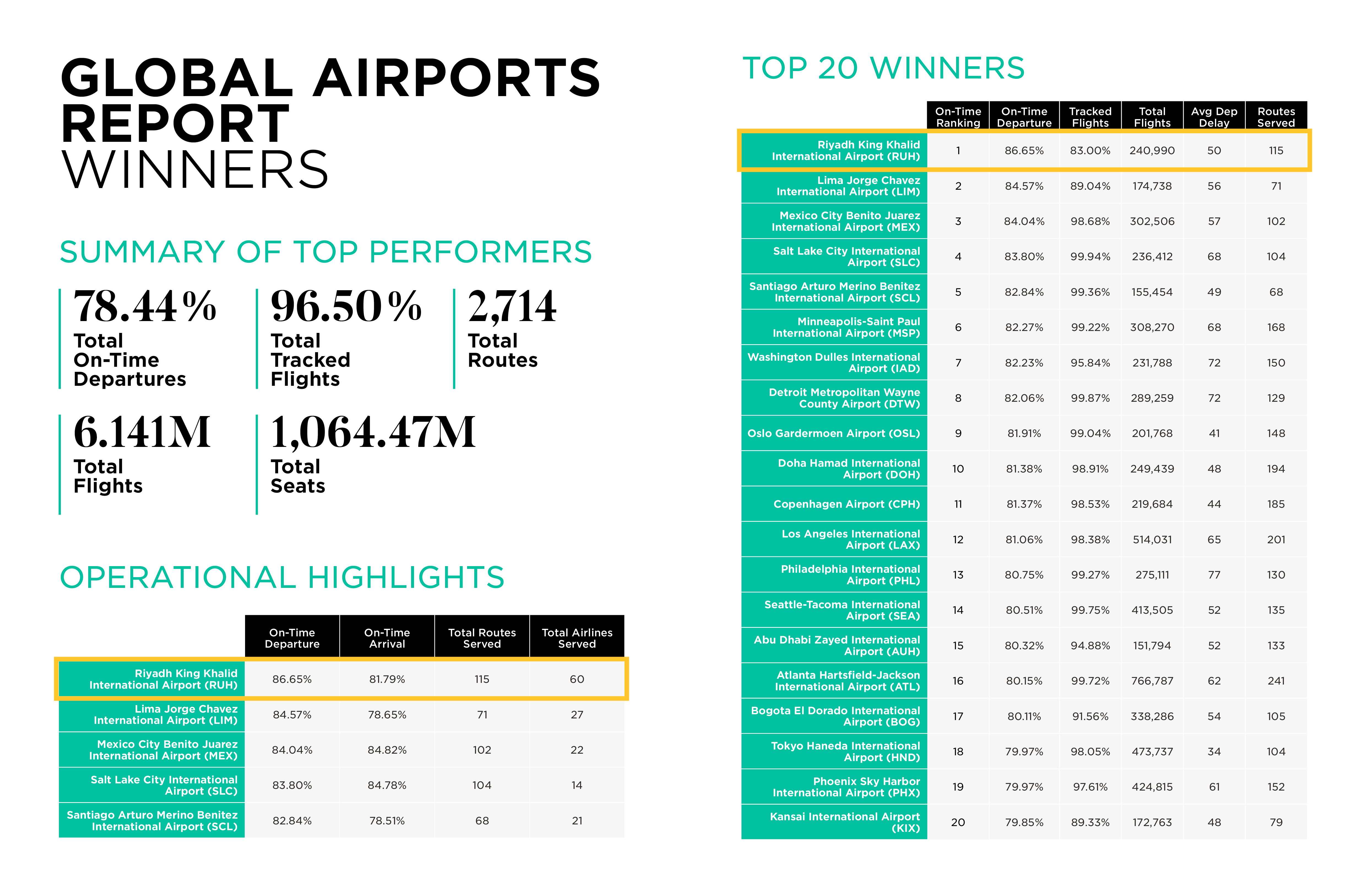
    King Khalid International Airport (RUH), positioned 35 kilometers north of Riyadh, Saudi Arabia has established itself as a global benchmark for airport operational excellence. In Cirium’s 2024 On-Time Performance Awards, RUH was recognized as the Most On-Time Global Airport, achieving an industry-leading departure OTP rate of 86.65%—a distinction that places the airport at the forefront of global aviation performance standards.

    In 2024, the airport handled a record-breaking 37 million passengers with double-digit year-on-year growth, added 15 new airlines to its roster and recognized as the second busiest airport in the Kingdom. These results demonstrate effective integration of infrastructure, planning, and process optimization across increasing passenger volumes.

    Leadership Driving Transformation

    Under the stewardship of CEO Ayman Abdulaziz AboAbah, who was appointed in February 2024, Riyadh Airports Company has accelerated its operational excellence initiatives. Mr. AboAbah brings extensive aviation sector experience, having previously served as CEO of Jeddah Airports where he enhanced planning and operations at King Abdulaziz International Airport. His tenure has coincided with RUH’s ascent to global recognition, reflecting strategic focus on operational discipline and systematic performance improvement.

    The leadership team’s commitment to excellence has resulted in exceeding revenue targets by over 15%, with enhanced offerings, stronger partnerships, and significant increases in passenger movements, according to industry reports. This performance underscores the airport’s evolution from regional gateway to emerging global hub.

    Operational Resilience Through Strategic Infrastructure

    Ayman Abdulaziz AboAbah, CEO, Riyadh Airports Company

    RUH’s performance reflects purposeful modernization strategies implemented over several years. The expansion of Terminals 1 and 2 increased the airport’s passenger handling capacity by 40% — from 10 million to 14 million annually. By upgrading baggage handling, adding security lanes, and introducing automation like self-service kiosks and automated boarding gates, the airport has cut processing times per passenger and unlocked higher throughput.

    The 2022 commissioning of Terminals 3 and 4 marked a decisive step in RUH’s evolution. Terminal 3’s reconfiguration from domestic to international operations represents an important strategic shift to accommodate long-haul growth. A centralized check-in system now serves both terminals, allowing flexible resource utilization and enhanced operational fluidity. These terminal linkages, combined with renewed airside control infrastructure, have streamlined aircraft movements and reduced turnaround times—key enablers of on-time departures.

    The airport’s connectivity received another boost with the opening of Riyadh Metro Line 4 on December 1, 2024, providing passengers with efficient access to the city center through stations serving all terminal complexes.

    Strategic Alignment with National Objectives

    RUH’s growth is tightly linked to Saudi Arabia’s Vision 2030, supporting Riyadh’s emergence as a global hub for business and tourism. Backed by GACA and managed by Riyadh Airports Company, its development roadmap ensures infrastructure expansion matches the pace of rising traffic and future demand—positioning RUH as a cornerstone of national connectivity.

    The on-time performance gains reflect systematic operational improvements rather than statistical outliers. Enhancements to landside and airside coordination, expansion of aircraft parking bays, and deployment of real-time operational control technologies are part of a disciplined approach to minimize delays and improve predictability across the passenger journey.

    Data Standards and Industry Recognition

    Cirium’s On-Time Performance program serves as the gold standard for measuring airline and airport operational performance, using rigorous methodology that combines global flight tracking with airport-level operational data. On-time flights at airports are defined as those departing within 15 minutes of scheduled departure times. RUH’s recognition within this program reflects not only punctuality but consistency—demonstrating reliable performance across a complex operational environment.

    The achievement underscores a broader transformation taking place across the Kingdom’s aviation sector—one that extends well beyond operational metrics to fundamental shifts in how airports can function as economic catalysts.

    From Regional Gateway to Global Hub

    Since opening in 1983, King Khalid International Airport (RUH) has evolved from a regional gateway to a critical global node. The transformation required infrastructure investment, operational discipline, and leadership vision working in concert.

    Today, King Khalid International Airport (RUH) stands as one of the world’s most efficient large airports—a working model for how airports can excel amid rising expectations and traffic complexity. In an industry where timing defines competitive advantage, RUH’s four decades of strategic evolution positions it as an essential component of Saudi Arabia’s aviation future, proving that systematic operational excellence achieves results that resonate across global performance benchmarks.

  • Greenwashing in Aviation: The Need for Accurate Emissions Data

    In recent years, the aviation industry has come under increasing scrutiny for its environmental claims, driven by regulatory oversight and growing demands from consumers and investors for genuine sustainability efforts. Greenwashing—misleading or exaggerating such claims—poses significant reputational, financial, and legal risks for the aviation industry. Addressing this issue requires a shift toward transparency and the adoption of accurate, data-driven approaches to emissions measurement. The following Q&A explores the risks of greenwashing, the limitations of traditional emissions reporting, and how advanced analytics can help the sector move forward with credibility and confidence. 

    Q: What is “greenwashing” in the aviation industry? 
    A: Greenwashing refers to the practice where airlines make invalid or misleading claims about their environmental efforts. This can involve exaggerating the impact of sustainability initiatives, leading consumers and stakeholders to believe the company is more environmentally friendly than it actually is. 

    Q: Why is greenwashing a significant issue for airlines? 
    A: Greenwashing poses several risks. It erodes public trust and investor confidence, which can damage a brand’s reputation. It also attracts regulatory scrutiny, as seen with the European Commission’s 2024 action against 20 airlines, potentially leading to significant financial and legal consequences. 

    Q: How does greenwashing affect an airline’s relationship with investors? 
    A: Investors are increasingly using Environmental, Social, and Governance (ESG) criteria to guide their decisions. Greenwashing creates uncertainty and undermines a company’s credibility, which can deter environmentally conscious investors and limit an airline’s access to capital. 

    Q: Why are traditional methods of calculating carbon emissions becoming insufficient? 
    A: Many traditional carbon calculators rely on broad estimates and assumptions that do not account for critical variables like aircraft type, engine efficiency, or actual fuel burn. This can lead to imprecise and inconsistent data, making it difficult to report progress accurately or comply with evolving regulations. 

    Q: What is the solution to inaccurate emissions reporting? 
    A: The industry needs to adopt an independent monitoring system that provides reliable, verifiable, and scientifically accurate emissions data. This approach enhances transparency, supports regulatory compliance, and builds trust among customers, investors, and regulatory bodies. 

    Q: How can advanced analytics improve emissions measurement? 
    A: Advanced analytics platforms, such as Cirium’s EmeraldSky, use cutting-edge techniques and a wide range of proprietary data to calculate CO2 emissions with unparalleled precision. By analyzing specific flight and aircraft details, these tools move beyond general estimates to provide an accurate measure of fuel burn and emissions for both flown and forecasted flights. 

    Q: What is EmeraldSky? 
    A: EmeraldSky is an advanced methodology developed by Cirium that integrates extensive data and analytics to achieve a highly precise measurement of aircraft CO2 emissions. It provides the industry with the accuracy and transparency required to meet environmental commitments and support credible sustainability reporting. 

    Q: What actionable steps can airlines take to combat greenwashing? 
    A: Airlines should commit to transparency by using independent, verified data for emissions reporting. Investing in advanced analytics will allow for precise measurement and optimization. It is also important to communicate sustainability strategies clearly, using verifiable data to back all claims and foster collaboration across the industry to establish a universal standard for emissions measurement. 

    In summary, addressing greenwashing in aviation is not only a regulatory challenge but an opportunity to strengthen trust, safeguard reputation, and build a resilient pathway to net-zero. Through transparent practices and the application of accurate, science-based emissions data, the industry can demonstrate true progress, meet stakeholder expectations, and support broader sustainability objectives. 

  • Daily Emissions Peak Masks Aviation’s Big Efficiency Jump

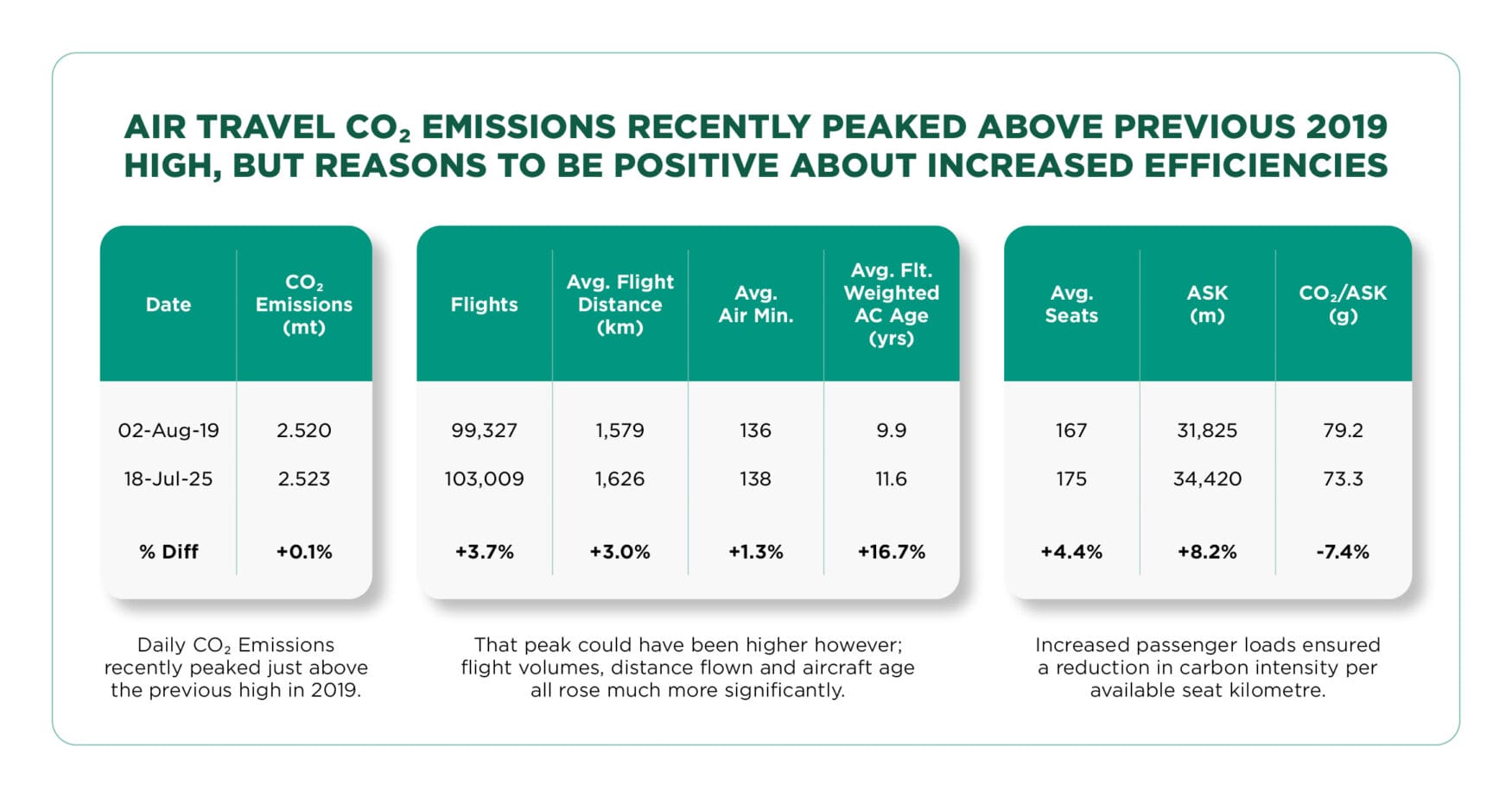
    July 18, 2025, saw passenger jet operations generate 2.52 million tonnes of CO₂—0.1% above the previous daily record set in August 2019, according to EmeraldSky analysis from Cirium. The milestone caps aviation’s complete recovery from the pandemic collapse, but the path back reveals fundamental shifts in how the industry operates.

    Behind the seemingly modest 0.1% increase in total daily emissions lies a more complex story: airlines achieved a 7.4% improvement in fuel efficiency per available seat kilometer (ASK) while accommodating substantially more passengers. The mathematics of this recovery challenge long-held assumptions about the relationship between aviation growth and environmental impact.

    The Recovery Paradox

    Here’s what makes July 18 significant: airlines delivered 8.2% more ASKs than August 2, 2019 while increasing total emissions by just 0.1%. Flights crept up only 3.7% over six years, yet carriers found ways to accommodate surging demand through a wholesale reimagining of capacity deployment.

    The numbers tell the story. Average aircraft size grew by eight seats to 175 passengers per flight. Route distances stretched 3% longer to 1,626 kilometers on average. Flight times? They barely budged—up just 1.3% to 138 minutes despite busier airspace and longer routes.

    Efficiency Context

    The 7.4% efficiency improvement represents approximately 187,000 tonnes of CO₂ saved daily compared to 2019 operational standards, though absolute emissions still increased 0.1% due to capacity growth exceeding efficiency gains.

    When Plans Meet Reality

    The efficiency gains become more intriguing when viewed against operational headwinds. Flight-weighted average aircraft age jumped 17% to 11.6 years—exactly the opposite of what efficiency playbooks recommend. Post-COVID supply chain snarls and unexpected engine durability issues with newer aircraft meant airlines couldn’t simply buy their way to better performance.

    Instead, they had to extract more from what they had. The result: proof that operational innovation can deliver efficiency gains even when fleet modernization slows. It’s a finding that challenges conventional wisdom about the primacy of new technology in driving environmental progress.

    Fleet Reality

    Supply chain constraints and engine reliability issues resulted in older aircraft handling more operations than planned, yet airlines still achieved significant efficiency improvements through operational optimization.

    Beyond the Flight Plan

    EmeraldSky’s analysis goes deeper than standard industry calculations, which often miss 15-25% of actual emissions by relying on theoretical flight plans rather than operational reality. The system tracks 47 variables across more than 100,000 daily flights—everything from actual taxi times and routing changes to weight variations and holding patterns.

    This granular approach reveals efficiency improvements in unexpected places. Airlines didn’t just optimize cruise flight—they squeezed time from ground operations, streamlined routing coordination, and fine-tuned their networks. The 7.4% improvement represents the cumulative effect of hundreds of operational refinements, many invisible to passengers but clearly visible in the fuel burn data.

    Data Methodology

    EmeraldSky’s comprehensive tracking reveals operational efficiency improvements across multiple dimensions, including areas like ground operations and routing optimization that standard industry fuel burn calculations typically exclude.

    What 18 July, 25 Already Tells Us

    EmeraldSky’s real-time tracking confirmed what the industry suspected: July 18 was just the beginning. Emissions on 18 July 25 exceeded the 2019 record, and seasonal patterns suggest new peaks will become routine during Northern Hemisphere summer travel seasons.

    The question now isn’t whether aviation will set more emissions records—it’s whether the efficiency improvement trajectory can accelerate enough to bend the curve. With easier operational gains likely exhausted and sustainable aviation fuel still comprising less than 1% of consumption, the industry faces the mathematical reality that continued growth will require more fundamental changes to maintain environmental progress.

    Industry Analysis

    The 7.4% efficiency improvement over six years represents an annual rate of 1.2%, exceeding historical industry improvement trends but occurring alongside net emissions growth of 0.1% due to capacity expansion.

  • The Hidden Costs of Aircraft Aging

    Andrew Doyle
    Andrew Doyle

    Andrew Doyle, Senior Director of Strategy, Cirium


    In the complex world of aviation, aircraft maintenance is a critical aspect of airline operations. A recent case study conducted by Cirium’s Andrew Doyle, Senior Director Strategy, reveals surprising insights into how aircraft age impacts maintenance duration and efficiency, potentially costing airlines significant time and money.

    The Data Behind the Findings

    The analysis focused on an unnamed airline (referred to as “Airline X”) and its fleet, examining maintenance events over a 12-month period. Key observations emerged from a comprehensive review of maintenance, repair, and overhaul (MRO) providers’ performance using Cirium’s data capabilities.

    Maintenance Providers and Performance

    The study tracked 30 maintenance events across different MRO providers:

    • 4 events handled by the airline’s in-house MRO division
    • 4 external MRO providers performed the remaining maintenance

    What became immediately apparent was the significant variation in ground time across different maintenance providers. Two MROs stood out:

    • MRO A: Two checks overran by over 30 days, resulting in 75 lost operational days
    • MRO D: 9 checks averaged 5.5 days longer than expected, causing nearly 50 lost days

    The Age Factor: A Critical Correlation

    Perhaps the most intriguing finding from the data was the correlation between aircraft age and maintenance duration.

    • Aircraft 6-12 years old: Shortest ground times
    • Aircraft 12-18 years old: Significant increase in maintenance duration (up to 32 days longer)
    • Aircraft 18-24 years old: Slight reduction in ground time
    • Aircraft over 24 years: Another substantial increase in maintenance duration

    As aircraft age, they typically require more extensive maintenance. Components wear down, technological obsolescence becomes a factor, and the complexity of repairs increases. This translates directly into longer ground times and higher operational costs.

    The Value of Data-Driven Insights

    For the first time, airlines and MRO providers can compare maintenance performance across global providers, understand the direct impact of aircraft age on maintenance efficiency and make more informed decisions about fleet management and maintenance strategies.

    The analysis provides unprecedented visibility into maintenance performance, offering a global benchmark for comparing MRO provider efficiency, insights into the true cost of an aging fleet and potential strategies for optimizing maintenance scheduling.

    Aircraft maintenance is more than just a routine check – it’s a complex ecosystem where age, provider efficiency, and operational strategy intersect. As airlines continue to seek ways to optimize their operations, understanding these nuanced relationships becomes increasingly crucial.

  • Airport Ground Accumulation Data: A Case Study

    Dr. David Price, Senior Data Analyst, Cirium

    Profiling Aircraft on the Ground

    Understanding the global spatial distribution of the aviation fleet is understandably complex and challenging. Aircraft move quickly, and in most cases, a stationary aircraft is a costly one. One thing is certain: planes do not stay in one place for long.

    So, how do we begin to develop an intuitive understanding of the fleet’s location? A good starting point is to focus on specific locations and, rather than concentrating on individual aircraft, consider the average profile of aircraft grounded there. What does the distribution of aircraft on the ground look like throughout a typical day? How quickly does this change in response to external events?

    The first and most crucial step is to connect the arrival flight with its corresponding departure flight for each aircraft visit to the airport in question. The objective is to construct a continuous timeline of each aircraft’s stay at the airport over the course of a day, enabling us to visualize the number of planes on the ground at any given time.

    Hurricane Milton and Orlando International Airport

    Daily accumulation profile: Orlando International Airport (MCO), October 2024

    Using a sample fleet of the Cirium-identified in-service commercial fleet (excluding aircraft in storage and general aviation aircraft), we can analyse the ground accumulation profiles of airports worldwide. Florida’s Orlando International Airport (MCO) is an instructive example.

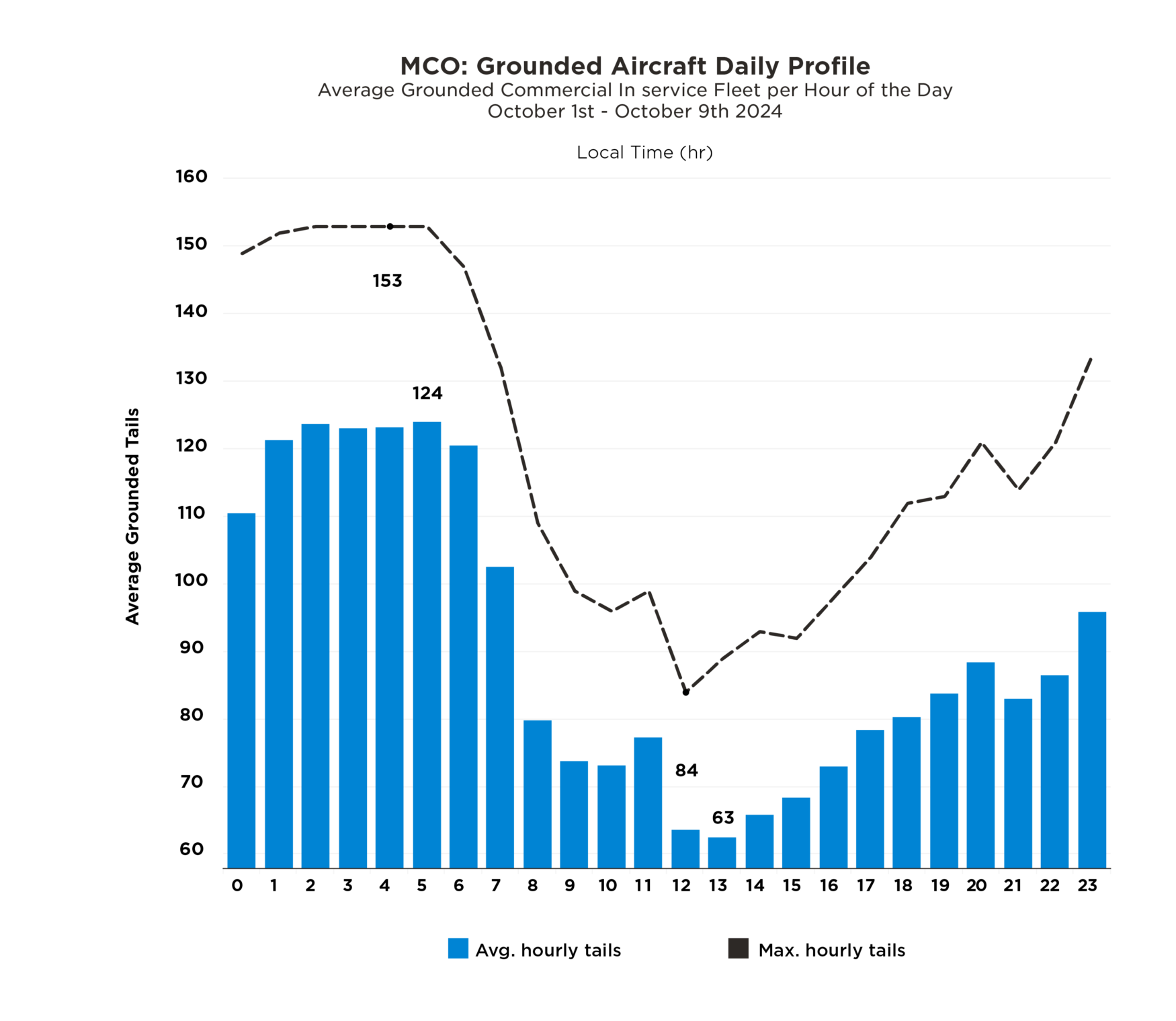
    During the first week of October 2024, MCO displayed a fairly typical daily pattern of aircraft ground accumulation. The average peak accumulation occurred around 05:00 local time, with 124 aircraft on the ground ahead of the first wave of morning flights, peaking at 153 on October 6th. Conversely, the average minimum accumulation was recorded around 13:00 local time, with an average of 63 aircraft on the ground. This lull follows the morning departures and precedes the arrival of afternoon incoming flights.

    Over the course of a typical day, the number of aircraft on the ground fluctuates by a factor of two. By identifying this pattern for each airport and snapshotting the grounded fleet at key times, it becomes possible to build a comprehensive picture of maximum grounded exposure for fleets throughout the year.

    Changes at MCO, 6th – 18th October 2024

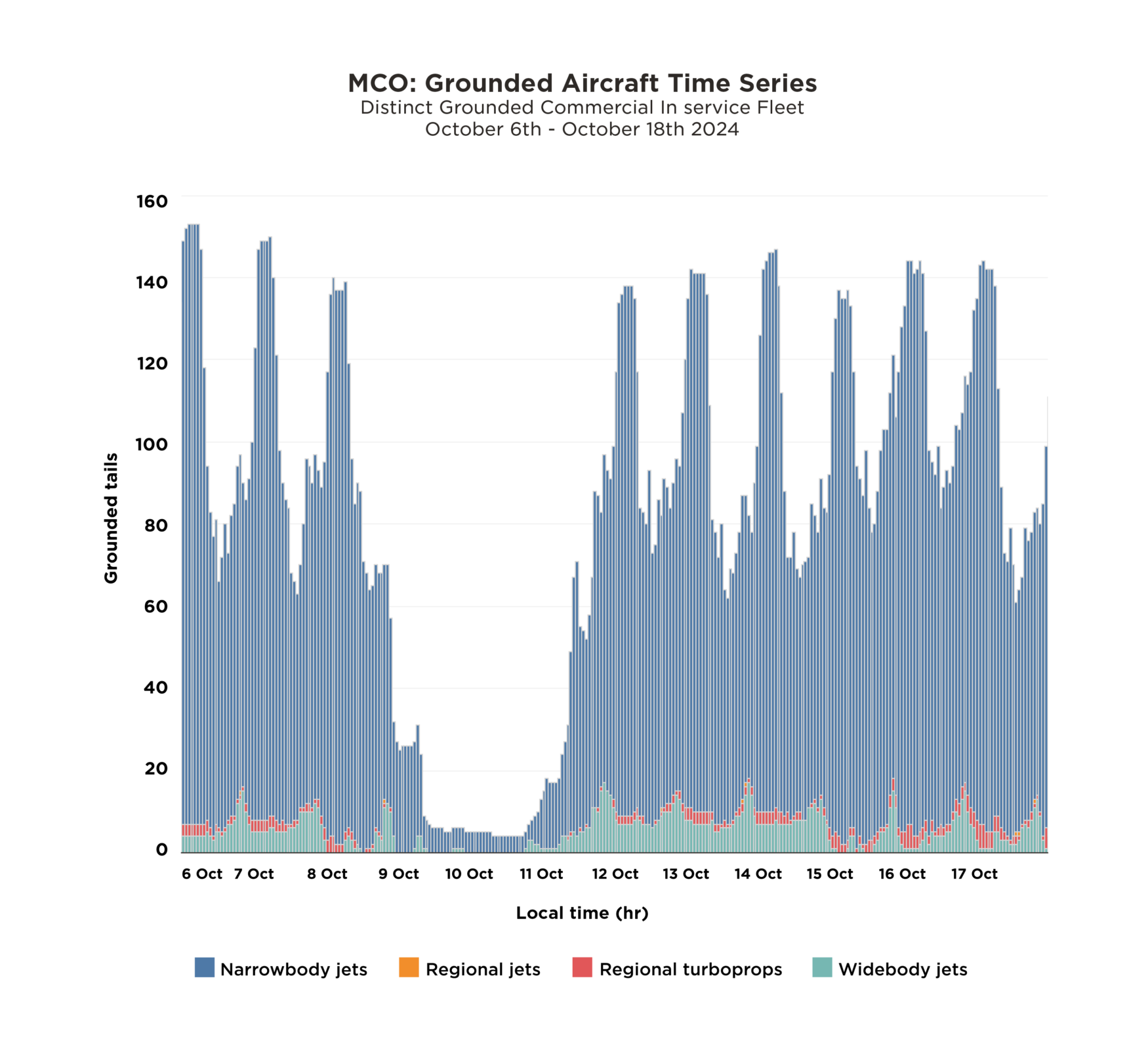
    In early October 2024, Hurricane Milton formed over the Gulf of Mexico and accelerated towards Central Florida. On October 7th, Orlando International Airport announced commercial operations would cease on the 9th.

     
    A significant number of aircraft and almost all widebody jets were moved away from MCO in preparation for the storm. The rhythmic daily profile described above disintegrated as normal commercial operations came to a halt.

    However, a small population of aircraft remained at MCO as it closed during the storm. Approximately 8-10 narrowbody jets stayed at the airport as the hurricane passed through. Despite some minor damage to facilities, the airport reopened to arrivals on the evening of 10th October, and aircraft quickly returned. Full commercial passenger operations resumed the next day and the daily ground accumulation profile returned to normal one day later on the 12th.

    Answering ‘What Ifs’ With Data

    The profiling data for MCO serves as just one example of how Cirium’s Tracked Utilization and Ground Accumulation data capabilities can be leveraged to monitor fleet activity. Many questions can be answered with this data: what aircraft are on the ground right now? Which airports accumulate the highest fleet exposure? What does a worst-case exposure scenario look like at a particular airport?

    Additionally, what proportion of an airline or lessor’s fleet is grounded at any point in time? How do they typically react during anomalous situations? And whose aircraft are on the ground at a given airport right now?

    This article was originally published in Cirium’s Aviation Data in Insurance report. For more insights and analysis into the evolving role of data in aviation insurance, read the full report.

  • AI in Travel Tech: Insights From Cirium’s First Networking Event

    As artificial intelligence and automation reshape how we experience travel, industry leaders are gathering to share insights, forge connections, and chart the path forward. Cirium recently hosted its first travel tech networking event, bringing together key voices from across the sector to explore how AI is transforming the traveler experience.

    Held strategically after the Business Travel Show at ExCeL London, this inaugural event created the perfect opportunity for meaningful dialogue between industry peers. The evening combined networking with substantive discussion, featuring an expert panel that dove deep into AI’s current applications and future potential in aviation and travel.

    Setting the Stage for Innovation

    Leanne Mehmet, Sales Manager for Cirium’s Traveller Services Europe, opened the evening by emphasizing the importance of bringing together industry leaders to share knowledge and build relationships. The timing couldn’t have been more relevant, with AI adoption accelerating across every aspect of travel operations.

    The event’s format balanced structured learning with organic networking, allowing attendees to engage with both formal presentations and informal conversations. This approach reflected a broader industry trend toward collaborative problem-solving, where companies share insights to advance the entire sector.

    The AI Panel: Real-world Applications and Future Vision

    The evening’s centerpiece was a panel discussion moderated by Cirium Account Manager Poorva Baderia. The conversation featured three industry experts: Alex Lawrence from Collinson, Micha Van Eijk from Emburse, and Kevin O’Toole from Cirium. Each brought unique perspectives on how AI is currently being implemented and where the technology is heading.

    Making Travel Seamless Through Automation

    Micha Van Eijk delivered what many considered the evening’s most memorable insight: “Automation is all about taking friction from the travellers.” He expanded on this concept by noting, “When you don’t know things went wrong, that is when automation has succeeded.”

    This perspective captures the essence of effective AI implementation in travel. The goal isn’t just to automate processes, but to create such smooth operations that travelers never experience the problems that automation prevents. When flights are rerouted seamlessly, when rebooking happens automatically, and when compensation is processed without traveler intervention, AI has achieved its purpose.

    This approach represents a fundamental shift from reactive customer service to proactive problem prevention. Rather than waiting for travelers to report issues, AI systems can identify and resolve problems before they impact the passenger experience.

    Data-driven Decision Making Without Human Intervention

    Alex Lawrence from Collinson provided concrete examples of how companies are operationalizing AI insights. He explained how Collinson “ingests Cirium’s data in order to push benefits to customers” when disruptions occur, whether through delays or irregular operations.

    Lawrence emphasized that effective automation creates “the environment where we make data driven decisions without having to get involved.” This hands-off approach allows companies to respond to disruptions at scale, processing thousands of flight changes and passenger impacts simultaneously.

    The key to this success lies in the quality and integration of data sources. When systems can access real-time flight information, passenger preferences, and available alternatives, they can make optimal decisions faster than any human operator could manage.

    The Foundation: Unified Data Infrastructure

    Kevin O’Toole from Cirium addressed the fundamental challenge that makes AI necessary in aviation: data fragmentation. His observation that “If the data was already joined up together, then we wouldn’t be here” highlights the core problem that AI solutions are designed to solve.

    O’Toole used this point to showcase Cirium’s Sky Warehouse, which he described as “automation in aviation absolutely personified.” This platform unifies schedules, flight status, CO₂ emissions data, fleet information, fares, weather, and more into a single, standardized, time-aligned resource.

    This unified approach represents the infrastructure layer that enables effective AI applications. Without clean, integrated data, AI systems cannot make reliable decisions or provide consistent user experiences. Sky Warehouse demonstrates how technology companies are solving this foundational challenge.

    Current State of AI Adoption

    The panel discussion revealed that AI in travel technology has moved well beyond experimental phases. Companies are actively using AI for:

    Disruption Management: Automatically rerouting passengers, rebooking flights, and arranging compensation when irregularities occur.

    Predictive Analytics: Using historical data and real-time information to anticipate problems before they affect travelers.

    Personalized Service Delivery: Tailoring offers, communications, and support based on individual traveler profiles and preferences.

    Operational Efficiency: Streamlining internal processes to reduce costs and improve service delivery speed.

    These applications demonstrate that AI has become integral to competitive operations rather than a future possibility.

    Looking Ahead: The Evolution of Travel Experience

    The insights shared point to several key trends shaping the future of travel technology:

    Invisible Automation: The most successful AI implementations will be those that travelers never notice because problems are prevented rather than solved after they occur.

    Integrated Ecosystems: Companies that can provide unified data and seamless system integration will enable better AI applications across the entire travel experience.

    Proactive Service Models: The industry is shifting from reactive customer service to predictive problem prevention, fundamentally changing how companies interact with travelers.

    Collaborative Innovation: Partnerships between data providers, technology companies, and service providers are becoming essential for delivering comprehensive AI solutions.

    The Path Forward for Travel Technology

    The focus on removing friction from the traveler experience, combined with the emphasis on data-driven decision making, shows how companies are balancing technological capability with user needs.

    As AI continues to evolve, conversations like this will play an increasingly important role in shaping industry standards and best practices. The insights shared by experts like Van Eijk, Lawrence, and O’Toole provide a roadmap for companies looking to implement AI solutions effectively.

    The future of travel technology lies not just in individual company innovations, but in the collaborative efforts of an entire industry working together to create better experiences for travelers worldwide.

    For Cirium, this event marked a strategic commitment to fostering meaningful connections across the travel tech landscape. These relationships enable the knowledge sharing and collaboration that drive industry-wide innovation. the traveler experience and optimise travel management.

  • Cirium Introduces First AI-Powered Solution for On-Time Performance Analysis

    Jeremy Bowen, Chief Executive Officer, Cirium

    London, 24 June 2025: Cirium, the global leader in aviation analytics, has launched OTP AI, a groundbreaking generative AI-powered solution designed to transform how airlines and airports analyze and enhance their On-Time Performance (OTP). This innovative tool addresses long-standing challenges in operational efficiency and disruption management, offering faster, smarter, and more proactive decision-making capabilities.

    OTP AI sets itself apart by addressing the specific challenges airlines and airports face, such as the time-intensive nature of traditional OTP analysis and the struggle to manage cascading delays caused by factors like weather or technical issues. By using advanced generative AI, the platform transforms complex data into precise insights, enabling operators to identify trends, streamline resources, and make swift decisions that minimize delays and improve the overall passenger experience.

    “Operational disruptions, whether caused by weather, strikes, or unforeseen technical issues, can create a ripple effect across the air travel system,” said Jeremy Bowen, CEO of Cirium. “With OTP AI, we’re equipping the industry with the tools to anticipate these challenges, take swift action, and ultimately deliver a better experience for passengers.”

    A New Standard in Operational Efficiency

    This cutting-edge platform enables aviation stakeholders to move beyond reactive problem-solving to predictive decision-making. Airlines and airports can analyze delay propagation, monitor block times, and assess unplanned disruptions with ease. The tool also supports scenario planning, benchmark analysis, and performance reviews, creating a 360-degree view of operational dynamics.

    For example, an airline experiencing cascading delays due to severe weather can use OTP AI to test and identify possible alternative solutions, minimizing passenger impact and operational costs. Airports could similarly optimize resource allocation, ensuring better alignment with real-time conditions.

    By connecting directly to Cirium Core which includes the OTP data, the solution sets a new standard for accuracy and insight across the aviation value chain.

    Driving Results Across the Aviation Industry

    The launch of OTP AI underscores Cirium’s commitment to driving digital transformation in aviation. Through AI-driven insights, the platform aims to enhance situational awareness, improve operational performance, and support industry players in meeting rising demands for agility and efficiency.

    “Many operational teams today lack the tools to anticipate and mitigate disruptions before they escalate,” Bowen added. “Cirium’s latest solution empowers these teams with data-driven intelligence, enabling them to stay ahead of challenges, reduce delays, and improve decision-making across the board.”

    For more information on Cirium’s OTP AI, visit Cirium.com/OTPAI


    For Cirium media inquiries please contact media@cirium.com

    About Cirium 
    Cirium® is the world’s most trusted source of aviation analytics. The company delivers powerful data and cutting-edge analytics to empower a wide spectrum of industry players. It equips airlines, airports, travel enterprises, aircraft manufacturers, and financial entities with the clarity and intelligence they need to optimize their operations, make informed decisions, and accelerate revenue growth. 

    Cirium® is part of LexisNexis® Risk Solutions, a RELX business, which provides information-based analytics and decision tools for professional and business customers.  The shares of RELX PLC are traded on the London, Amsterdam and New York Stock Exchanges using the following ticker symbols: London: REL; Amsterdam: REN; New York: RELX. 

    For more information, follow Cirium® on LinkedIn or visit cirium.com.

  • Travel Tech Providers Use Automation to Boost Customer Experience

    Courtney Jones, Marketing Director – EMEA, Cirium

    The travel industry is evolving at pace, with growth fueled by various factors including the rising demand for personalized experiences, the convenience of online travel bookings, and the marriage of mobile technology with travel solutions. However, this growth comes with challenges such as increased competition, higher customer acquisition costs, and the need to comply with evolving regulations like the EU Digital Markets Act.

    What’s clear is this – to thrive in this competitive landscape, OTAs, TMCs and travel tech providers must prioritize innovation, operational efficiency, and customer satisfaction.

    AI and Automation Catapulting Customer Experience

    One of the most significant game-changers for the travel industry has been the integration of Gen AI and automation. These technologies enable providers to create more efficient, data-driven systems while ensuring a customer-centric approach to operations.

    According to our panel, automation plays a critical role in optimizing the entire customer lifecycle – from the first search for vacation options to dealing with delays or disruptions during the trip. David Chappell, Chief Strategy Officer at Tripstax, explained the importance of “sweating the data asset”, emphasizing how automation helps connect disparate data sets in meaningful ways.

    By automating processes like booking confirmations or flight delay notifications, providers can ensure travelers are informed in real-time, minimizing frustration and enhancing satisfaction. For example, automation systems can trigger updates to both customers and agents, ensuring swift and coordinated responses to any potential issues.

    Booking as a Foundation for Automation

    From the perspective of Booking.com, automation forms the backbone of its customer experience strategy. Prabhjot Singh, Senior Engineering Manager at Booking.com, shared that automation is embedded at every step of the customer’s travel experience – from browsing and booking, to post-travel resolutions. Its approach prioritizes making customers’ lives easier by reducing unnecessary interactions while delivering quick resolutions to inquiries or challenges.

    One standout feature is Booking.com’s use of automation in customer service, where approximately 60-70% of queries in the last year were resolved automatically. This capability not only minimizes waiting times for customers but also frees up resources for more complex tasks, enabling smarter resource allocation and a better overall experience.

    Personalization Through Automation

    Personalization was another key area discussed during the discussion. Kevin O’Toole, Cirium’s Chief Strategy Officer, highlighted the importance of crafting offers tailored to individual travelers.

    He emphasized that automation helps providers extract meaningful insights from customer data, enabling them to:

    • Present relevant options to customers during the booking phase.
    • Eliminate irrelevant distractions, focusing only on what matters to the customer.
    • Streamline their travel experience, from selecting seats to coordinating arrivals and departures seamlessly.

    Kevin suggested that combining personalized strategies with automation will define the future of customer engagement and retention.

    Automation Extends Into Operations

    Beyond enhancing customer experience, automation has a profound impact on operational efficiency. With the travel industry dealing with multiple intricate processes – from supply chain coordination in aviation to hotel room inventory management – automation ensures accuracy, reduces redundancies, and streamlines workflows.

    This operational optimization is particularly valuable in reducing human error by minimizing data duplication or breaks. For example, automated systems ensure that critical travel data like itineraries and schedules flow seamlessly through platforms, keeping every stage of the process interconnected.

    Preparing for the Future

    The future of travel lies in adopting and adapting to emerging technologies that not only meet the needs of today’s travelers but also anticipate future expectations. These include advancements in predictive analytics, machine learning algorithms, and even AI-powered virtual assistants capable of further personalizing travel experiences. However, the pathway to adoption requires careful planning.

    Key Takeaways:

    1. Leverage your data: Utilize automation to integrate disparate data sets into actionable insights, creating a seamless customer experience.
    2. Focus on personalization: Tailor every customer interaction – from marketing to post-travel follow-ups – with insights derived from AI-driven analysis.
    3. Streamline operations: Use robotics and automation to reduce inefficiencies and enhance back-end processes, ensuring smooth delivery of services.
    4. Future-proof your strategy: Stay ahead by investing in emerging technologies like AI, predictive analytics, and machine learning to remain competitive.

    Automation and AI are transforming all aspects of the travel industry – from how travelers book their vacations to how businesses operate internally. The industry must adapt quickly if it hopes to keep pace with demand while staying profitable and competitive.

    Contact us learn more about how Cirium is enabling businesses to improve the traveler experience and optimise travel management.

  • Data-Driven Operations Fuel Middle East Aviation Growth

    Navigating Disruption in a High-Growth Market

    The Middle East aviation sector faced significant operational disruptions in 2024, with severe weather events and geopolitical tensions leading to widespread delays and cancellations. Notably, Dubai International Airport was forced to cancel 31% of flights during historic flooding between April 15-17. The cost of these disruptions can be substantial, with the estimated cost of roughly 8% of airline revenues.

    Remarkable Passenger Growth

    Despite the disruptions that did occur in 2024, the region continued to grow at a remarkable rate.

    Air travel demand continued to soar for the Middle East, with passenger figures to the Middle East up 18% over 2019 and a 37% rise in revenues. 

    Major airports in Jeddah, Abu Dhabi, and Medinah saw the steepest rises, with traffic up 56% to King Abdulaziz International Airport in Jeddah and up 65% to Zayed International Airport in Abu Dhabi.

    Operational Excellence and On-Time Performance

    Amid rising passenger volumes, a focus on operational excellence differentiated carriers like Oman Air, which led the region with an +90% on-time performance in 2024 arrivals. The airline has continued to operate with a high on-time arrival percentage even after it expanded its network and schedule.

    The Imperative for Data-Driven Operations

    Persistent disruption, particularly from unpredictable events like extreme weather, underscores the need for robust data analytics integration within airline and airport operations. Leveraging aviation data analytics enhances day-to-day situational awareness, aids disruption diagnosis, and streamlines workflows—from forecasting demand to optimizing staff and resource allocation. Airlines and airports using advanced analytics can respond faster and more effectively to disruptions, reducing costs, improving passengers’ experiences, and benchmarking their performance to inform future operational planning.

    The Road Ahead for Middle East Aviation

    As the Middle East region continues to invest in infrastructure and connectivity, digital transformation emerges as a critical strategy for sustaining growth and minimizing the cost of disruption. Adopting a data-driven approach allows organizations to optimize planning, drive efficiency, and ensure operational resilience.

    Industry professionals seeking actionable insights and strategies for leveraging data-driven aviation operations won’t want to miss Cirium’s Piyush Chawla in conversation with STR’s Sarah Duignan on the Global Stage at the Arabian Travel Market, Wednesday, April 30 at 11:05.

    Digital transformation is the path to aviation success. The future belongs to those who transform. 

  • How Trade Policy Shifts Are Shaping Global Aviation

    Cirium Ascend Consultancy is trusted by clients across the aviation industry to provide accurate, timely, and insightful aircraft appraisals. The team provides the valuations and analysis the industry relies on to understand the market outlook, evaluate risks and identify opportunities.

    Discover the team’s industry reports & market commentaries. Read their latest expert analysis, viewpoints and updates on Thought Cloud.

    Joanna Lu
    Joanna Lu

    Joanna Lu, Head of Consultancy Asia, Cirium Ascend Consultancy

    Following the seismic shock of the Covid-19 pandemic, which brought global travel to a near standstill, the industry is now facing a different kind of disruption — one with potentially longer-lasting consequences. The rise of trade protectionism and tariff actions in key economies is contributing to a broader shift in global dynamics that may reshape supply chains, travel patterns, and aviation strategies in the years ahead.

    Unlike Covid, which caused a sharp but time-bound crisis followed by a defined recovery path, the impact of trade-related policy shifts appears more gradual — and potentially more difficult to reverse. If these changes trigger a prolonged decoupling of global economies, they may leave a lasting mark on the structure of international aviation — from network strategies and passenger demand to fleet deployment and aircraft economics.

    The Legacy of Covid and a New Wave of Fragmentation

    In many ways, the current landscape is an extension of the lessons and adaptations triggered by Covid-19. The pandemic exposed the vulnerabilities of overreliance on global systems. As a result, businesses and governments have become more cautious, and some of that caution is now being formalized into policy through tariffs, trade barriers, and revised sourcing strategies.

    This environment may be starting to create structural pressure points for aviation in two key areas:

    1. Passenger Travel: Premium Travel Redefined

    Corporate and traditional business travel continues to face scrutiny from cost-conscious companies. While premium travel demand overall has rebounded, much of this recovery appears to be driven by premium leisure rather than corporate activity — a trend noted by several airlines in the U.S. and Europe.

    However, real passenger traffic data from Cirium FM Traffic reveals that the share of passengers flying in premium cabins (First, Business, and Premium Economy) has not returned to pre-pandemic levels for most global network carriers — suggesting that corporate travel recovery remains uneven and fragile.

    Key observations:

    • Singapore Airlines (SQ) led the group in premium traffic share but peaked in 2022, with a decline through 2024.
    • Cathay Pacific (CX) saw a temporary bump in 2022, but premium share has returned to 2019 levels.
    • British Airways (BA) and Delta (DL) saw stable or declining shares, pointing to a structural shift in the premium travel mix.

    Chart: Premium Cabin Share of Total Traffic (2019–2024)

    Source: Cirium Core

    These trends suggest that while pricing and cabin revenue may have recovered, the volume of premium passengers remains below pre-Covid norms. This has important implications for network planning, cabin configuration, and loyalty program strategies.

    2. Air Cargo: A Shifting Geopolitical Footprint

    Air cargo demand is also evolving as global manufacturers reassess supply chains in light of geopolitical uncertainty. There is growing interest in “friendshoring” and “nearshoring” — particularly in the tech and automotive sectors — as companies seek to reduce overreliance on single-country sourcing models.

    For example, Apple’s expansion of manufacturing in India and Vietnam reflects a broader trend of diversifying away from China-centric production. While this has not yet resulted in major shifts in air cargo traffic flows, it signals a potential realignment of freight corridors toward new Asia–Asia and Asia–Middle East lanes.

    Gradual but Structural Change

    Structural changes such as these tend to unfold slowly, and their effects may only become fully visible in the data over time. However, early indicators — including shifts in premium travel composition and supply chain restructuring — suggest a gradual rebalancing of global aviation is already underway:

    • A pivot away from long-haul intercontinental traffic toward more regionalized operations
    • Increasing reliance on agile fleet strategies, particularly longer-range single-aisle aircraft
    • A growing need for scenario-based planning amid continued trade and policy fragmentation

    Chart: Average Stage Length (KM) – Scheduled Passenger vs. Cargo Flights (YE Apr 2019-2025)

    Source: Cirium Core

    Passenger flight distances are projected to increase modestly, reaching 1,480 km by YE April 2025 — slightly above 2019 levels. Cargo flights have shown more volatility but continue to maintain longer average stage lengths, indicating that major freight corridors remain active in the near term. These trends suggest that while the impact of tariff-driven fragmentation is still emerging, its eventual implications for route planning and aircraft deployment could be significant.

    Assessing Network Strategy: The Regional Pivot

    One way to observe strategic shifts in aviation is through changing network patterns. Cirium schedule data shows that several major carriers — including Cathay Pacific, Singapore Airlines, and United Airlines — have increased the share of operations on routes under 5,000 km since 2021.

    This reflects a broader trend: in times of macro uncertainty, regional flying becomes a lower-risk, more manageable option. For Asia-based carriers especially, the data suggests a strategic pivot toward intra-Asia routes as a foundation for building resilience and capturing regional growth.

    For instance, Cathay Pacific reported a full-year profit of HK$9.9 billion in 2024, its second consecutive year in the black. A key factor was its strengthened focus on regional connectivity, particularly with mainland China and other parts of Asia. By increasing the proportion of flights under 5,000 km, Cathay improved operational efficiency and supported scalable recovery — even as long-haul markets remain volatile.

    Chart: Scheduled Regional Flights Share (<5000km) by Selected Network Airlines

    Source: Cirium Core

    This shift is not just tactical — it is strategic:

    • Regional routes allow airlines to adapt quickly to regulatory or demand changes
    • They come with lower operational costs
    • They align with the growth of intra-regional trade and tourism

    Low-cost and regional carriers may be best positioned to benefit, while long-haul carriers may face continued pressure to right-size networks and rethink fleet composition.

    Aircraft Implications: Deployment, Not Just Demand

    While it may take time for these shifts to be fully reflected in aircraft valuations, their operational implications are already emerging:

    • Single-aisle aircraft, especially long-range variants, are becoming increasingly relevant due to their flexibility across both domestic and regional international routes.
    • Widebody aircraft, particularly older models, may struggle to achieve consistent deployment without a clear long-haul recovery.

    Even in the absence of clear pricing trends, there is a growing need for conservative long-haul fleet planning and greater adaptability in deployment strategies.

    Looking Ahead: Key Questions for Industry Stakeholders

    The shift toward a more fragmented and regionalized world raises critical questions:

    • How diversified is your network strategy across regional and long-haul markets?
    • Are your fleet plans agile enough to adapt to a prolonged long-haul demand recovery?
    • How are trade policy shifts influencing your procurement, partnerships, and alliances?

    In an era of policy divergence and evolving alliances, the ability to adapt will increasingly define competitive advantage. Aviation strategies must reflect not only traveler behavior but also broader political and economic signals.


    At Cirium, we continue to track these evolving patterns through flights, schedule, and fleet data. While some trends will take time to fully materialize, the signals today point to a future where regional agility may matter more than global reach, and where strategic flexibility becomes a core competitive differentiator.

    We support our clients with scenario-based analysis and data-led insights to help them navigate uncertainty and plan with confidence.

  • Copenhagen Optimization, Azinq, & Cirium Advance Airport Ops

    London, 8 April 2025: Aviation analytics firm, Cirium, has entered into an integration partnership with two leading airport technology providers, Copenhagen Optimization and Azinq, to enable airport operations and border control to adopt enhanced data integration and automation, driving multiple operational efficiencies.

    This new agreement brings together Cirium’s advanced analytics with Copenhagen Optimization and Azinq’s leading technology to improve airport efficiency, leading to time and resource savings and an enhanced passenger experience.

    This out-of-the box solution enables airports and customs, border protection and security agencies to seamlessly integrate Cirium’s proprietary schedules, flight data and fleet information into their operating systems. By integrating the data, businesses can accelerate data-driven decision-making to ensure smooth airport operations, a more reliable service and suitable resource planning.

    Over the past few years, global airports have continued to implement innovative technologies and strategies across their infrastructures to enhance operations. The uptake and implementation of such technologies, however, has been slow, meaning airport operations will hugely benefit from this type of partnership.

    Airports that embrace this integrated and connected way of using data analytics can implement various solutions to more effectively manage operations – running passenger predictions, automating data for resource planning, monitoring airport-specific flight data to mitigate disruption and more. 

    The coming together of the three companies, expands upon the existing collaboration between Copenhagen Optimization and Azinq for airport flight schedule management and seasonal planning solutions.

    “Optimizing airport operations requires access to the most precise and timely data available,” said Kasper Hounsgaard, CoCEO and founder of Copenhagen Optimization.

    “By integrating Cirium’s trusted flight schedules into Better Airport®, we empower airports to make better decisions, reduce operational disruptions, and enhance the overall passenger experience. Together with Cirium and Azinq, we are committed to provide airports with an unparalleled level of forecasting accuracy and efficiency.”

    Chris Taylor, Azinq CEO said: “Our approach, through our Airport Hive ® suite, has always been to facilitate seamless integration, flexibility and scalability in airport operations. By collaborating with Cirium we can take this even further, delivering the industry’s leading analytics through our dynamic operational platform”. This builds on our already stronger partnership with Copenhagen Optimization and our strong emphasis on partnerships and integration.

    Copenhagen Optimization and Azinq will seamlessly integrate Cirium’s data and analytics into their software solutions through connecting to the Cirium Sky Warehouse and Cirium Sky APIs.

    To find out more about integrating Cirium analytics through data cloud and APIs visit: cirium.com/analytics-services/data-cloud-api/


    For Cirium media inquiries please contact media@cirium.com

    About Cirium 
    Cirium® is the world’s most trusted source of aviation analytics. The company delivers powerful data and cutting-edge analytics to empower a wide spectrum of industry players. It equips airlines, airports, travel enterprises, aircraft manufacturers, and financial entities with the clarity and intelligence they need to optimize their operations, make informed decisions, and accelerate revenue growth. 

    Cirium® is part of LexisNexis® Risk Solutions, a RELX business, which provides information-based analytics and decision tools for professional and business customers.  The shares of RELX PLC are traded on the London, Amsterdam and New York Stock Exchanges using the following ticker symbols: London: REL; Amsterdam: REN; New York: RELX. 

    For more information, follow Cirium® on LinkedIn or visit cirium.com.

    Copenhagen Optimization
    A global software-as-a-service platform with a passion for making airport operations simple and efficient. The software solution Better Airport® is a cloud-based solution that uses data and a combination of AI and advanced mathematical algorithms to bring clarity and confidence to plans, data, and complex decision-making, empowering airports to better predict, operate, and optimize. Better Airport is currently deployed and live in operations in more than 40 medium and large airports globally, spanning across USA, Canada, Europe, Asia, and now also Australia.

    Azinq
    Azinq’s “Airport Hive” is a cloud-based, modular SaaS suite of airport operational products designed to replace traditional Airport Operational Databases (AODB). Airport Hive modules offer rich functionality for managing flight schedules, operational flight information, fixed resources, reference data, reporting and aeronautical billing. Airport Hive is built using event driven microservices architecture.  Therefore, all data is available through real-time data streaming and REST APIs, enabling systems to connect and easily share data effortlessly.

  • Capacity Between Canada and the U.S.; Bookings Are Down

    Mike Malik, Chief Marketing Officer, Cirium

    Mention “snowbirds” to a Floridian and most will think of Canadians. In South Florida, that long-standing seasonal migration is so familiar that some neighborhoods even bear French Canadian street names.

    But economic headwinds and political uncertainty have begun to reshape one of the world’s busiest cross-border air markets. Canadian carriers, in particular, are adjusting their schedules — and Florida is feeling the impact. And, the bookings appear to be taking a hit.

    U.S.–Canada: A Vital Transborder Corridor

    The United States remains the top international destination for Canadian travelers, while Canada ranks just behind Mexico for U.S. outbound passengers, according to Cirium data. The transborder market connects nearly 190 city pairs, including high-frequency routes like Toronto to New York City, which alone sees roughly 4,000 daily seats.

    Using Cirium’s Diio airline planning system, we reviewed airline schedule changes for April through June 2025. The analysis compares data as filed on January 31, 2025, with updated schedules from late March. And, using Cirium’s Diio Advance Bookings tool, we analyzed forward bookings — for which there are some very important caveats.

    Scheduled Capacity Down Since January

    Overall, carriers are offering 4.4% fewer seats between Canada and the U.S. for April–June 2025 than they were back in January. Canadian airlines, which operate the bulk of this capacity, have made steeper cuts — down 6.1% on average.

    For example, in April alone, airlines initially scheduled 13,555 flights. That number has now dropped to 13,100 — a reduction of roughly 400 flights. Signs of this pullback first emerged in March and have since extended into the spring months.

    April 2025 vs. April 2024

    When comparing this April to the same month last year, scheduled capacity is generally lower. The Canadian dollar’s continued weakness and ongoing political tensions have likely played a role in these reductions.

    Air Canada’s seats are down more than 9% year-over-year, with WestJet reducing capacity by nearly 5%. United, by contrast, is growing its presence in the market with an 8.5% increase in seats. Meanwhile, Porter Airlines, which has deployed its new Embraer E2-195 jets, is directing 23% of its available seat miles to U.S. destinations this April.

    AirlineApr-25Apr-24DiffPercent Diff
    Air Canada623,461686,644-63,183-9.20%
    WestJet244,032255,989-11,957-4.67%
    United Airlines190,276175,32214,9548.53%
    Delta Air Lines121,417119,4062,0111.68%
    Porter Airlines119,29283,73635,55642.46%
    American Airlines112,644103,1189,5269.24%
    Flair Airlines40,44663,049-22,603-35.85%
    Alaska Airlines32,09229,5172,5758.72%
    Air Transat21,59528,989-7,394-25.51%
    JetBlue4,7704,860-90-1.85%

    Florida: A Sharper Decline

    Florida stands out. Traditionally a strong seasonal market for Canadian carriers — particularly in fall, winter, and spring — it’s now seeing significant pullbacks. Compared to January schedules, seat capacity for April through June is down more than 20% as of late March for destinations like Fort Lauderdale and Miami. The cuts are less severe in Orlando, but the overall trend points to caution among carriers.

    Watching the Summer Booking Curve

    When we talk about advance bookings data, it’s important to note that our insights come from online travel agencies—not direct airline bookings. And since most bookings still happen directly with the airlines, this means we’re looking at a sample, not the full picture. Some carriers don’t distribute through OTAs or GDS at all.

    So while the data can point us in the right direction, it’s more directional than definitive.

    We performed an analysis of bookings made between January and March 2025 for travel in April, May, and June, and compared them to the same period in 2024. The analysis focused on departures from Toronto, Montreal, Vancouver, and Calgary to key U.S. destinations—New York-area airports, Los Angeles, Chicago, Ft. Lauderdale, Miami, and Denver. It’s not the full picture, of course. But on third-party channels, bookings are down by about 20.5%. Only the airlines have the full view of what the actual decline looks like.

    Despite current reductions and potential reductions in bookings, the U.S. remains a critical market for both Canadian and U.S. airlines. Canadian carriers, in particular, depend on robust transborder demand — whether for business, family connections, or leisure. Airlines on both sides of the border will be closely monitoring booking trends as the summer season approaches.