










Category: Program

  • China Aviation: Airbus & COMAC Rise, Boeing on the Back Foot

    Cirium Ascend Consultancy is trusted by clients across the aviation industry to provide accurate, timely, and insightful aircraft appraisals. The team provides the valuations and analysis the industry relies on to understand the market outlook, evaluate risks and identify opportunities.

    Discover the team’s industry reports & market commentaries. Read their latest expert analysis, viewpoints and updates on Thought Cloud.

    Yuanfei Zhao (Scott) Aviation Analyst
    Yuanfei Zhao (Scott) Aviation Analyst

    Yuanfei Zhao (Scott), Principal Aviation Analyst, Cirium Ascend Consultancy


    Ongoing geopolitical tensions between China and the United States – exacerbated by sanctions, trade tariffs, and escalating diplomatic frictions – have significantly impacted Boeing’s commercial aircraft business in China. These macro-level challenges, compounded by internal setbacks such as the prolonged 737 Max issues, have severely restricted Boeing’s ability to deliver new jets and secure fresh orders from Chinese carriers.

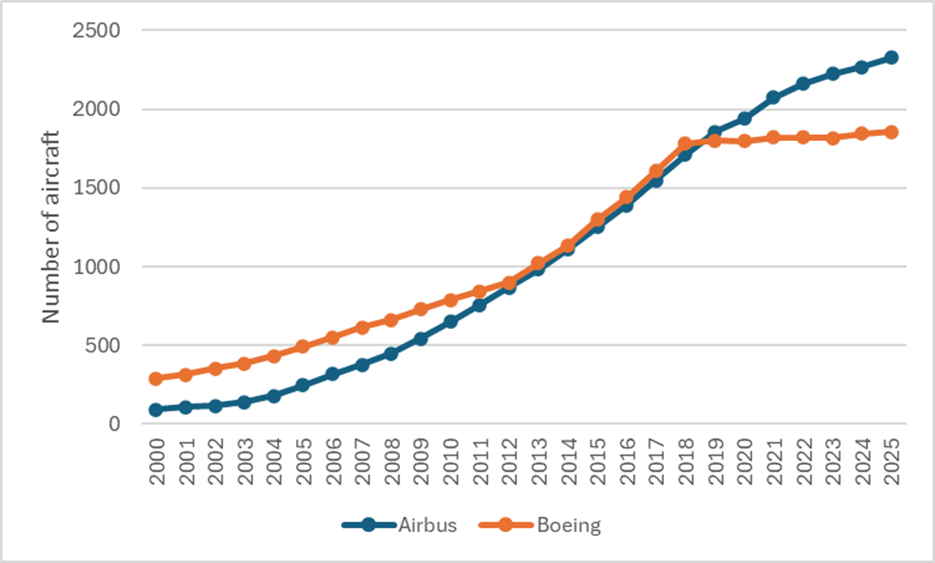
    Against this backdrop, 2019 marked a pivotal turning point in the Chinese aviation market: for the first time, the number of single-aisle and twin-aisle Airbus aircraft surpassed that of Boeing in the region. This lead has continued to grow in subsequent years, reflecting not only evolving commercial preferences but also broader geopolitical shifts influencing airline procurement strategies.

    Chart: Chinese airlines’ in-service and stored fleet trend

    Source: Cirium Core. Data includes in-service and stored single-aisle and twin-aisle passenger and freighter jets

    In early June 2025, reports emerged suggesting that China is preparing to place a major aircraft order with Airbus. While some sources anticipate a commitment of around 300 aircraft, others speculate the total could range between 200 and 500 units, comprising a mix of single-aisle and twin-aisle models. These developments align with an upcoming high-level diplomatic visit to China by key European leaders in July. Industry observers widely expect that a formal purchase agreement may be announced during or shortly after the visit, further reinforcing Europe’s expanding aviation partnership with China.

    If this potential order comes to fruition, it will further widen the market share gap between Airbus and Boeing in China, solidifying Airbus’s position as the leading commercial aircraft supplier in the region.

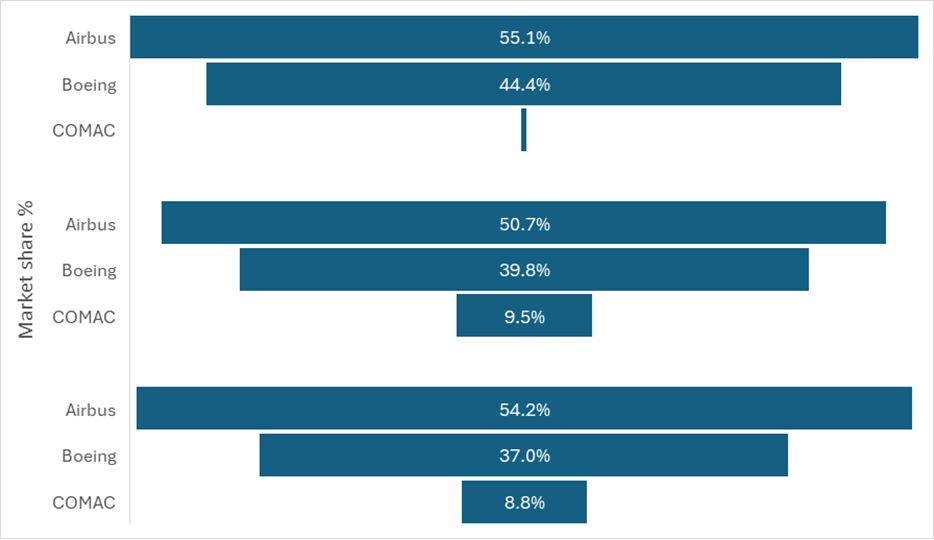
    The accompanying chart below offers a high-level overview of the evolving fleet composition and market dynamics in China, with projected market share changes based on the assumption that all on-order aircraft are delivered. It illustrates three scenarios:

    1. The current in-service and stored fleet operated by Chinese airlines;
    2. The current fleet combined with existing firm aircraft orders; and
    3. The fleet from scenario 2 plus an assumed new Airbus order of 300 single-aisle and 100 twin-aisle aircraft – an average drawn from prevailing market speculation.

    Chart: Chinese fleet share by OEM: scenarios 1, 2 and 3

    Source: Cirium Core. Data includes in-service, stored, and firm orders by airlines for single-aisle and twin-aisle passenger and freighter jets

    It is important to note that this analysis includes only firm orders placed directly by Chinese airlines, excluding those from lessors. The destination and placement of lessor-owned aircraft often fluctuate, making their inclusion uncertain. Additionally, Chinese airlines also have orders that are for unidentified customers by Airbus and Boeing, and these will be additional to this analysis.

    Lessor orders for COMAC aircraft are largely concentrated among Chinese lessors and are expected to be primarily allocated to Chinese airlines in the future. This trend suggests that COMAC’s long-term market share could increase further – alongside anticipated gains for Airbus. Consequently, Boeing’s proportional market share may continue to decline unless there are substantial improvements in its standing within the Chinese market.

    These developments highlight not only a shifting commercial landscape but also the increasingly strategic role that aviation plays in global geopolitics – where aircraft procurement decisions are shaped as much by diplomacy and international alliances as by operational needs and economic considerations.

  • Development of Yuan-Denominated Aircraft Financing Outside China

    Cirium Ascend Consultancy is trusted by clients across the aviation industry to provide accurate, timely, and insightful aircraft appraisals. The team provides the valuations and analysis the industry relies on to understand the market outlook, evaluate risks and identify opportunities.

    Discover the team’s industry reports & market commentaries. Read their latest expert analysis, viewpoints and updates on Thought Cloud.

    Johnny Yung
    Johnny Yung

    Johnny Yung, Senior Aviation Analyst, Cirium Ascend Consultancy


    Aircraft are capital-intensive assets and airlines typically employ a range of financing instruments, including debt issuance, finance leases, and operating leases, to fund their fleet requirements. Recently some operators have begun exploring offshore yuan-denominated financing as an alternative to the conventional US Dollar-based structures. However, adoption outside of China remains limited, with only a few carriers—such as Turkish Airlines and Korean Air—reportedly engaging in such arrangements with AVIC Leasing, CCB Leasing, ICBC Leasing and BOCOM Leasing. Broader uptake among major international airlines is expected to take time.

    What are the strategic and financial motivations behind Turkish Airlines and Korean Air adopting yuan-denominated financing?

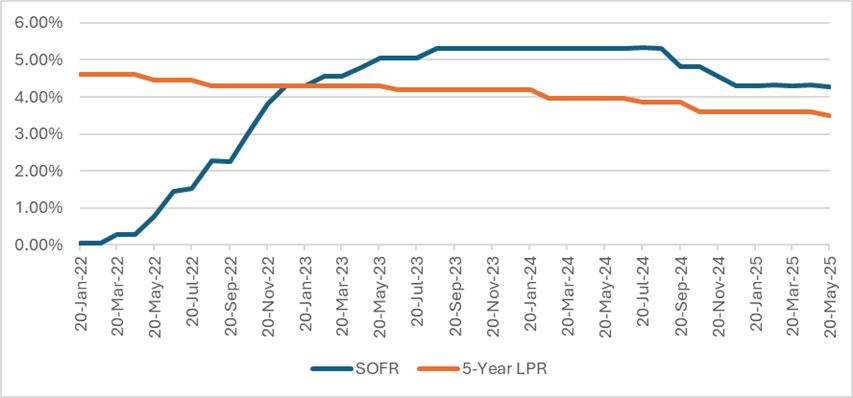
    The interest rate associated with a specific financing arrangement is typically composed of two components: the risk-free rate and the borrower’s risk premium. While the risk premium remains consistent across different financing currencies, the risk-free rate varies depending on the loan tenor and, more critically, the benchmark rate of the chosen currency. When comparing the US Secured Overnight Financing Rate (SOFR) with the People’s Bank of China Loan Prime Rate (LPR), it becomes evident why yuan-denominated financing may offer comparatively lower interest rates.

    Chart 1: The trend of SOFR and 5-Year LPR

    Sources: FOMC, PBOC

    While yuan-denominated financing offers the advantage of lower interest costs, it also introduces potential foreign exchange risk since debt repayments are denominated in yuan, typically not the domestic currency of the airline. Airlines can mitigate this risk by generating yuan revenues.

    According to Cirium FM Traffic data, Korean Air derived approximately USD 470 million for the routes related to China in FY2024. This amount seems adequate to service the debt associated with its yuan-denominated financing for one A350 and one A321neo aircraft. As per Cirium valuations and assuming a 75% loan-to-value, the assets financing requirement here is around USD 162 million.  

    In contrast, Turkish Airlines generated an estimated USD 364 million for China-related routes in FY2024. Although this figure is relatively modest, the airline’s decision to pursue yuan financing for three A350 aircraft is part of a broader strategy to diversify funding sources across multiple currencies. In addition to yuan, Turkish Airlines has secured financing in four other currencies, underscoring its commitment to managing currency risk through diversification.

    Is there potential for increased adoption of yuan-denominated financing in the future?

    Interest rate trend

    According to the Federal Open Market Committee’s (FOMC) most recent projection released in March 2025, the Federal Funds Rate is expected to decline gradually from the current 4.25% to around 3.1% by 2027. As the cost of U.S. dollar funding trends downward, the relative appeal of yuan-denominated financing may diminish, given the narrowing differential in potential interest cost savings. However, if Chinese interest rates were to follow a similar forward trend then interest might sustain.

    China traffic recovery

    As international air traffic to and from China continues to recover, airlines are positioned to generate increased yuan-denominated revenue. The chart below illustrates the gradual restoration of capacity to China by non-Chinese carriers.

    Chart 2: Capacity to/ from China of non-Chinese carriers

    Source: Cirium Core, Schedule

    Beyond serving as a natural hedge against currency risk, the regulatory challenges associated with repatriating yuan – such as the need for official approvals – further incentivise the use of yuan-denominated financing.

    Next potential candidate?

    From a revenue composition perspective, airlines with higher ticket sales originating from China will potentially be the next candidate as it offers natural hedging and lower interest cost, for example Cathay Pacific, which has already entered the offshore yuan bond market with its debut issuance in 2021. In addition, several Middle Eastern and Southeast Asian carriers have expressed interest in exploring yuan-denominated financing, reflecting growing regional engagement with yuan-based funding solutions.

  • Business Jet Deliveries Set for 11% Growth in 2025

    Daniel Hall
    Daniel Hall

    Daniel Hall, Senior Valuation Consultant, Cirium Ascend Consultancy

    This piece follows analysis shared within our 14 May 2025 market update webinar: available to watch on-demand.

    Cirium Ascend Consultancy produces annual new delivery forecasts across the commercial, helicopter and business jet markets. In terms of new production, the helicopter and business sectors look to be entering growth mode once again, leaving supply chain woes behind us. For business jets, we believe some 8,700 new aircraft will be handed over in the following 10 years (2025-2034). This is driven by an 11% climb this year alone, driven by new types and product ramp-ups. The following analysis discusses this, and concludes with some thoughts on forecast risks.

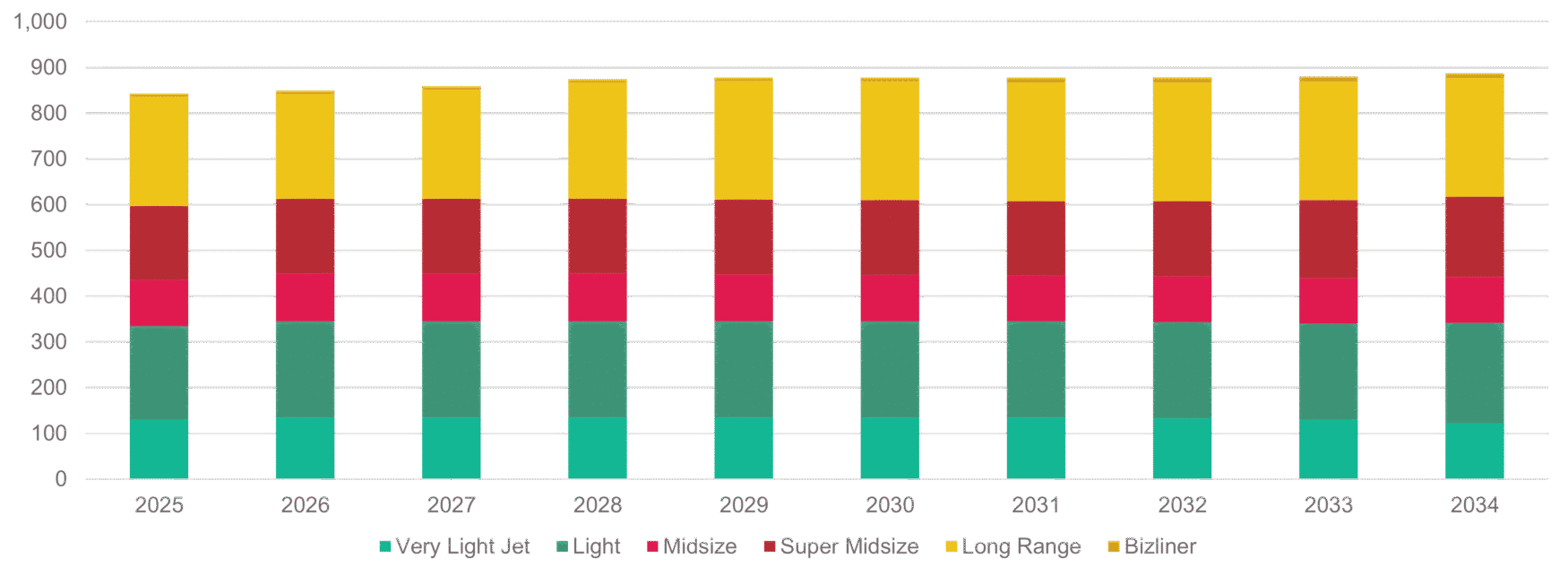
    The below chart presents our annual forecast, split by market size segment/category.

    Chart 1: Cirium Ascend Consultancy forecast: new business jet deliveries 2025-2034

    Source: Cirium Ascend Consultancy forecast. Business turboprops not included.

    Here are some key takeaways from our latest forecast.

    Firstly, we expect new deliveries to increase by 11% this year. That is some growth, and we do admit that our forecast did not reach its target last year, owing to production strikes and a slow ramp-up of new products. But commentary from the OEMs suggests that supply chain issues are easing and with new product ramp-ups (such as Gulfstream’s G700 and Dassault’s Falcon 6X), and growth by Textron and Embraer, we feel confident that an 11% improvement will be achieved through 2025.

    Secondly, following this growth year, we forecast a flattish annual growth of approximately 1% thereafter.

    Comparing the next five years with the previous five translates to an overall 22% growth (equating to around 800 units), but almost half of this comes from the long-range category, which we forecast to grow deliveries by 31% alone.

    The light sectors are showing notably little growth over recent history. Honda’s in-development Echelon programme is a slight unknown in terms of production and market demand, but we would not expect Textron (and Embraer) to easily concede market share or units to this.

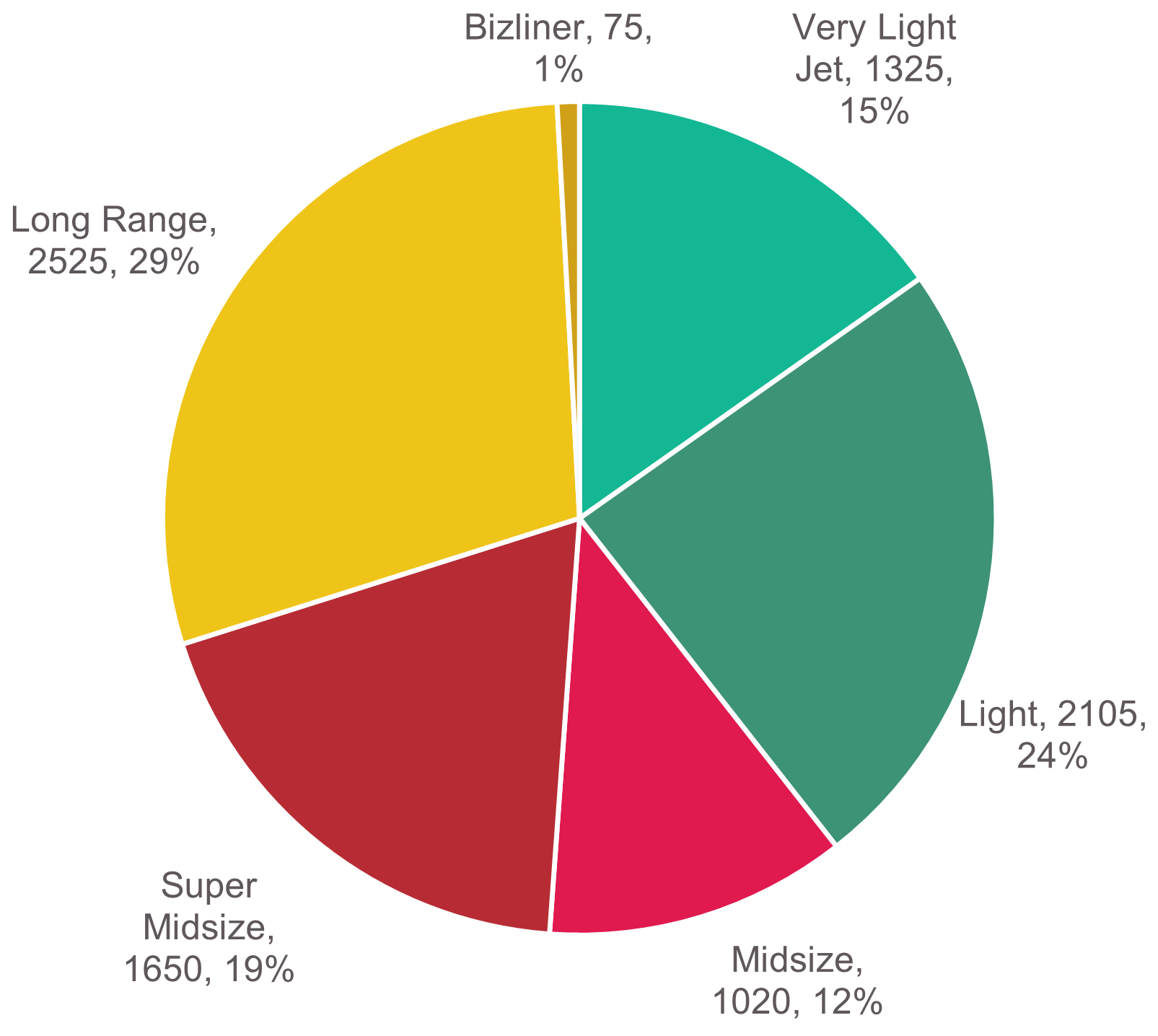
    Not only is the long-range sector contributing to growth, but it also underpins our forecast by units (29%), and value, at a notable 63% share.

    Chart 2: Forecast split by size sector: deliveries forecast by units and share

    Source: Cirium Ascend Consultancy forecast. Business Turboprops not included.

    Embraer is a growth OEM of note, and our forecast has this manufacturer moving into third position by units. Gulfstream and Dassault have notable product ramp-ups. Although the G650 will see production end this year, the Savannah-based OEM will be keen to get G700s out the door (which we forecast to be delivered at a rate of 3.5 for every G800 unit produced).

    But overall, towards the end of the 10-year period, it is clear that to unlock more production, we need labour to ease and new innovative products to enter the scene. Over 15% of the forecast will be driven by new or to-be-launched types. Delays to their development may shift our forecast to the right.

    The chart below adds our value of deliveries to the forecast. The impact of higher priced aircraft can clearly be seen in the large segment. Together, Gulfstream, Bombardier and Dassault alone are responsible for three-quarters of new delivery backlog value, in 2025 dollars at our Full-Life Base Values. Some $25 billion of business jet aircraft are expected to be delivered this year. That is quite a large financing need even in an industry where it is said that around half of new aircraft purchases are self-financed by cash.

    Chart 3: Forecast split by size sector: deliveries forecast by value and share

    Source: Cirium Ascend Consultancy forecast. Values are Full-Life Base Value. Business Turboprops not included.

    An Industry Facing Plateau or Structural Change?

    Why do we have lower forecast growth after 2025? We can look at the lack of new aircraft development after the Falcon 10X and Honda Echelon (both due in the 2027-2029 timeframe). We may have reached a development peak in terms of range, speed and cabin size, with current technology. Arguably a step change in new engine technology is needed to pivot the industry with something new. It could be said that with conventional technology, we may only see notable annual growth by other world regions taking more deliveries, particularly those underpinned by strong high net worth individual (HNWI) growth (e.g., India, China).

    Backlogs are likely to stay fairly flat through this year. The major manufacturers are currently reporting book-to-bill ratios of around 1:1 (meaning one order for each delivery). This maintains them at around two years of backlog, which we think manufacturers prefer for planning purposes. Most OEMs seem hesitant to increase production rates; of course we know some are capable of more production (based on past performance), but local labour constraints may be holding them back. Perhaps a structural change is in play, backlogs will be maintained, and we won’t move back to the days of highly competitive pricing and “white tail” risk.

    Forecast Risks, and 2025 So Far

    As of late May 2025, Q1 2025 new deliveries are 15% up on Q1 2024, which is impressive growth and looks supportive of our forecast projection. This has been driven by a range of factors, some discussed above (e.g., general product ramp-ups), but also by built and undelivered aircraft last year (G700 & Falcon 6X). Of interest were comments by Embraer that they are working to balance their delivery stream across the full year rather than their historically heavy weighting in Q4.

    There are risks, however. Tariffs have the ability to not only disrupt demand but also supply (of parts, raw materials). Many scenarios could play out, and the tariffs themselves are ever-changing. It may have been that a front-loading of deliveries helped a bump (before impacting an international transfer of an asset), but tariffs may later cause aircraft deferrals and we could see deliveries impacted in Q2 numbers.

    During the webinar, we discussed the growth of the fractional operator segment. This has undoubtedly benefitted the forecast for popular types in that segment, for instance, the Phenom 300, Citation Latitude, Challenger 3500 and Praetor series. Any curtailment of growth could impact the demand/supply balance for those models, impacting Bombardier, Cessna and Embraer. But likewise, brand loyalty is typically strong and higher-hours fractional users who want to go into full ownership are likely to stick with the same product they are used to experiencing, representing an opportunity for these OEMs.


    About Cirium Ascend Consultancy’s Business Jet Delivery Forecast

    • Our independent new delivery forecast is our opinion on business jet deliveries for the upcoming 20 years, broken down by manufacturer, type and size segment. We also provide the value of deliveries forecast.
    • The forecast can be bespoke, and go into greater levels of detail (including historical analysis, forecast methodology, commentary by size category/competitive landscape and OEM summary).
    • While the forecast above is for business jets only, we can offer services in the business turboprop marketplace.

    To request your copy of the Business Jet Delivery Forecast, enquire here.

    Cirium Ascend Consultancy is available for expert advisory, aircraft, helicopter and engine valuations, as well as market commentaries across various asset classes. We have a team consisting of both ISTAT-certified and ASA-accredited appraisers spread across the globe with offices in North America, Europe and Asia. We are also able to provide ASA appraisals conforming to USPAP standards.

  • Saab 340A and B – the Tale of Two Lifecycles

    Cirium Ascend Consultancy is trusted by clients across the aviation industry to provide accurate, timely, and insightful aircraft appraisals. The team provides the valuations and analysis the industry relies on to understand the market outlook, evaluate risks and identify opportunities.

    Discover the team’s industry reports & market commentaries. Read their latest expert analysis, viewpoints and updates on Thought Cloud.

    Eleni Maragkou, Valuations Analyst, Cirium Ascend Consultancy

    Same family, different tales. The Saab 340A and 340B, are at very different stages in their lifecycle. While the 340A is fading fast, the 340B powered by the General Electric CT7-9B engine continues to show signs of endurance in a tough regional market.  

    As of today, the in-service Saab 340 family fleet is around 160 aircraft, with approximately 180 having been retired. As shown in the graph below, the Saab 340B passenger fleet is almost evenly split between aircraft in-service and those in storage, highlighting that a sizable portion of the fleet is not in use. While the Saab 340A also has a significant portion of the fleet in storage, overall, it has a much smaller operational presence with only around 40 aircraft remaining in use. Although the proportion of retirements between the 340A and 340B are on a similar level, the 340Bs 85 retirements, are only 38% of its total fleet, however, given the large numbers of the 340B in storage, we would expect to see more of them retiring going forward.

    Figure 1. The current in service and storage fleet of Saab 340 (Fleets Analyzer, Cirium 2025)

    The Saab 340A is reaching the end of its useful life with only around ten passenger aircraft remaining in service. The challenge being there are very few CT7-5A engines left in the market. Engine shops do not prioritise that engine due to the lack of life limited parts and materials. With a limited operational future the variant is well within the sunset phase.

    But What Exactly is the “Sunset Phase”?

    For aircraft engines, it marks the final stage of an engine type’s life: declining demand, minimal parts support, higher maintenance costs, and a shrinking operator base marking the end of its commercial relevance. For the 340A, that time is the next two to three years.

    The CT7-9B engine on the other hand, remains operationally relevant, serving the Saab 340B Fleet exclusively. While the average age of the fleet for this type is 30 years old, the retirement trend for the Saab 340Bs is not yet substantial. Operators across North America and Canada continue to utilise the aircraft and the engines. The Half-Life Market Values for CT7-9B engines rose to over $600k in March 2025, with overhaul costs climbing to around $1m, driven by continued demand and availability constrains.

    Cargo conversions temporarily boosted interest in the -340B engine, though that trend has slowed according to multiple market sources. Viable conversion candidates are fewer, and some airframes require more maintenance than they are worth.

    The Verdict?

    Figure 2. A typical profile of the engine value life cycle (Cirium Ascend Methodology 2025)

    The graph in Figure 2.  shows the typical profile of the engine value life cycle,with the Saab 340A fleet reaching an average age close to 40 years old and few still in service, the CT7-5A is very much at the end of the retirement phase of the life cycle, sunsetting rapidly.

    On the other hand, the Saab 340B is still very much in the daylight, while not in the prime of its life it is far from obsolete. Considering recent value changes and fleet status of the 340B, this would place the CT7-9B in the secondary phase of the engine life cycle.

  • Advanced Air Mobility – Snapshot April 2025

    Cirium Ascend Consultancy is trusted by clients across the aviation industry to provide accurate, timely, and insightful aircraft appraisals. The team provides the valuations and analysis the industry relies on to understand the market outlook, evaluate risks and identify opportunities.

    Discover the team’s industry reports & market commentaries. Read their latest expert analysis, viewpoints and updates on Thought Cloud.

    YIRU ZHANG
    Yuri Zhang

    Yiru Zhang, Senior Valuation Analyst, Cirium Ascend Consultancy

    The Cirium Ascend Consultancy team has seen continuing dynamic developments in the advanced air mobility sector since the beginning of the year. To date, the Cirium team has registered over 11,000 order commitments for 27 different eVTOL OEMs, reflecting a continued market interest despite the hurdles.

    Data coverage includes:

    MARKET GROUPINGMANUFACTURERTYPECOMMENT
    Regional Electric – SmallAura AeroERAProgram temporarily paused
    Regional Electric – SmallHeart AerospaceES-30
    Regional Electric – SmallLYTE AviationLA-44 Skybus
    Regional Electric – SmallMaeve AerospaceMaeve 01 
    Regional Electric – SmallJektaPHA-ZE 100
    eVTOL – Urban Air MobilityAerofugiaAE200
    eVTOL – Urban Air MobilityARC Aero SystemsLinx P9 
    eVTOL – Urban Air MobilityDufour AerospaceAero3
    eVTOL – Urban Air MobilityBETA TechnologiesALIA-250
    eVTOL – Urban Air MobilityManta AircraftANN2
    eVTOL – Urban Air MobilityAscendance Flight TechnologiesAtea
    eVTOL – Urban Air MobilityOverair IncButterfly
    eVTOL – Urban Air MobilityHorizon AircraftCavorite X7
    eVTOL – Urban Air MobilityPlanaCopterPlane CP-01
    eVTOL – Urban Air MobilityWisk Aero LLCCora
    eVTOL – Urban Air MobilityTCab TechE20 eVTOL
    eVTOL – Urban Air MobilityThe ePlane Companye200XNewly added
    eVTOL – Urban Air MobilityEhangEH216
    eVTOL – Urban Air MobilityEve Air MobilityEve
    eVTOL – Urban Air MobilityCrisalion MobilityIntegrity
    eVTOL – Urban Air MobilityJaunt Air MobilityJourney
    eVTOL – Urban Air MobilityLilium GmbHLilium JetFiled for bankruptcy as of Feb 2025
    eVTOL – Urban Air MobilityArcher AviationMidnight
    eVTOL – Urban Air MobilityOdys AviationOdys eVTOL
    eVTOL – Urban Air MobilityAutoFlightProsperity 1
    eVTOL – Urban Air MobilityJoby AviationS4
    eVTOL – Urban Air MobilitySkyDriveSD-05
    eVTOL – Urban Air MobilitySirius AviationSirius Jet
    eVTOL – Urban Air MobilityXTI Aircraft CompanyTriFan 600
    eVTOL – Urban Air MobilityAMSL AeroVertiia
    eVTOL – Urban Air MobilityVolocopter GmbHVoloCityIn Insolvency proceeding as of Dec 2024
    eVTOL – Urban Air MobilityVolocopter GmbHVoloConnectIn Insolvency proceeding as of Dec 2024
    eVTOL – Urban Air MobilityEhangVT-30
    eVTOL – Urban Air MobilityVertical Aerospace Group LtdVX4
    eVTOL – UAV/UASBETA TechnologiesALIA-250c
    Business Electric – Single EngineVoltAeroCassio 330
    Business Electric – Single EngineBETA TechnologiesCX300
    Business Electric – Multi EngineEviationAlice
    Business Electric – Multi EngineBeyond AeroBYA-1Newly added
    Business Electric – Multi EngineBye AerospaceeFlyer 800
    Business Electric – Multi EngineElectraElectra eSTOL
    Business Electric – Multi EngineElectronElectron 5
    Business Electric – Multi EngineElflyNoemiNewly added
    Business Electric – Multi EngineAirflowM200
    Business Electric – Multi EngineMD AircraftMDA1 

    The eVTOL-Urban Air Mobility sector remains the most active segment of the market. The space now has a total of just under 11,000 order commitments and about 40 in-service EH216s captured by Cirium Fleets Analyzer. The drop in total order commitments was largely caused by the cancellation of over 800 Lilium Jet and 140 VX4 order commitments. Eve Air Mobility and Vertical Aerospace continue to lead the sector with 2,950 and 1,400 commitments respectively.

    Source: Cirium fleets data

    The global market for eVTOLs shows a varied regional distribution. Since surpassing North America as the region with the most orders at the end of 2024, APAC remains its leading position, with a total of 3,777 order commitments, representing a 34% share.

    Source: Cirium fleets data

    Source: Cirium fleets data

    Latest Developments in Urban Air Mobility

    • Lilium filed for insolvency for the second time: ​In February 2025, German electric air taxi developer Lilium filed for insolvency for the second time, following a series of financial setbacks. The company’s German subsidiaries had in October 2024 entered insolvency after failing to obtain essential funding, including a €50 million loan guarantee from the Bavarian government.

    In January 2025, Lilium announced a new investor in Mobile Uplift – a consortium of investors from Europe and North America – which intended to acquire the operating assets of the subsidiaries Lilium GmbH and Lilium eAircraft GmbH. However, the acquisition failed and in February 2025, Lilium again filed for insolvency.

    Lilium GmbH was founded in 2015. The aircraft, the Lilium Jet, was powered by 36 electrical motors and was intended to accommodate six passengers and one pilot. The Lilium Jet’s entry into service was scheduled for 2026. Media reports indicate that the shutdown of operations affected around 750 employees.

    • Blade’s commuter helicopter service: In January 2025, Blade introduced a new commuter service offering $95 helicopter rides from Long Island and New Jersey to Manhattan’s West Side. This reflects the growing demand for urban air transport in major metropolitan areas such as New York City. Blade currently holds 50 order commitments for Beta Technologies’ ALIA-250 and Wisk Aero’s Cora. Additionally, Blade serves as a key target operator for numerous eVTOL OEMs and has established partnerships with several of them. The expansion of Blade’s routes could also provide benefits for the future adoption and operation of eVTOL aircraft.

    Multi-Engine Business Electric

    • Electra’s EL-2 Goldfinch hybrid-electric short takeoff and landing (eSTOL)continues to lead in this sector, with total order commitments of 1,348.
    • Aura Aero recentlypushed back its targeted entry into service for its ERA design from 2028 to “before 2030”. The ERA design is a hybrid using kerosene, rather than a fully electric aircraft.
    • Heart Aerospace successfully conducted initial ground tests of its ES-30 demonstrator in 2024’s third quarter. A maiden flight is scheduled for later this year. The ES-30 order backlog now stands at 532, reflecting continued interest in regional hybrid-electric aircraft solutions.
    • In February, Eviation Aircraft paused work on its nine-passenger Alice design as it sought new investment. The company has reportedly laid off 30 employees. Eviation chief executive Andre Stein told Geekwire that the temporary pause was necessary to focus on “identifying the right long-term partnerships to help us make electric commercial regional flight a reality”, adding: “We at Eviation are proud of what we have accomplished in advancing electric flight. This decision was not made lightly.”

    Source: Cirium fleets data

    Financial and regulatory challenges persist in the AAM sector, but the industry’s commitment to achieving commercial success remains strong. The next few years will be pivotal in identifying which OEMs can effectively overcome these obstacles and establish themselves as leaders in this rapidly evolving market.

    The Cirium Ascend Consultancy AAM team will continue to provide valuable insight to the market. We would be pleased to hear any thoughts, comments or feedback you may have, so do not hesitate to contact us.

    Sara Dhariwal

    Lead Appraiser – Helicopters & AAM

    Ascend analyst Tim Chun Hing Li
    Ascend analyst Tim Chun Hing Li

    Tim Chun-hing Li

    Aviation Analyst

    YIRU ZHANG
    YIRU ZHANG

    Yuri Zhang

    Senior Valuations Analyst

    Eric Tamang
    Eric Tamang

    Eric Tamang

    Valuations Analyst


  • How Trade Policy Shifts Are Shaping Global Aviation

    Cirium Ascend Consultancy is trusted by clients across the aviation industry to provide accurate, timely, and insightful aircraft appraisals. The team provides the valuations and analysis the industry relies on to understand the market outlook, evaluate risks and identify opportunities.

    Discover the team’s industry reports & market commentaries. Read their latest expert analysis, viewpoints and updates on Thought Cloud.

    Joanna Lu
    Joanna Lu

    Joanna Lu, Head of Consultancy Asia, Cirium Ascend Consultancy

    Following the seismic shock of the Covid-19 pandemic, which brought global travel to a near standstill, the industry is now facing a different kind of disruption — one with potentially longer-lasting consequences. The rise of trade protectionism and tariff actions in key economies is contributing to a broader shift in global dynamics that may reshape supply chains, travel patterns, and aviation strategies in the years ahead.

    Unlike Covid, which caused a sharp but time-bound crisis followed by a defined recovery path, the impact of trade-related policy shifts appears more gradual — and potentially more difficult to reverse. If these changes trigger a prolonged decoupling of global economies, they may leave a lasting mark on the structure of international aviation — from network strategies and passenger demand to fleet deployment and aircraft economics.

    The Legacy of Covid and a New Wave of Fragmentation

    In many ways, the current landscape is an extension of the lessons and adaptations triggered by Covid-19. The pandemic exposed the vulnerabilities of overreliance on global systems. As a result, businesses and governments have become more cautious, and some of that caution is now being formalized into policy through tariffs, trade barriers, and revised sourcing strategies.

    This environment may be starting to create structural pressure points for aviation in two key areas:

    1. Passenger Travel: Premium Travel Redefined

    Corporate and traditional business travel continues to face scrutiny from cost-conscious companies. While premium travel demand overall has rebounded, much of this recovery appears to be driven by premium leisure rather than corporate activity — a trend noted by several airlines in the U.S. and Europe.

    However, real passenger traffic data from Cirium FM Traffic reveals that the share of passengers flying in premium cabins (First, Business, and Premium Economy) has not returned to pre-pandemic levels for most global network carriers — suggesting that corporate travel recovery remains uneven and fragile.

    Key observations:

    • Singapore Airlines (SQ) led the group in premium traffic share but peaked in 2022, with a decline through 2024.
    • Cathay Pacific (CX) saw a temporary bump in 2022, but premium share has returned to 2019 levels.
    • British Airways (BA) and Delta (DL) saw stable or declining shares, pointing to a structural shift in the premium travel mix.

    Chart: Premium Cabin Share of Total Traffic (2019–2024)

    Source: Cirium Core

    These trends suggest that while pricing and cabin revenue may have recovered, the volume of premium passengers remains below pre-Covid norms. This has important implications for network planning, cabin configuration, and loyalty program strategies.

    2. Air Cargo: A Shifting Geopolitical Footprint

    Air cargo demand is also evolving as global manufacturers reassess supply chains in light of geopolitical uncertainty. There is growing interest in “friendshoring” and “nearshoring” — particularly in the tech and automotive sectors — as companies seek to reduce overreliance on single-country sourcing models.

    For example, Apple’s expansion of manufacturing in India and Vietnam reflects a broader trend of diversifying away from China-centric production. While this has not yet resulted in major shifts in air cargo traffic flows, it signals a potential realignment of freight corridors toward new Asia–Asia and Asia–Middle East lanes.

    Gradual but Structural Change

    Structural changes such as these tend to unfold slowly, and their effects may only become fully visible in the data over time. However, early indicators — including shifts in premium travel composition and supply chain restructuring — suggest a gradual rebalancing of global aviation is already underway:

    • A pivot away from long-haul intercontinental traffic toward more regionalized operations
    • Increasing reliance on agile fleet strategies, particularly longer-range single-aisle aircraft
    • A growing need for scenario-based planning amid continued trade and policy fragmentation

    Chart: Average Stage Length (KM) – Scheduled Passenger vs. Cargo Flights (YE Apr 2019-2025)

    Source: Cirium Core

    Passenger flight distances are projected to increase modestly, reaching 1,480 km by YE April 2025 — slightly above 2019 levels. Cargo flights have shown more volatility but continue to maintain longer average stage lengths, indicating that major freight corridors remain active in the near term. These trends suggest that while the impact of tariff-driven fragmentation is still emerging, its eventual implications for route planning and aircraft deployment could be significant.

    Assessing Network Strategy: The Regional Pivot

    One way to observe strategic shifts in aviation is through changing network patterns. Cirium schedule data shows that several major carriers — including Cathay Pacific, Singapore Airlines, and United Airlines — have increased the share of operations on routes under 5,000 km since 2021.

    This reflects a broader trend: in times of macro uncertainty, regional flying becomes a lower-risk, more manageable option. For Asia-based carriers especially, the data suggests a strategic pivot toward intra-Asia routes as a foundation for building resilience and capturing regional growth.

    For instance, Cathay Pacific reported a full-year profit of HK$9.9 billion in 2024, its second consecutive year in the black. A key factor was its strengthened focus on regional connectivity, particularly with mainland China and other parts of Asia. By increasing the proportion of flights under 5,000 km, Cathay improved operational efficiency and supported scalable recovery — even as long-haul markets remain volatile.

    Chart: Scheduled Regional Flights Share (<5000km) by Selected Network Airlines

    Source: Cirium Core

    This shift is not just tactical — it is strategic:

    • Regional routes allow airlines to adapt quickly to regulatory or demand changes
    • They come with lower operational costs
    • They align with the growth of intra-regional trade and tourism

    Low-cost and regional carriers may be best positioned to benefit, while long-haul carriers may face continued pressure to right-size networks and rethink fleet composition.

    Aircraft Implications: Deployment, Not Just Demand

    While it may take time for these shifts to be fully reflected in aircraft valuations, their operational implications are already emerging:

    • Single-aisle aircraft, especially long-range variants, are becoming increasingly relevant due to their flexibility across both domestic and regional international routes.
    • Widebody aircraft, particularly older models, may struggle to achieve consistent deployment without a clear long-haul recovery.

    Even in the absence of clear pricing trends, there is a growing need for conservative long-haul fleet planning and greater adaptability in deployment strategies.

    Looking Ahead: Key Questions for Industry Stakeholders

    The shift toward a more fragmented and regionalized world raises critical questions:

    • How diversified is your network strategy across regional and long-haul markets?
    • Are your fleet plans agile enough to adapt to a prolonged long-haul demand recovery?
    • How are trade policy shifts influencing your procurement, partnerships, and alliances?

    In an era of policy divergence and evolving alliances, the ability to adapt will increasingly define competitive advantage. Aviation strategies must reflect not only traveler behavior but also broader political and economic signals.


    At Cirium, we continue to track these evolving patterns through flights, schedule, and fleet data. While some trends will take time to fully materialize, the signals today point to a future where regional agility may matter more than global reach, and where strategic flexibility becomes a core competitive differentiator.

    We support our clients with scenario-based analysis and data-led insights to help them navigate uncertainty and plan with confidence.

  • Slow Start to Commercial Aircraft Deliveries in 2025

    Cirium Ascend Consultancy is trusted by clients across the aviation industry to provide accurate, timely, and insightful aircraft appraisals. The team provides the valuations and analysis the industry relies on to understand the market outlook, evaluate risks and identify opportunities.

    Discover the team’s industry reports & market commentaries. Read their latest expert analysis, viewpoints and updates on Thought Cloud.

    RobMorris Cirium
    RobMorris Cirium

    Rob Morris, Global Head of Consultancy, Cirium Ascend Consultancy

    There continues to be much talk about commercial aircraft deficits. Cirium Ascend Consultancy has explained before that in reality these amount to a deficit of new aircraft caused by the inability of Airbus and Boeing to increase production as rapidly as they would like, for a multitude of reasons. Last year they delivered 766 and 348 aircraft respectively across their commercial jet programmes, including a handful of aircraft for non-commercial roles. For 2025 Airbus has stated a delivery guidance of 820. Boeing has been silent, but we have a working estimate of 610 units.

    As the first quarter closed on Monday, we now have initial estimates for March, and hence first quarter, deliveries. Cirium’s fleet data indicates that Airbus delivered 69 aircraft in the month, including 18 A320s, 33 A321s, 10 A220s, two A330-900s and six A350-900s. Consequently, first quarter shipments total 134. Looking at data for the past 15 years (2010-2024), Airbus has historically averaged 20% of total annual deliveries in the first quarter. Hence, this cumulative 134 Q1 total suggests a 2025 annual total of 660, significantly short of the 820 target.

    However, Airbus was clear in its February briefing that we should expect lower deliveries in the early part of the year due to a relative shortage of engine deliveries, particularly CFM Leap for the A320 family. There is some evidence of this through analysis of aircraft backlog and production progress. Cirium data indicates that Airbus currently has 43 A320 family aircraft which have flown but not yet been delivered, whilst further research suggests there are at least 70 which have been rolled out of the respective final assembly lines but which have not yet flown. These include 43 aircraft which Cirium data indicates will be powered by Leap engines when finally delivered.

    Hence, Airbus has potential to increase delivery rates in the second quarter (and beyond) as they work through these aircraft. There are also signs of increasing A320 production pace again, with 53 first flights detected in March (compared to 42 in February and only 38 in January; as an aside there were also three on 1 April), perhaps headed back towards the average close to 60 seen in the final quarter of 2024. Since Airbus stated an expectation of 820 deliveries this year only a few weeks ago, it seems likely that this slow progress was already expected and at present there is no reason to doubt that number.

    Over at Boeing, Cirium estimates 41 deliveries in March including 33 737 Max, four 787s and four 777-200LRFs, taking the Q1 total to 130. The US OEM has historically delivered 24.5% of annual deliveries in the first quarter and hence there is an indication of 530 total, again relatively short of our 610 expectation for the year. However, we know that Boeing is working through a ramp-up on the 737 line and first flight data indicates 27 aircraft built in March, up from an average of 23 in the first two months of the year and as few as 10 in November 2024. Expectations of achieving the FAA-imposed cap of 38 per month by mid-year seem reasonable.

    Boeing’s deliveries are also being augmented by inventory aircraft. In 2025 to date almost 25% of 737 Max deliveries have been aircraft that flew more than 90 days prior to delivery. Although the pace of delivery of such aircraft seems to have slowed in March, with only four amongst the 33 total, there are still some 34 737-8s in inventory which seem likely to be delivered this year. If 737-7 deliveries could begin in 2025 (post-certification) then there are a further 28 potential deliveries there. The upside opportunity is completed with the 787 programme, where Cirium data indicates 25 aircraft flown prior to 2025 yet to be delivered (including 13 specifically for Lufthansa which are delayed by seat supply issues).

    In summary, provisional first quarter delivery data indicates that both Airbus and Boeing face significant challenges if they are to achieve 2025’s delivery targets. However, there are clear data arguments to suggest that we should see volumes increase in the coming months. Therefore, it seems premature to be revising those targets downwards yet.

    As a postscript, what about Comac? Following 13 C919 deliveries in 2024, we have seen suggestions of around 30 in 2025. We have also very recently seen reports of the three major Chinese airlines – China Eastern, Air China and China Southern – expecting 10, 12 and 10 C919 deliveries respectively this year. Yet in the first quarter Cirium’s data records only a single unit delivered to Comac Express. I bear this slow progress in mind each time I hear comments about Comac’s potential to break the duopoly. The challenge in Shanghai is clearly at least as great as those faced by Airbus and Boeing.

  • The Next-Gen Engine Challenges

    Cirium Ascend Consultancy is trusted by clients across the aviation industry to provide accurate, timely, and insightful aircraft appraisals. The team provides the valuations and analysis the industry relies on to understand the market outlook, evaluate risks and identify opportunities.

    Discover the team’s industry reports & market commentaries. Read their latest expert analysis, viewpoints and updates on Thought Cloud.

    YIRU ZHANG
    Yuri Zhang

    Yiru Zhang, Senior Valuation Analyst, Cirium Ascend Consultancy

    Persistent Challenges in the PW1100G Fleet

    As the aviation industry continues to navigate supply chain disruptions and reliability concerns, the challenges surrounding new-generation engines remain a critical focal point. As of March 10, 2025more than 600 PW1100G-powered A320 family aircraft remain parked, accounting for 35% of the global fleet. While some suggest the worst may be over, caution is warranted. In contrast, the parked LEAP engine fleet is small and continues to decline in line with seasonal trend, signaling a more stable trajectory for its operational fleet.

    RTX reported $1.1 billion in GTF engine compensation payments in 2024, with further projected payouts between $1.1 and $1.3 billion in 2025, underscoring the financial burden caused by ongoing groundings. These payments are issued as aircraft-on-ground (AOG) incidents occur, reflecting the sustained impact on airline operations.

    Source: Cirium Core, 10 March 2025 (aircraft classified as parked following 7 continuous days of inactivity and therefore subject to restatement in near-term)

    Engine Production and Delivery Constraints

    RTX, the parent company of Pratt & Whitney, has signalled a 14% increase in large commercial engine production in 2025, with a slight increase in installations relative to additions to the spares pool. Cirium Ascend Consultancy’s analysis-driven 2025 delivery projections appear to show downside risk when compared to statements made by RTX as well as its competitor, in terms of supporting airframers to achieve their delivery targets for 2025.

    While the powder metallurgy issue is expected to be largely resolved within the next 18–24 months, other technical and supply chain challenges persist. The uncertainty surrounding next-generation engine technologies through 2030 is prompting airlines to retain CFM56 and IAE-powered aircraft longer than initially planned. This trend suggests sustained demand for older-generation engines well into the 2030s, albeit at lower price points than currently.

    The following analysis of fleet-weighted market values for key single-aisle aircraft, indexed to December 2019 levels, highlights some notable trends:

    Source: Cirium Core Current Market Values indexed to December 2019, on a fleet-weighted and constant-age basis

    The A320ceo and 737-800 have shown the most significant value appreciation. Mid-life 737NG values saw an uptick in Q1 2025. The A320ceo family is currently under review, but both A320 and A321 are expected to show a stable trend alongside other mid-life narrowbody aircraft.

    Older-generation aircraft values remain robust, supported by strong engine demand. Data indicates that lease extension levels are higher through 2023 and 2024 than in the latter years of the prior cycle. While demand for CFM56 and IAE engines remains solid over the next three years, supply constraints could ease once new production ramps up and more aircraft undergo part-out. A potential weakening in macroeconomic conditions and passenger demand could accelerate this timeline, but for now, the market remains resilient.

    Despite production increases, PW1100G-related disruptions will likely persist for the rest of the decade, reinforcing the need for strategic fleet planning among airlines and lessors.

  • How Southwest Became North America’s Most On-Time Airline

    Mike Malik, Chief Marketing Officer, Cirium

    Southwest carefully engineered transformation, redefining reliability, and showcasing the impact of strategic improvements and a commitment to sustained performance.

    Two years ago, Southwest Airlines faced one of the toughest challenges in its history. A holiday meltdown in December 2022 left the airline scrambling, cancelling nearly 17,000 flights and disrupting travel for over 2 million passengers. Social media swarmed with frustrated posts, and trust in the airline hit rock bottom. The crisis wasn’t just weather-driven; it exposed deeper flaws, from outdated scheduling systems to operational vulnerabilities. Industry watchers wondered if Southwest could recover.  

    Fast forward to February 2025, and the airline is writing a very different story. With an impressive on-time arrival rate of 82.27%, Southwest Airlines has been named North America’s most on-time airline by aviation analytics leader Cirium. It’s not just a comeback; it’s a transformation that began long before Winter Storm Elliott. How did Southwest go from crisis to champion?  

    A Turning Point Built on Leadership  

    Justin Jones

    “We knew we couldn’t just patch things up and move on. It required rethinking everything—from technology to teamwork to how we schedule flights,” he explained.  

    Southwest didn’t just “fix” its problems; it overhauled the way it operates, said Justin Jones, the airline’s Executive Vice President of Operations. Speaking with Scott McCartney recently on the Airlines Confidential podcast, Jones described the monumental effort it took for the airline’s leadership team to steer the airline out of rough skies.  

    “We knew we couldn’t just patch things up and move on. It required rethinking everything—from technology to teamwork to how we schedule flights,” he explained.  

    This leadership approach reassured both employees and customers that resilience was a key part of Southwest’s operations. 

    How Southwest Took Back Control  

    Southwest’s recovery wasn’t built on short-term solutions or lucky breaks. It was a carefully engineered transformation, focused on key areas where their previous systems had failed.  

    1. Preparing An Operation Ready For The Future  

    Southwest recognized the need for stronger, more adaptable technology to support its growing network. While already working to modernize the operation, the airline accelerated its efforts—investing $1.3 billion in more modern IT systems, including automated flight rescheduling tools and advanced decision-making platforms. These upgrades go beyond short-term fixes—they are designed to enhance efficiency, improve resilience, and ensure Southwest can operate smoothly even in the most challenging conditions. 

    2. Weather Resilience Strategies  

    Winter weather may be unpredictable, but its disruptive power can be anticipated. Southwest strengthened its defenses by expanding de-icing capabilities, boosting airport coordination, and adjusting staffing protocols during storms. These improvements meant fewer last-minute scrambles and more efficient operations during extreme conditions.  

    3. Smarter Scheduling, Fewer Delays  

    By aligning Network Planning and the Network Operations Center under a single leader, Southwest brought network thinking into how it manages the business every day, including aircraft routing, cancellation decisions, and coordination with all operating groups. 

    4. More Crew, Fewer Complications  

    Southwest also tackled one of the biggest contributors to operational chaos: staffing. By hiring more pilots, flight attendants, and ground crew members, the airline ensured resources were available even during high-stress moments. Crew shortages, once a critical weak link, were no longer a stumbling block in delivering reliable service.  

    5. Extra Aircraft for Extra Assurance  

    To add further stability, Southwest increased its fleet rotation by incorporating more spare aircraft. This allowed for quicker recoveries from unexpected mechanical issues or delays, minimizing disruptions for passengers. (Southwest didn’t add more spare aircraft per se; they added more late departing originators to give mechanics more time to work on the aircraft overnight. TechOps took numerous steps to further reduce aircraft downtime.) 

    A New Era for Southwest  

    By 2024, Southwest’s efforts were already showing results. The airline achieved a cancellation rate of just 0.62%, the lowest in the industry and well ahead of the 1.63% industry average. During the busy summer months, they flew a record-breaking 54 million passengers while improving on-time performance by two percentage points.  

    But the real breakthrough came in early 2025. With an A14 rate in the low-to-mid 80s (a measure of flights arriving within 14 minutes and 59 second of the scheduled time), Southwest ascended to the top of Cirium’s on-time rankings.  

    This achievement signaled a shift in an industry where Delta Air Lines has long set the standard for operational reliability.

    Southwest’s climb to the #1 spot was more than just a comeback—it showcased the impact of strategic improvements and a commitment to sustained performance. 

    More Than Numbers  

    Behind the metrics is a story of persistence, innovation, and teamwork. Employees who worked tirelessly to restore faith in the airline. Passengers who began to take notice, moving from frustration to praise for the airline’s newfound reliability.  

    Leadership, too, played its part by inspiring confidence. Justin Jones credited the turnaround not to any single decision, but to the collective spirit of a company determined to win back trust.

    “You can’t plan your way out of a crisis like this overnight,” he noted. “It takes consistent effort and a commitment to doing what’s right for passengers and our employees.”  

    Lessons in Transformation  

    Southwest’s rise to the top offers valuable lessons for the aviation industry and beyond. When faced with operational challenges, many companies opt for quick fixes. However, Southwest took a different approach—investing in core infrastructure, refining its network strategy, and strengthening its teams—demonstrating that resilience comes from deliberate action and long-term commitment

    For passengers, the message is clear as well. Even brands that falter can become reliable again with transparency, hard work, and a relentless focus on improvement.  

    The Flight Ahead  

    While Southwest’s success is worth celebrating, its team knows the job isn’t done. Consistency will depend on maintaining the momentum they’ve established and adapting as new challenges emerge. 

    Southwest is working to maintain this momentum even as the recently announced move to charge for checked luggage will likely result in more gate-checked bags that could threaten the hard-won reductions in turn times. The airline is adding technology at every gate to eliminate string tags, bolstering procedures to help gate agents manage volume, and installing equipment to get bags more efficiently from the gate to the ground. 

    But if the last two years have proven anything, it’s that Southwest Airlines is more than capable of weathering a storm and taking flight again.  

    More than a comeback, Southwest’s rise to the top shows that operational excellence is built on adaptability, strategy, and commitment.  

  • FlySafair Leads Middle East & Africa in OTP for 2024

    This achievement is particularly significant for South African aviation, positioning the country as a leader in dependable air travel within the continent. South Africa’s advanced infrastructure and strategic location have long made it a key aviation hub, connecting intra-African routes and international markets. Beyond aviation, South Africa plays a vital role in the region culturally, economically, and geographically.

    As a melting pot of diverse cultures and traditions, the country serves as a symbol of unity and richness in African heritage. Economically, South Africa is one of the continent’s largest economies, driving trade, innovation, and development across borders. Geographically, its position at the southern tip of the continent makes it a natural gateway between Africa and the rest of the world. FlySafair’s success not only enhances its own reputation but also reinforces South Africa’s role as a trailblazer in raising standards and fostering growth in the region on multiple fronts.

    As South Africa’s largest low-cost airline, FlySafair’s commitment to punctuality is no accident with

    FlySafair ranking as the most on-time regional carrier 11 out of 12-months in 2024 by Cirium.

    Through investments in data-driven practices, advanced scheduling, and fleet management, the airline has minimized delays and reduced travel disruptions for passengers. Close collaboration with ground handling teams and air traffic management has further ensured seamless operations. Despite challenges such as rising operational costs, volatile jet fuel prices, and currency pressures, FlySafair has maintained its resilience through strategic initiatives. Refining its route network, optimizing fleet efficiency, and prioritizing operational excellence have been key factors in its success.

    FlySafair’s leadership in on-time performance serves as a benchmark for the MEA region, where airlines face diverse challenges, including infrastructure gaps, regulatory complexities, and geopolitical instability.

    By proving that precision and reliability are achievable even in demanding conditions, FlySafair inspires higher regional standards, benefiting passengers with more dependable travel experiences.

    Being ranked number one in the MEA category is not just a recognition of FlySafair’s efforts—it’s a testament to its role in advancing aviation standards across the region. This success underscores the critical link between punctuality, customer trust, and innovation, inspiring progress throughout the industry while reinforcing FlySafair’s position as a leader in reliable air travel.

    Report highlights

    • Delta Air Lines Secures Cirium’s Platinum Award for Operational Excellence for Fourth Year Running 
    • Aeromexico Recognized as the Most On-Time Airline in the Global Category 
    • Regional Leaders Announced: Delta Air Lines, Copa Airlines, Iberia Express, Japan Airlines, and FlySafair Take Top Honors 
    • Bogotá El Dorado International Airport Earns Cirium’s Inaugural Airport Platinum Award 
    • Riyadh King Khalid International Airport Named Most On-Time Global Airport for 2024
  • A Deep Dive Into ACMI Utilization by Airlines

    Cirium Ascend Consultancy is trusted by clients across the aviation industry to provide accurate, timely, and insightful aircraft appraisals. The team provides the valuations and analysis the industry relies on to understand the market outlook, evaluate risks and identify opportunities.

    Discover the team’s industry reports & market commentaries. Read their latest expert analysis, viewpoints and updates on Thought Cloud.

    Toshimitsu Sogabe, Aviation Consultant, Cirium Ascend Consultancy

    Aircraft, Crew, Maintenance, and Insurance (ACMI) leasing has become an increasingly essential strategy for airlines to address operational challenges. Factors such as delayed new aircraft deliveries, supply chain constraints leading to parts shortages, prolonged maintenance turnaround times, and overall operational limitations continue to drive demand for ACMI solutions. Under such circumstances, we have assessed which airlines have been heavily utilizing the fleet from specialist ACMI providers.

    Below are the top ten airlines with the largest passenger fleet sourced from ACMI providers in July 2024 (Northern Hemisphere Summer). Note this does not include “traditional” airlines categorized as non-ACMI providers under Cirium Fleets Analyzer (e.g. Finnair wet-leasing their A330s to Qantas, or AirBaltic wet-leasing their A220s to Lufthansa Group).

     AirlinesJul-2024Fleet from ACMI
    1Lufthansa Group35E190 E1/E2, CRJ1000, A320
    2THY (Ajet)25A320, A321, 737 Max 8
    3TUI Group24A320, 737-800, 737 Max 8
    4VivaAerobus21A320
    5SAS20CRJ900
    6Indigo16A320
    7Air France-KLM Group13E190 E1, A319, A320, A330-200
    8Condor9A320, A321
    8Wizz9A320, 737-800
    10Jet28A320, A321
    Others118
    TOTAL 298

    Source: Cirium Fleets Analyzer

    The above list reflects a diverse mix of airlines, including full-service carriers, low-cost carriers (LCCs), regional airlines and freighter operators.

    In contrast, when examining the top ten airlines in January 2025 (Northern Hemisphere Winter), we observe shifts in rankings, with some airlines increasing or decreasing their fleet from specialist ACMI providers, while others have been completely removed from the list.

     AirlinesJan-2025vs Jul-2024
    1VivaAerobus243
    2Indigo182
    3Lufthansa Group23-12
    4SAS15-5
    5THY (Ajet)13-12
    6Condor7-2
    7Air Peace66
    7Air France-KLM Group6-7
    9Saudia4-1
    9Air Arabia41
    9El Al41
    9Azerbaijan Airlines41
    9PSA Airlines41
    Others76-69
    TUI Group2-22
    Jet20-8
    SunExpress0-7
    TOTAL204-94

    Source: Cirium Fleets Analyzer

    It is notable that while flag carriers such as Lufthansa Group, THY (through it’s subsidiary Ajet), Air France-KLM Group and SAS sees some reductions but continue to utilize ACMI provider’s fleet in January 2025, leisure and tour operators have significantly scaled down or completely phased out these fleets. The most striking example is TUI, which returned most of its 22 aircraft that were in operation in July 2024 by January 2025 to ACMI providers. Similarly, Jet2 and SunExpress, both of which had incorporated ACMI provider’s fleet in July 2024 (with eight and seven aircraft respectively), fully discontinued their ACMI provider’s fleet utilization by January 2025. This is understandable given the larger fluctuation in peak and off-peak demand for leisure and tour operators. In contrast, Indigo has maintained (or in fact slightly increased) their fleet from ACMI providers, primarily to compensate for ongoing groundings of its owned and leased aircraft due to Pratt and Whitney’s GTF engine issues.

    Operator RegionJul-2024Jan-2025Jan-2025 vs
    Jul-2024
    Europe1998744%
    Africa312374%
    Asia Pacific2632123%
    Latin America2435146%
    Middle East1320154%
    North America57140%
    TOTAL29820468%

    Source: Cirium Fleets Analyzer

    The above chart highlights that Europe remains the largest market for ACMI provider’s fleet utilization. It is interesting to see Africa ranks as the second-largest market, despite its relatively smaller aviation sector compared to other continents. A significant portion of ACMI demand in the Asia Pacific and Latin American markets is driven by Indigo and VivaAerobus; excluding the two airlines would result in a substantial reduction in ACMI provider’s fleet usage in these regions (Turkey is categorized as part of “Europe” under Cirium Fleets Analyzer). Furthermore, European airlines have significantly reduced their ACMI provider’s fleet utilization in January 2025, whereas other regions have shown an overall increase, with the exception of Africa, which experienced a slight reduction. This may be attributed to a combination of factors, including seasonal fluctuations in air traffic (including countries in the Southern Hemisphere), and non-seasonal challenges that necessitate ACMI use, as observed in IndiGo’s case).

    As mentioned above it is important to note that this assessment does not completely capture the impact of the full wet-lease demand in the market as we have not assessed wet-lease provided by “traditional” airlines. However even within this scope, we can observe the distinct variations in airline requirements and/or operational strategies regarding ACMI utilization.

  • Cirium Launches Asset Watch: Revolutionizing Asset Management

    London, March 4, 2025: Cirium, the most trusted source of aviation analytics, has unveiled a new innovative tool, Asset Watch, designed to transform how aviation stakeholders monitor, manage, and optimize their portfolios.

    With Asset Watch, users can configure aircraft portfolios and receive real-time updates on their flight and ground activity. The tool integrates aircraft utilization trends, CO₂ emissions benchmarking, maintenance events and flights, ensuring a holistic understanding of asset operations and risk.

    The tool offers different benefits to a variety of key stakeholders, including:

    • Lessors: Gain precise insights into fleet performance and operator compliance, enabling smarter lease negotiations and asset placement strategies.
    • Banks: Monitor aviation investments with transparency, assessing asset utilization and condition for informed decision-making.
    • Insurers: Access real-time data on aircraft cycles, locations, and routes, streamlining underwriting processes and risk evaluations.
    • Aftermarket Service Providers: Anticipate maintenance demand and trends using detailed aircraft utilization metrics.
    • Airlines: Benchmark fleet performance against competitors and align with sustainability goals through advanced CO₂ emission analytics.

    The tool is designed to offer quick insights, enabling aviation finance professionals to safeguard investments, meet regulatory requirements, and optimize their strategic planning processes. It makes workflows more efficient and offers unparalleled accuracy and actionable intelligence.

    This announcement launching the new Asset Watch tool underscores Cirium’s commitment to delivering solutions that address the dynamic needs of the aviation sector while advancing sustainability and operational efficiency in the industry.

    Find out more about Cirium’s Asset Watch and access a demonstration video of the tool.

    For Cirium media inquiries please contact media@cirium.com

  • Copa Celebrates 10 Years of On-Time Excellence

    Panama City, Panama – Copa Airlines has cemented its place as Latin America’s undisputed leader in On-Time performance, achieving an unprecedented tenth year at the top.  The airline celebrated this remarkable milestone on Friday, February 14th, 2025 at a special ceremony held at their Panama City Headquarters, Hangar 2, where they received the prestigious 2024 On-Time Performance Award from Cirium, the global leader in aviation analytics.

    Presenting the award and leading the Cirum team was Jeremy Bowen, Chief Executive Officer of Cirium.  Other members of the Cirium team included, Mike Malik, Chief Marketing Officer, Lydia Webb, Marketing Director – Americas & Strategic Programs and Daniela Arrebola, Business Development Manager. Accepting the award on behalf of Copa Airlines were Pedro Heilbron, Chief Executive Officer and three employees, representing different organizations within Copa, directly impacting on-time performance. 

    “Once again, Copa Airlines sets the standard for On-Time Performaance, securing its 10th award as the most on-time airline in Latin America. Achieving this level of consistency in an industry where so much is beyond our control is no small feat—it speaks to a well-run airline where every team member plays a role in delivering reliability day in and day out. Cirium is proud to recognize Copa’s achievement, and we extend our congratulations to everyone at Copa Airlines for their dedication and teamwork in making this possible”

    Jeremy Bowen, CEO, Cirium

    This decade of dominance underscores Copa’s unwavering commitment to operational excellence and passenger satisfaction. With an impressive on-time performance rate of 88.22% for 2024, Copa’s 125,445 flights saw a remarkable 98.73% completion rate. This achievement is particularly noteworthy in a year of high operational performance across Latin America, where airlines and airports ranked among the top performers globally. Copa consistently maintained high OTP scores throughout the year, even achieving top global rankings in February (91.66%) and May (90.24%).

    “In a year of high operational performance in the Latin American region, Copa Airlines has once again soared to the top with an impressive on-time performance rate of 88.22% for 2024.  Copa Airlines can now boast of a decade of continuous leadership and excellence in On-Time Performance in the region.”

    Lydia Webb, Marketing Director – Americas & Strategic Programs, Cirium

    This milestone reflects Copa Airlines’ commitment to providing a seamless and reliable travel experience. Their focus on operational efficiency, coupled with a dedicated team and strategic hub location, has solidified their position as the leading airline in Latin America for on-time performance. Copa’s contribution extends beyond aviation, connecting Panama, a country rich in cultural heritage and economic significance to the world.

    Congratulations to the entire Copa Airlines team on this well-deserved recognition!

  • Consolidation Cold Spell

    Cirium Ascend Consultancy is trusted by clients across the aviation industry to provide accurate, timely, and insightful aircraft appraisals. The team provides the valuations and analysis the industry relies on to understand the market outlook, evaluate risks and identify opportunities.

    Discover the team’s industry reports & market commentaries. Read their latest expert analysis, viewpoints and updates on Thought Cloud.

    Thomas Kaplan Senior Valuations Analyst, ISTAT Appraiser
    Thomas Kaplan Senior Valuations Analyst, ISTAT Appraiser

    Thomas Kaplan, Senior Valuations Consultant, Cirium Ascend Consultancy

    The decade of the 2010s saw tremendous growth of the leased fleet size (~88% in total), but also the entrance of many new operating lessors, leading to fragmentation of the fleet. In 2010, two lessors, GECAS and ILFC accounted for nearly 40% of the leased fleet. By the end of the decade, eight lessors would share the 40%. The number of managers classified as operating lessors with at least one aircraft in service or stored increased from 143 to 186. 90% of the leased fleet went from being shared amongst 41 lessors to 63.

    The pandemic put the brakes on lessor trading as aircraft values fell and later rising interest rates increased lessor cost of capital. With defaulting lessees and geopolitical shifts, the trend reversed towards more consolidation, at least on the level of the largest lessors. The chart below tracks consolidation of the lessor fleet. The difference between the green and black line shows the fragmentation and growth trend of the 2010’s. The red line, representing today’s fleet, is above the black line but the shift is mostly noticeable for the largest lessors. The largest consolidation that can be spotted from the chart intercepting the y-axis is AerCap’s 2021 acquisition of GECAS.  However, for half a decade of trend, consolidation has not moved very quickly, particularly compared to the speed of change observed in the previous decade.

    Lessor Fleet Distribution Over Time

    Source: Cirium Fleets Analyzer, Narrowbody and Widebody Jets, Commercial usage, excluding unconfirmed lessors. Note: Avolon acquisition of Castlelake portfolio accounted for in February 2025 data.

    The yellow line, which is barely visible due to its overlap with today’s fleet, represents the picture at the very start of 2024. The past 13 months had a large “consolidation” event in the Avolon acquisition of a 106 aircraft portfolio from Castlelake. While it is significant in rearranging the size rankings of the two lessors in question, it does not do much to change the landscape. DAE Capital’s planned acquisition of Nordic Aviation Capital is a very significant consolidation event, but mostly involving regional aircraft so does not affect this analysis which focuses on narrowbody and widebody jets.

    New entrant activity continued at a slow pace to dampen the consolidation trend. IAT Leasing took out an advertisement at Dublin Airport to catch the eye of those flying in to attend the Airline Economics Growth Frontiers conference in January 2025. They now have nine aircraft on lease including three A330-200s. Notable new entrants from earlier in the decade which have managed to grow beyond a 40 aircraft portfolio include AviLease, SKY Leasing, Griffin Global Asset Management and Vmo Aircraft Leasing. Gaining scale has been challenging, however, with only Avilease breaching the 100-jet mark following its 2023 acquisition of Standard Chartered’s aircraft leasing business.

    Lessor fleet distribution change since 2024 has been minimal:

    Number of lessors1-Jan-2024Feb-2025
    35% of leased fleet66
    50% of leased fleet1112
    90% of lease fleet6261
    100% of leased fleet191190

    Source: Cirium Fleets Analyzer, Narrowbody and Widebody jets, Commercial usage, in-service/stored fleet, excluding unconfirmed lessors

    Will the consolidation trend pick up again in 2025? Cirium reported in an interview that Stratos chief Gary Fitzgerald, who contributed to the consolidation trend in 2023 with the acquisition of Magi Partners, believes the industry would benefit from consolidation as some leasing platforms have underperformed. Carlyle Aviation Partners’ Robert Korn also suggested that the recent strength of the US dollar should make for a good exit opportunity for some lessors. Carlyle was a driver of consolidation as well with its 2021 ACMK acquisition. Economies of scale do exist for aircraft leasing to a certain extent, which should favour some consolidation. Perhaps the lessors with the lowest cost of funding will take the opportunity to grow their scale – if they find a lessor willing to sell. While there are good reasons for consolidation to occur, it remains to be seen if conditions will finally warm to allow it.