









Category: Industry

  • A Marathon Mindset: The 2025-2034 Cirium Helicopter Forecast

    Sara Dhariwal, Senior Aviation Analyst, Lead Appraiser – Helicopters & AAM, Cirium Ascend Consultancy

    The past decade has for the helicopter industry been largely lived through a downturn. A prolonged period of significantly reduced oil prices affected production and exploration, which impacted the offshore support market. This turned relative undersupply to oversupply at a rapid speed leaving a substantial pool of excess helicopters, resulting in notable pressure on values. Growth slowed from a CAGR of around 2.5% prior to 2015, to 1.2% in the most recent decade. 

    In 2024 there was a fleet growth of 1.9% which is the strongest since 2015 signalling ongoing recovery.

    The growth has been supported by stable deliveries, and lower attrition – with fewer retirements and total losses. In 2024, there were almost 100 fewer retirement/total loss events than in 2023. This means that existing fleet is being used longer supporting the long useful lives of helicopters, which helps strengthening investment cases. It also marks a welcome and long-term improvement in terms of safety.

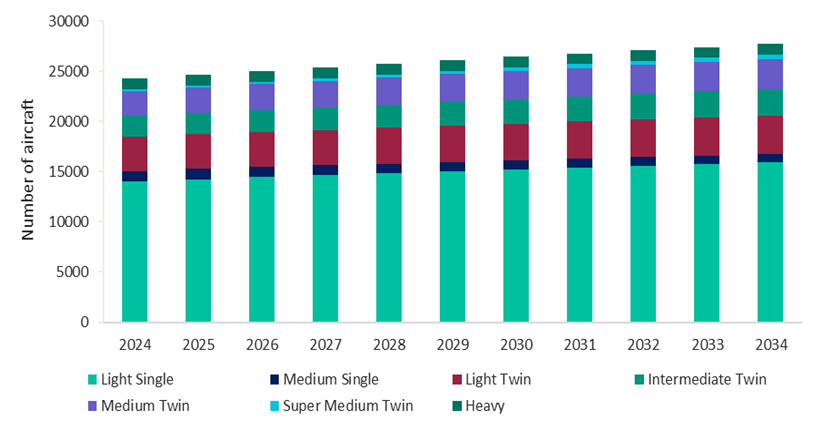
    Over the next 10-year period, the 2025 Cirium Helicopter Forecast anticipates a continued steady rebound at a pace of 1.3% year-on-year. The market is expected to welcome 7,500 new civil turbine helicopters, reaching a fleet of 27,700 by 2034. Key drivers will be the need for replacements and rising demand in emerging markets.

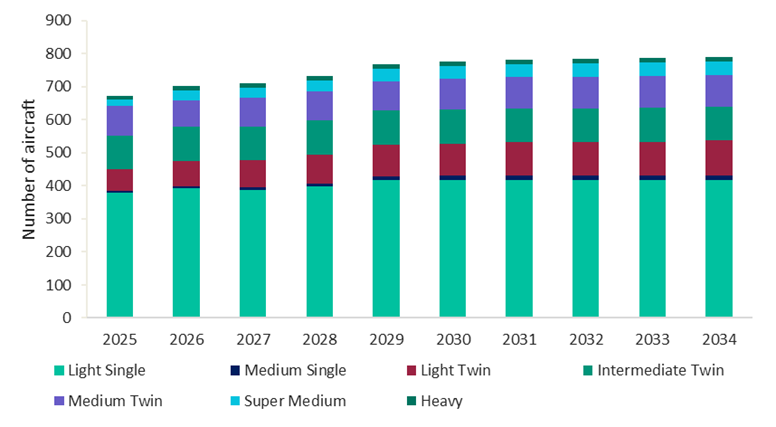
    Helicopter delivery forecast (2025-2034)

    Despite recovery from the oil and gas downturn and the Covid-19 pandemic, the 2025 forecast is 3% lower than 2024 due to ongoing supply chain constraints making lead times for new aircraft extensive. Annual deliveries dropped to 512 in 2020 but rebounded to nearly 700 in 2023, with no growth in 2024. A 5% decline is expected in 2025 compared to 2024, with gradual recovery projected and reaching 2014 levels (~790 units) by the early 2030s.

    Overall, the forecast anticipates –

    • 7,500 new civil turbine helicopters valued at $50 billion in 2025$ (based on a Base Full-Life Value for a typical utility machine) to be delivered over the next decade.
    • 54% of demand is expected to be driven by replacement, and 46% by fleet growth.

    Forecast annual civil helicopter deliveries 2025-2034
    Source: 2025 Cirium Helicopter Forecast

    Key factors stimulating future helicopter demand include:

    • Aging fleets, especially in North America and Europe.
    • Recovery in offshore oil support and growth in Asia-Pacific.
    • Introduction of new models (e.g., H140, R88, Bell 525).

    In 2024, there were 225 helicopters recorded as retired which was 100 fewer than 2023 and likely a result of a combination of high demand and constrained supply, as OEMs find challenges in despatching new helicopters due to ongoing supply chain issues. Subsequently and whilst deliveries are not predicted to increase significantly in the near term due to the challenges, it leads to longer use of the existing fleet.

    Longer use underpins the asset class having strong residual values, supporting investment.

    Helicopter replacement demand

    Over the last 10 years, Cirium recorded approximately 2,200 permanent retirements, averaging around 1% of the fleet annually. This retirement rate is relatively low compared to commercial fixed-wing aircraft standards.

    The average age of retirement in the past 10 years has been at 37.5 years.

    Besides the physical retirements, there is also attrition from the fleet through accidents (total losses), which has to be factored into replacement demand and can be added to retirements.

    Cirium Ascend monitors the total losses for helicopters and some 1,200 were recorded in the past 10 years. As helicopters operate in many different roles and environments, their loss rate can be comparatively high versus other commercial aviation sectors.

    On a per year basis, some 1% of the fleet was being lost 20 years ago, but the trend has been declining and has been at just 0.5% in the most recent ten-year period. In 2024, the recorded rate was a record low of only 0.4%. This effectively means there is replacement demand for an average of 1.4% of the fleet annually, or 4,050 civil turbine helicopters in the next 10 years, which is 17% of the current total fleet.

    Helicopter fleet growth outlook

    Forecast civil helicopter fleet to 2034
    Source: 2025 Cirium Helicopter Forecast

    By 2034, the global fleet is projected to reach 27,700 helicopters, growing at a slow but steady 1.3% annually, slightly higher than the previous decade’s rate.

    North America is projected to remain the largest market, followed by Europe. The projection for Asia-Pacific has been revised in the 2025 forecast due to growth slowing down in recent years following restriction on airspace usage in China, impacting demand for helicopters.

    Slow but steady seems a good pace for the helicopter market. The pre-2014 sprint approach to secure quick returns failed. Few held on to those returns as the oil and gas downturn led to financial hardship across the industry.

    Some would argue that slow and steady is “boring” and implies that there isn’t anything of interest going on in the market. The stronger argument is possibly that slow and steady provides companies the time required to make better, more considered long-term strategic decisions.

    The past decade suggests that discipline, and resilience alongside consistency, pacing, and the ability to learn from experience and adapt to unexpected situations is key. In other words, a Marathon Mindset, rather than that of a sprint.


    REQUEST THE FULL 2025-2034 CIRIUM HELICOPTER FORECAST HERE

  • Rob Morris: Reflecting on a 35-year career in aviation

    When Rob Morris checks out from Cirium Ascend Consultancy‘s London Heathrow headquarters at the end of August, he will be calling time on a 35-year career in which he has gone from British Aerospace market analyst to influential voice that resonates across the ever-changing global aviation industry.

    As will be familiar to many in the industry, the spark of that career began in childhood, says Morris, recalling that he received a pair of binoculars one year for Christmas and headed down with his brother to Heathrow to try them out.

    “We spent a day watching the planes, and my passion for aviation was born just looking at those planes.”

    That spark ignited something, but Morris admits he was “a fairly naive teenager, not knowing what I really wanted to do”, so settled on studying chemistry, which led to a job with the United Kingdom Atomic Energy Authority in the 1980s.

    The shift into aviation would not come until 1989 when he applied for a database analyst position at British Aerospace, but the role was already filled. However, as a market analyst had just left the company, Morris was invited back to interview for that role. This resulted in a career change at age 27, to start work at BAe in Hatfield.

    “And I still remember sitting there in May 1990, my first day in Hatfield thinking: ‘Am I getting paid to do this? That’s robbery!’”

    He primarily worked on BAe’s Worfleet database, with the task of running queries of fleet data and at times the ABC Schedules database – a grounding for his later role leading consultancy at Cirium.

    “Everything our team says now is based upon a reading of the data and interpretation of the data, the trend of the data, that kind of thing. So having been privileged enough to work with Cirium and being able to go and present that data to the world has been an end of my career that I could never have imagined.”

    Back in the early 1990s, as a 27-year-old new entrant to the business, Morris quickly immersed himself into the industry and its dynamics, largely through attending conferences.

    “I sat and listened to what people were saying, and I vividly remember my first finance conference in Geneva around 1991 where I sat there and thought: ‘What are they talking about? I need to go and learn about this,’” he recalls.

    As that was occurring, though, BAe itself was transitioning from OEM to supplier and later to defence contractor BAE Systems.

    For Morris, this meant that instead of having “a job for life”, within a few years he would have to make a career move as the manufacturer moved production away from its Hatfield site.

    That led to a role with the UK’s Department of Trade and Industry, which included a lot of time working with Airbus, which was just starting to overtake McDonnell Douglas as the second-largest airframer in the world.

    From there, he joined BAE Systems Asset Management – the forerunner to Falko – before joining Ascend in January 2012, not long after the business had been acquired by the parent of what is now Cirium.

    “I thought I’d just be a senior consultant, but then in 2014 came the chance to lead the business, and together with our Head of Valuations George Dimitroff, we became the leaders of Ascend.”

    Leading an award-winning team

    That ascendancy came as Cirium, under previous branding, was in its own transition from publisher to aviation data provider through several acquisitions, which expanded the consultancy team’s available toolbox considerably, and allowed Morris and the team to focus on delivering data-driven insights, which has continued to grow.

    “We had fleets data and we had values and lease rates. Then we got the schedules and then latterly we got tracking, [which] is just fabulous because tracking tells us what’s happening in real time or in near-real time.”

    Asked about his professional highlights, Morris points to Cirium Ascend Consultancy’s ten wins of the Airline Economics Appraiser of the Year award.

    “Appraiser of the Year is the only way the market can recognise us publicly other than giving us their business, so winning that, keeping the confidence of the team in the market has been really important for us,” he says.

    Another key achievement has been building up the skills of the consultancy team, including adding more ISTAT- and ASA-certified appraisers.

    “Developing the team has become probably the thing I’m proudest of at the end of my career, just being able to try and help to mentor more junior members of the team,” he says. “And that’s what I’m going to miss the most: working with those people day to day. But of course, with global connectivity, I’ll still be able to connect with those people most days. So I’ll be watching closely to see the industry continue.”

    Constants and change

    Over Morris’s 35-year career he has witnessed some major changes in the market, including tracking closely the rise of Airbus into its current duopoly with Boeing in the large-jet market.

    “I’ve never stopped learning,” he reflects. “Every day this industry teaches you something new, and that’s why it’s so fascinating and why it’s such an exciting industry. Because it’s only with 35 years’ hindsight can you see the big changes that have happened, but each day you don’t really see them.”

    Another big change Morris notes is the rise of operating leasing, which now finances just over half of new deliveries – a far cry from where it was when he started in the industry.

    “Back in 1990, leasing was hardly a thing, and I’m sure most of the financing was either sovereign debt or bank debt. Now you have these financial institutions that are more effective at raising capital than airlines which can manage the asset for financial gain.”

    He also bore witness to some key shocks, most notably 9/11 and the Covid pandemic.

    Of the post-9/11 crisis, Morris, who was then working at the Department of Trade and Industry, recalls: “It was the first time in my career that things were changing daily, and we were trying to understand how they were changing.”

    But the Covid pandemic and the rapid recovery of demand thereafter, which has led to major disruption of the supply chain across the industry, gave rise to a whole new scenario.

    “We’ve come out of it far more quickly than we expected to, and the OEMs and their suppliers have been caught on the hop. Supply is lagging demand, and we can hypothesise about how much, and where the equilibrium is, et cetera, but it is a fact that it is lagging, new aircraft supplies lagging demand, and that’s a big issue.”

    In the same breath, though, Morris notes that traffic demand is slowing this year, and that growth is forecast at around 5% instead of the 8% predicted at the start of the year.

    That leads him to another insight: “I’ve always said in the periods when we’ve got growth, my job is to say ‘Calm down’ and in the periods when we’ve got decline, my job is to say: ‘It’s fine, it’ll be OK. Cheer up, don’t get caught up in the moment because we’ve got a long-term growth industry.’

    “I’m probably a pragmatist, but I’m an optimist by nature of the industry because of those underlying fundamentals that are strong.”

    He also points out that for all that has changed, the fundamentals of aircraft design have not.

    “When I think about the aircraft that we were delivering in 1990, like the A320 which today has had new engines and a slightly different wing, the geometry is still a cigar tube with wings on it.

    “And the 787 looks very similar to the 767 that was being delivered in 1990 – OK, with different materials – but similar geometry. So the efficiencies have been more incremental than fundamental.”

    What next?

    Morris warns that this poses a problem for the industry as it may hold back the kind of progress on emissions that will make it a larger target for politicians to take action against to constrain its growth.

    “If we don’t do enough, then regulators will do more. They’ll say if the only way to decarbonise aviation is to make flying less attractive, and the way to make flying less attractive is to make flying more expensive.

    “If we, if the businesses don’t deal with it, then eventually the regulators will deal with it. Now it might be too late for the planet by then, but they’ll still deal with it.”

    More positively, as a long-time data watcher, Morris is curious about how artificial intelligence will play a greater role in decision making for the industry.

    “I’m kind of getting out at a strange time because I’m getting out at a time when all these things are changing, but actually the point is that as you get older, change becomes harder to manage and deal with.

    “You know, doing things in a certain way becomes not comfortable, but it becomes what you do and it’s harder to exit your comfort zone at 60-something than it is at 20-something.”

    More immediately, though, Morris says he has not given much thought to his next move after leaving Cirium.

    “I do know that my garden needs a lot of work. I do know that I need to spend more time with my family and I do know that I want to spend more time watching my football team, Reading.”

    He muses that he may write a book about the club; and travel is also high on the list of priorities, although more of that may be on the ground given how often work has taken him around the world over several years.

    “I don’t want to get on aeroplanes quite so much,” he admits.

  • The Hidden Costs of Aircraft Aging

    Andrew Doyle
    Andrew Doyle

    Andrew Doyle, Senior Director of Strategy, Cirium


    In the complex world of aviation, aircraft maintenance is a critical aspect of airline operations. A recent case study conducted by Cirium’s Andrew Doyle, Senior Director Strategy, reveals surprising insights into how aircraft age impacts maintenance duration and efficiency, potentially costing airlines significant time and money.

    The Data Behind the Findings

    The analysis focused on an unnamed airline (referred to as “Airline X”) and its fleet, examining maintenance events over a 12-month period. Key observations emerged from a comprehensive review of maintenance, repair, and overhaul (MRO) providers’ performance using Cirium’s data capabilities.

    Maintenance Providers and Performance

    The study tracked 30 maintenance events across different MRO providers:

    • 4 events handled by the airline’s in-house MRO division
    • 4 external MRO providers performed the remaining maintenance

    What became immediately apparent was the significant variation in ground time across different maintenance providers. Two MROs stood out:

    • MRO A: Two checks overran by over 30 days, resulting in 75 lost operational days
    • MRO D: 9 checks averaged 5.5 days longer than expected, causing nearly 50 lost days

    The Age Factor: A Critical Correlation

    Perhaps the most intriguing finding from the data was the correlation between aircraft age and maintenance duration.

    • Aircraft 6-12 years old: Shortest ground times
    • Aircraft 12-18 years old: Significant increase in maintenance duration (up to 32 days longer)
    • Aircraft 18-24 years old: Slight reduction in ground time
    • Aircraft over 24 years: Another substantial increase in maintenance duration

    As aircraft age, they typically require more extensive maintenance. Components wear down, technological obsolescence becomes a factor, and the complexity of repairs increases. This translates directly into longer ground times and higher operational costs.

    The Value of Data-Driven Insights

    For the first time, airlines and MRO providers can compare maintenance performance across global providers, understand the direct impact of aircraft age on maintenance efficiency and make more informed decisions about fleet management and maintenance strategies.

    The analysis provides unprecedented visibility into maintenance performance, offering a global benchmark for comparing MRO provider efficiency, insights into the true cost of an aging fleet and potential strategies for optimizing maintenance scheduling.

    Aircraft maintenance is more than just a routine check – it’s a complex ecosystem where age, provider efficiency, and operational strategy intersect. As airlines continue to seek ways to optimize their operations, understanding these nuanced relationships becomes increasingly crucial.

  • How High-Speed Rail is Reshaping Chinese Regional Air Travel

    Cirium Ascend Consultancy is trusted by clients across the aviation industry to provide accurate, timely, and insightful aircraft appraisals. The team provides the valuations and analysis the industry relies on to understand the market outlook, evaluate risks and identify opportunities.

    Discover the team’s industry reports & market commentaries. Read their latest expert analysis, viewpoints and updates on Thought Cloud.

    Scott Zhao
    Scott Zhao

    Scott Zhao, Principal Aviation Analyst, Cirium Ascend Consultancy

    China’s transportation landscape has undergone a quiet but profound transformation, one that is redefining how people move across the country and recalibrating the roles of air and rail in the national mobility ecosystem. At the heart of this shift is the rapid rise of high-speed rail (HSR), which has not only captured market share from short-haul aviation but has fundamentally altered traveller behaviour, airline network strategies, and urban connectivity.

    With a series of strategic milestones, from the 2007 railway speed-up, when several existing lines were upgraded to support operations at speeds of up to 250 km/h, to the 2017 launch of the 350 km/h “Fuxing” trains, China has built one of the world’s most advanced HSR network, one that now outperforms air travel on many regional routes.

    For urban travellers in China, the total time from home departure to passing security at the terminal is a critical factor in mode choice. Despite the speed of air travel, the full door-to-security journey often favours high-speed rail, especially for trips under 800 km. This analysis compares average total travel times from a typical urban centre residence to completing security at major airports versus high-speed rail stations across China’s first-, second-, and third-tier cities. This advantage is evident across city tiers.

    Average total time – home door to security clearance:

    City tierAirport (door to security)HSR station (door to security)Time saved by HSR
    First-tier (e.g., Beijing, Shanghai)120 min75 min45 min
    Second-tier (e.g., Chengdu, Hangzhou)105 min65 min40 min
    Third-tier (e.g., Nanchang, Luoyang)85 min50 min35 min

    Note: averages based on typical urban residential areas, non-peak traffic, and standard security wait times

    The time savings stem from three key factors: HSR stations are typically 10–15 km from city centres, compared to 25–40 km for airports; access is faster and less prone to congestion; and security screening is more efficient, with shorter queues and less stringent protocols.

    Time breakdown by component (typical first-tier city):

    StepAirportHSR station
    Home preparation & departure15 min10 min
    Distance to terminal25–30 km10–15 km
    Travel time (car/taxi)55 min30 min
    Parking / entry / walk-in15 min10 min
    Security screening & queue35 min18 min
    Total~120 min~75 min

    Data source: urban mobility surveys, traffic analytics (2023–2024), and operational benchmarks from major Chinese transport hubs

    These advantages explain HSR’s dominance for trips under 800 km, where it offers faster, more reliable, and more convenient service than air, even when flight time is shorter.

    The impact on aviation is clear. As HSR expanded, short-haul flights began to decline in relative importance. The data from Cirium SRS Analyser illustrates a structural shift in domestic air travel patterns:

       Count of total flightsAvg. distance kmFlight count (≤800 km)Flights ≤800 km (as a % of total)Avg. distance (≤800 km flights)
    2011 Q1395681147710454926.4%550
    2013 Q1469721153911836325.2%561
    2015 Q1562112156313035923.2%556
    2017 Q1689640153715202222.0%549
    2019 Q1828744151417544221.2%557
    2024 Q1967186160515781916.3%583
    2025 Q1960944161015267515.9%581

    Data source: Cirium SRS Analyser, all figures refer to scheduled flights only

    While total flight volume has more than doubled since 2011, growth has plateaued in recent years, with a slight dip observed in Q1 2025 suggesting market saturation. More significantly, the average flight distance has increased from 1,477 km to 1,610 km, while the share of short-haul flights (≤800 km) has declined sharply from 26.4% to 15.9%. This shift is not incidental; it reflects the growing impact of HSR on route-level demand. As high-speed rail has expanded and gained preference for sub-800 km journeys, airlines have responded by reallocating capacity toward medium- and long-haul segments, where air travel retains a competitive edge.

    Rather than eliminating demand for air travel, HSR appears to be reshaping it. The above data suggests that airlines may be gradually shifting their focus away from saturated short-haul routes – particularly in regions where HSR provides strong competition – and toward longer domestic flights, international services, and markets where high-speed rail coverage remains limited. These may include parts of western China, smaller cities, or corridors requiring multi-stop connectivity. While further analysis is needed to confirm the extent of this realignment, the observed trends point to a broader strategic adaptation by airlines in response to evolving competitive dynamics.

    The implications for fleet demand are therefore complex. While HSR appears to have suppressed growth in the short-haul segment, this does not necessarily equate to an overall reduction in aircraft needs. Instead, demand may be shifting toward aircraft better suited for longer distances. Cirium’s forecast of over 6,600 new single-aisle aircraft in the next 20 years is driven not just by fleet renewal, but by structural changes in route design and demand profiles, especially as more airlines prioritize efficiency and range in their future operations.

    China’s evolving air network illustrates how modal competition can catalyse innovation and resilience. The rise of HSR has challenged airlines to redefine their role, moving from head-to-head competition to strategic differentiation. The future of mobility in China may not be rail versus air, but rail and air functioning in a more integrated ecosystem. HSR delivers strong regional and intercity access, while aviation continues to lead in long-haul and international connectivity. Together, these modes have the potential to support a more balanced, sustainable, and passenger-oriented transportation system.

    For policymakers and industry leaders, a key takeaway is that high-speed rail need not be viewed solely as a competitor to aviation, but as a potential enabler of broader transport efficiency. By exploring multimodal integration through coordinated scheduling, ticketing, and infrastructure planning, China may be developing a model that reduces redundancy, enhances connectivity, and improves system resilience. Its evolving experience offers valuable insights for other countries planning or expanding high-speed rail networks.

    It is important to note, however, that this analysis has limitations. The time comparisons in Tables 1 and 2 are based on generalized assumptions for typical urban travellers under non-peak conditions. Moreover, the 800-km threshold, though widely used in industry and media, should be interpreted as a flexible benchmark rather than a fixed cutoff. Future research could extend this analysis to routes in the 800–1,000 km range to better understand the full extent of modal overlap and passenger preference shifts as HSR networks continue to evolve.

  • Airport Ground Accumulation Data: A Case Study

    Dr. David Price, Senior Data Analyst, Cirium

    Profiling Aircraft on the Ground

    Understanding the global spatial distribution of the aviation fleet is understandably complex and challenging. Aircraft move quickly, and in most cases, a stationary aircraft is a costly one. One thing is certain: planes do not stay in one place for long.

    So, how do we begin to develop an intuitive understanding of the fleet’s location? A good starting point is to focus on specific locations and, rather than concentrating on individual aircraft, consider the average profile of aircraft grounded there. What does the distribution of aircraft on the ground look like throughout a typical day? How quickly does this change in response to external events?

    The first and most crucial step is to connect the arrival flight with its corresponding departure flight for each aircraft visit to the airport in question. The objective is to construct a continuous timeline of each aircraft’s stay at the airport over the course of a day, enabling us to visualize the number of planes on the ground at any given time.

    Hurricane Milton and Orlando International Airport

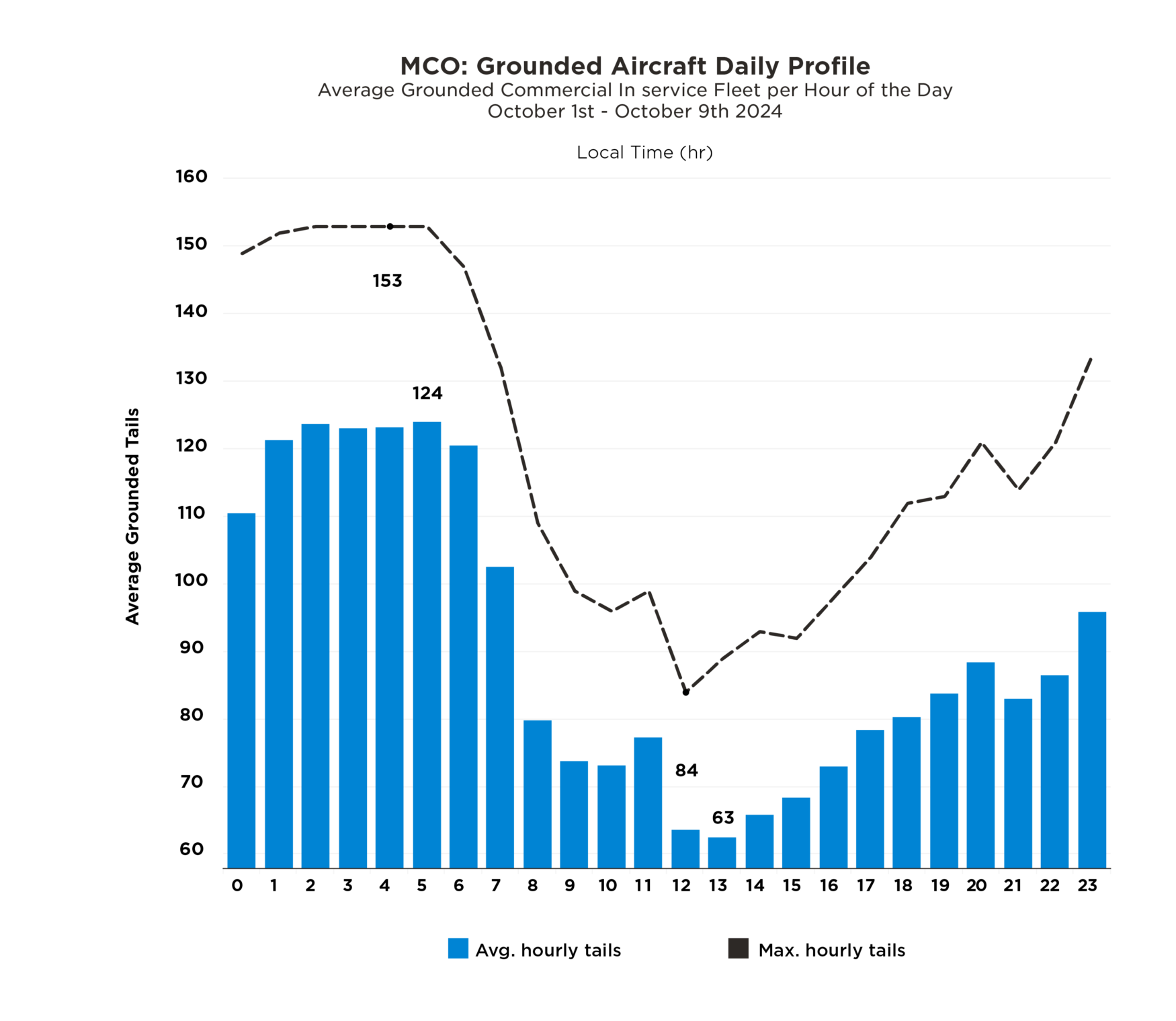
    Daily accumulation profile: Orlando International Airport (MCO), October 2024

    Using a sample fleet of the Cirium-identified in-service commercial fleet (excluding aircraft in storage and general aviation aircraft), we can analyse the ground accumulation profiles of airports worldwide. Florida’s Orlando International Airport (MCO) is an instructive example.

    During the first week of October 2024, MCO displayed a fairly typical daily pattern of aircraft ground accumulation. The average peak accumulation occurred around 05:00 local time, with 124 aircraft on the ground ahead of the first wave of morning flights, peaking at 153 on October 6th. Conversely, the average minimum accumulation was recorded around 13:00 local time, with an average of 63 aircraft on the ground. This lull follows the morning departures and precedes the arrival of afternoon incoming flights.

    Over the course of a typical day, the number of aircraft on the ground fluctuates by a factor of two. By identifying this pattern for each airport and snapshotting the grounded fleet at key times, it becomes possible to build a comprehensive picture of maximum grounded exposure for fleets throughout the year.

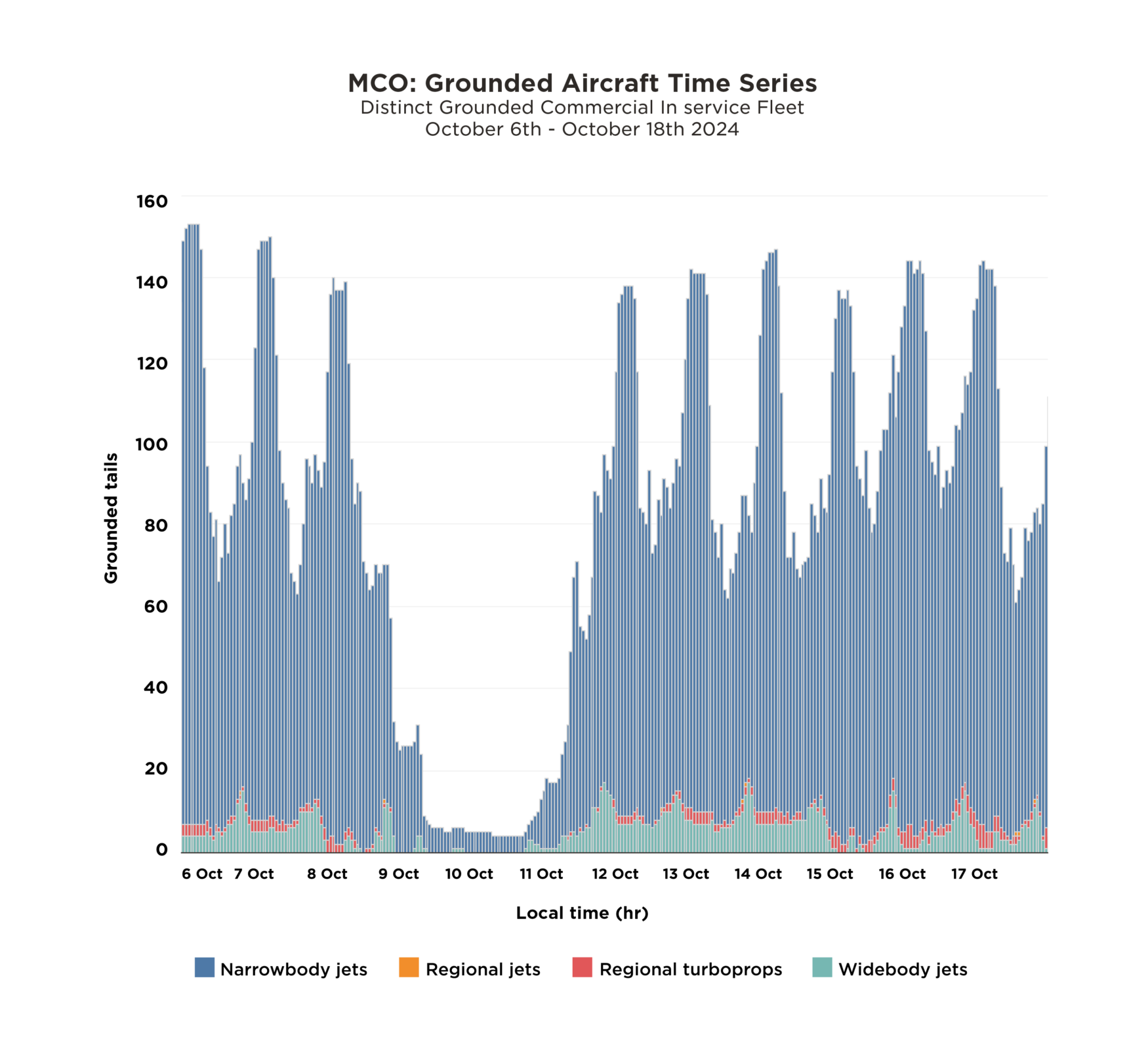
    Changes at MCO, 6th – 18th October 2024

    In early October 2024, Hurricane Milton formed over the Gulf of Mexico and accelerated towards Central Florida. On October 7th, Orlando International Airport announced commercial operations would cease on the 9th.

     
    A significant number of aircraft and almost all widebody jets were moved away from MCO in preparation for the storm. The rhythmic daily profile described above disintegrated as normal commercial operations came to a halt.

    However, a small population of aircraft remained at MCO as it closed during the storm. Approximately 8-10 narrowbody jets stayed at the airport as the hurricane passed through. Despite some minor damage to facilities, the airport reopened to arrivals on the evening of 10th October, and aircraft quickly returned. Full commercial passenger operations resumed the next day and the daily ground accumulation profile returned to normal one day later on the 12th.

    Answering ‘What Ifs’ With Data

    The profiling data for MCO serves as just one example of how Cirium’s Tracked Utilization and Ground Accumulation data capabilities can be leveraged to monitor fleet activity. Many questions can be answered with this data: what aircraft are on the ground right now? Which airports accumulate the highest fleet exposure? What does a worst-case exposure scenario look like at a particular airport?

    Additionally, what proportion of an airline or lessor’s fleet is grounded at any point in time? How do they typically react during anomalous situations? And whose aircraft are on the ground at a given airport right now?

    This article was originally published in Cirium’s Aviation Data in Insurance report. For more insights and analysis into the evolving role of data in aviation insurance, read the full report.

  • South Side Story – Southeast Asian Airlines’ Stalled Growth

    Cirium Ascend Consultancy is trusted by clients across the aviation industry to provide accurate, timely, and insightful aircraft appraisals. The team provides the valuations and analysis the industry relies on to understand the market outlook, evaluate risks and identify opportunities.

    Discover the team’s industry reports & market commentaries. Read their latest expert analysis, viewpoints and updates on Thought Cloud.

    Thomas Kaplan Senior Valuations Analyst, ISTAT Appraiser
    Thomas Kaplan Senior Valuations Analyst, ISTAT Appraiser

    Thomas Kaplan, Senior Valuations Consultant, Cirium Ascend Consultancy

    News that AirAsia had signed for up to 70 A321XLRs earlier this month certainly raised eyebrows. An airline that already has such a large backlog, and which is still emerging from restructuring, should not, on the face of it, be adding more orders. Reading beyond the headlines, however, the 70 A321XLRs are only commitments, not firm orders. AirAsia Group’s firm orderbook stands at 402 aircraft, all A321neos (including 20 XLRs) save for 15 A330neos. Its in-service passenger fleet comprises only 219 aircraft (mostly A320-family jets, plus 24 A330neos), which is still fewer than the 240+ it was operating in 2019.

    In 2015, we prepared a slide deck showing the airlines in Asia-Pacific that had orderbooks far larger than their in-service fleets. Two airlines were outliers: Lion Air and AirAsia. Our message at the time was these airlines had managed double-digit growth rates in the past and it was theoretically possible for them to absorb their orderbooks if they managed to continue the same growth trend.

    There were reasons to be optimistic about Southeast Asia’s air travel market. The 640 million people spread across islands and narrow peninsulas were getting richer and they’d sooner or later take a flight. Tourism was booming, and it seemed Chinese tourists would provide an endless source of demand. The ultra low-cost carrier (ULCC) model applied by AirAsia and Lion Air was seen as the best way to capture and drive that growth.

    Ultimately, the story of fast-paced growth was not to last. Economic and geopolitical factors along with the competitive dynamics of a ULCC turf war all contributed to a decade of slowed growth.

    The chart below shows the compound annual growth rate of the in-service narrowbody passenger jet fleet of Southeast Asian airlines with the largest orderbooks, compared with the region’s overall fleet growth. Looking at five-year periods (but shifting 2020 to 2019 in order to isolate pre-pandemic figures), we can see 2005-2015 was a time of very rapid growth for AirAsia and Lion Air with sustained periods of over 20% annual growth. The Southeast Asian fleet also grew at around 10% per year throughout that decade.

    The period of 2015-2019 brought a marked reduction, to single-digit levels, with AirAsia’s narrowbody fleet growing at the same pace as the rest of the region’s fleets. VietJet, which was Vietnam’s ULCC, tripled in size from 24 to 76 aircraft, but added fewer aircraft than Lion Air did and only slightly more than AirAsia.

    Since 2019, growth has been a struggle for all these players. Over the past six years, the Southeast Asian narrowbody jet fleet actually shrunk at a rate of 1% per year, and the highest ULCC compound annual growth rate was VietJet’s 3%, a far cry from the >20% the region’s high-flyers had achieved in the past.  

    Filters: Narrowbody jets, passenger usage, years calculated as 1 July, company category Airlines. Southeast Asia is defined as: Brunei, Cambodia, East Timor, Indonesia, Laos, Malaysia, Myanmar, Philippines, Singapore, Thailand, Vietnam.
    Source: Cirium Fleets Analyzer

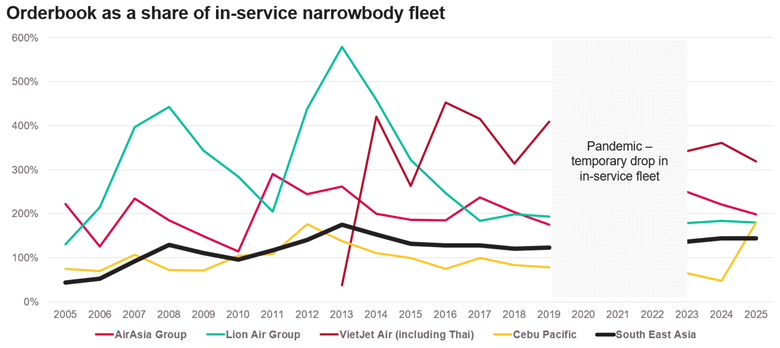
    The stalled growth raises questions about the remaining substantial orderbook. Southeast Asian Airlines have 1,366 narrowbody passenger jets on order, representing 144% of the current in-service fleet. By comparison, the world’s backlog share of in-service narrowbody fleet is only 66%.  Large Southeast Asian ULCCs’ backlog can be 180% to over 300% of their in-service fleets, which are about the same level as they were 10 years ago. The chart below shows this, while omitting the pandemic years in which the temporary parking of aircraft led to a small in-service fleet, artificially inflating orderbook share.

    Filters: Narrowbody jets, passenger usage, years calculated as 1 July, company category Airlines. Southeast Asia is defined as: Brunei, Cambodia, East Timor, Indonesia, Laos, Malaysia, Myanmar, Philippines, Singapore, Thailand, Vietnam.
    Source: Cirium Fleets Analyzer

    Southeast Asian airlines are not taking deliveries fast enough to make a dent in their orderbooks and bring them back to stable levels. Supply chain issues that have been plaguing the industry are partially to blame, but the slowing fleet growth began before the pandemic and the Max grounding. Southeast Asia’s peak for passenger narrowbody jet deliveries was back in 2014 at 126. That is more than has been delivered since the start of 2020.

    A replacement cycle rather than a growth cycle may finally drive deliveries, but there are problems with orders placed so far in the past. AirAsia placed a massive order for 200 A320neos back in 2011. To date, only 55 A320neo family aircraft have been delivered to the group. It may have received a good deal from Airbus at the time, but what does 14+ years of escalation do to delivery pricing? Orders were likely renegotiated during the pandemic as the group also went through general restructuring, but escalation continues to increase the eventual delivery pricing.

    Southeast Asia is not the only place with a very large narrowbody jet orderbook as a share of in-service fleets. India, Saudi Arabia and Hungary (home to Wizz Air) stand out with orderbook shares at over 200%. It can be argued these have growth potential in different ways, but the ULCCs of Southeast Asia appear to have over-ordered given the trend of the last decade.

    This does not risk causing global oversupply, as OEMs cannot deliver fast enough to meet the global demand in any case. However, the backlog increases the risk for those airlines with growing liabilities in terms of escalating delivery pricing in an ultra-competitive market which appears not to be growing as fast as their ambitions.

  • Is Commercial Aviation Cruising or Climbing?

    Commercial aviation faces a complex landscape in 2025, showing clear momentum while facing new challenges that hold the potential to reshape the sector’s trajectory.

    In Commercial aviation in 2025: cruising or climbing?, MUFG’s Head of Aviation Research joined Cirium Ascend Consultancy’s Max Kingsley-Jones and Sofia Zoidou to explore the key factors shaping the industry’s path forward. In a lively and wide-ranging discussion, they shared data, insights and perspectives on commercial aviation’s outlook in the near-term and beyond.

    Tariffs Create Industry-Wide Uncertainty

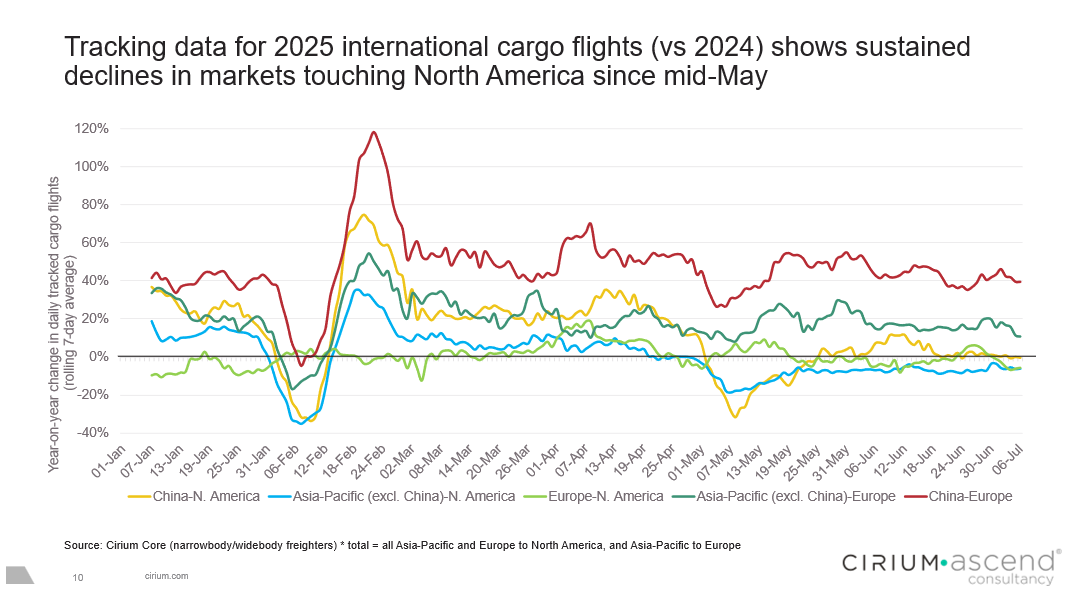
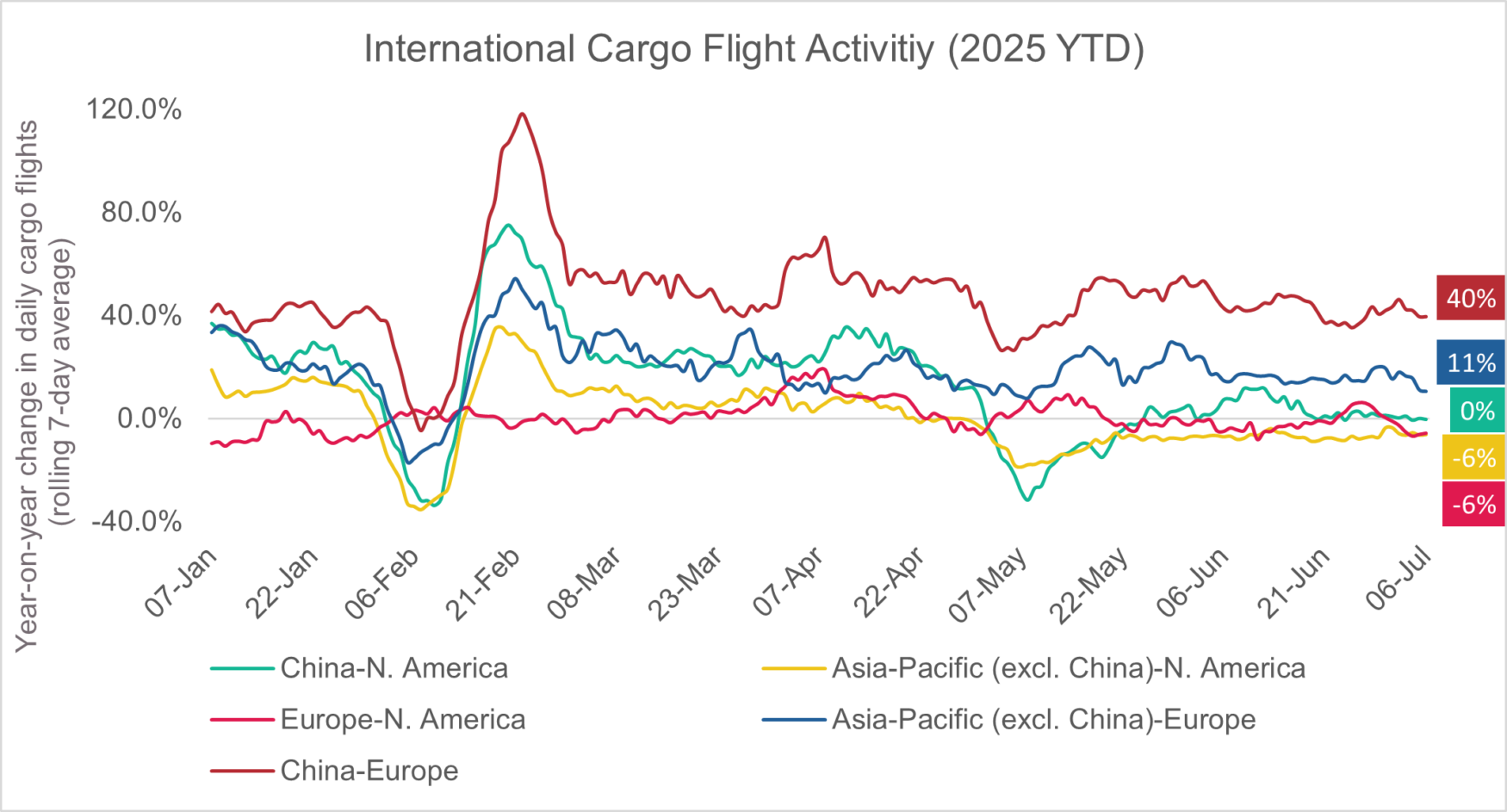
    Trade tensions dominated much of the discussion, with tariffs emerging as a significant and wide-ranging risk factor. Max Kingsley-Jones emphasized that “tariffs pose a risk to all the parameters, be it demand, supply, and also to aircraft values.” He pointed to slowing demand for cargo already showing in tracking data, with international cargo flights demonstrating a sustained year-on-year decline since mid-May in markets touching North America.

    On the risk to aircraft values, Max explained that new aircraft values are unlikely to increase due to the tariff themselves, as this ‘tax’ is not an intrinsic part of the asset’s value. However, if tariffs cause a reduction in new aircraft deliveries, that will further tighten supply and increase positive pressure on secondary market values and lease rates.

    The ripple effects of tariffs will extend beyond manufacturers. Simon Finn highlighted aviation’s unique vulnerability, noting “it’s difficult to think of another industry that’s more globalised than aviation.” He pointed to how the industry’s interconnectedness leads tariff impacts to cascade throughout the supply chain, forcing manufacturers to determine what is passed onto the customer, and if they can’t, how to absorb the costs themselves.

    Production Recovery Faces Continued Delays

    Despite ongoing efforts to scale production, original equipment manufacturers (OEMs) remain behind their pre-pandemic output levels. The industry continues to grapple with supply chain constraints that have pushed full recovery timelines from 2025 to 2026.

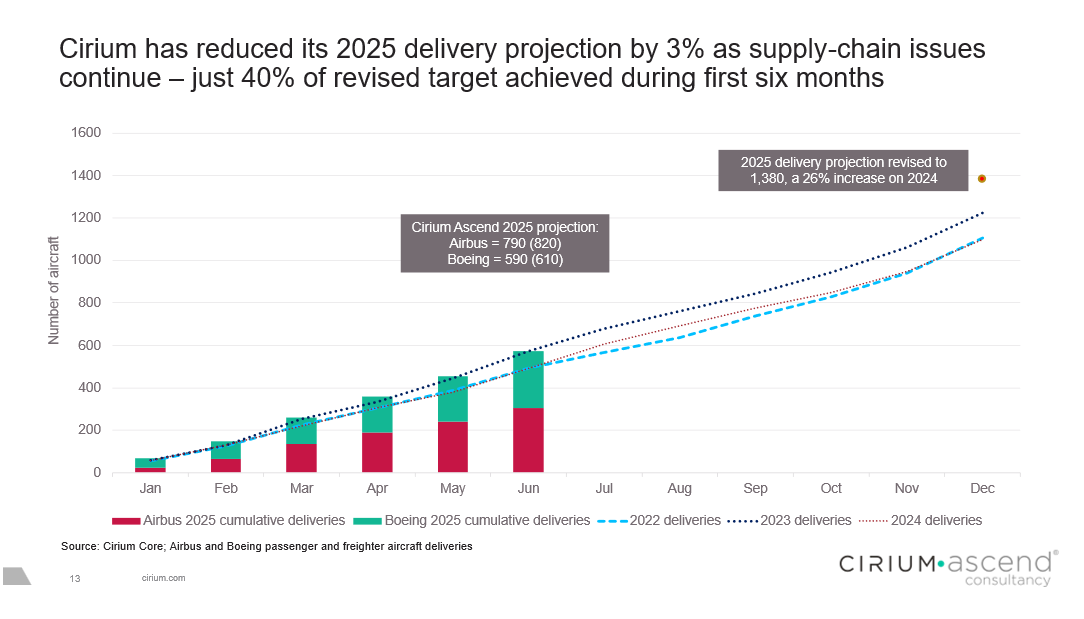
    Current projections show the challenge ahead. Max noted that manufacturers “are still going to be behind in 2025,” compared to their stated targets, with much depending on supply chain. Cirium recently reduced its 2025 delivery projection by 3% as these issues persist, with only 40% of the revised target achieved during the first six months.

    Airbus faces particular scrutiny in meeting delivery targets. The company delivered 232 A320neo family aircraft in the first half of 2025, representing about 38% of the full-year forecast. Engine availability remains a bottleneck, with approximately 40 additional aircraft ready for delivery once their CFM LEAP engines arrive.

    Boeing’s recovery trajectory appears more promising, though both manufacturers must navigate ongoing supply chain complexities that continue to constrain industry-wide production capacity.

    Engine Supply Chain Bottlenecks Persist

    Engine availability has emerged as a critical constraint on aircraft deliveries. CFM’s LEAP engines power a significant portion of new aircraft, but supply limitations have created delivery delays across the industry.

    The data reveals the scope of this challenge: about 40 aircraft remain as “gliders” awaiting their LEAP engines before delivery completion. CFM accounted for 54% of total A320neo family deliveries in the first half of 2025, highlighting both the engine’s market dominance and the bottleneck’s industry-wide impact.

    These engine-related delays contribute to the broader production constraints facing manufacturers as they work to meet airline demand and fulfil existing order backlogs.

    Future Aircraft Development Accelerates Despite Current Challenges

    Looking ahead, the industry shows signs of preparation for the next generation of commercial aircraft. Both manufacturers and suppliers are advancing technologies that will define aviation’s future, even as current production faces constraints.

    Airbus continues developing its next-generation single-aisle aircraft, targeting a launch by 2030 for delivery around 2038. The CFM RISE open-fan engine technology, showcased as a potential powerplant for this program, represents significant advancement in propulsion efficiency.

    Simon expressed optimism about engine technology readiness, stating it’s “fair and reasonable to expect the engine manufacturers to push their technologies and have something ready for the early 2030s.”

    Market dynamics also support future growth. Airbus and Boeing combined net orders in the first half of 2025 exceeded 1,000, approaching the full-year 2024 total of 1,171. This strong order momentum, boosted by 300 orders added in June alone, indicates sustained airline confidence in long-term demand recovery.

    The emergence of new competitors adds another dimension to future market dynamics. Simon suggested China’s political will to produce an indigenous commercial aircraft may see Comac emerge as a major manufacturer in the long term. He pointed to favourable historic parallels with Airbus’s emergence, but cautioned this may take a decade or more to materialize. “Comac is in a powerful position, but there’s a lot of work to do”.

    Watch the Webinar on Demand

    To access the full presentation, including analysis of the capacity and emission trends, the Paris Air Show and more, register to watch the webinar.

  • Middle East Aviation: Key Market Insights From Latest Outlook

    The Middle East aviation sector continues to outpace global growth trajectories, with compelling data revealing the region’s expanding influence on international aviation markets. Recent analysis of regional performance metrics demonstrates sustained momentum across multiple indicators, positioning Middle Eastern carriers as significant drivers of global aviation recovery and future expansion.

    Watch the Middle East Market Outlook

    Market Share and Growth Trajectory

    The Middle East represents approximately 6% of the global aviation market by multiple measures. According to Cirium’s global Schedules data, the region accounts for 6.1% of total global scheduled capacity, while the passenger fleet in service represents 6.2% of the worldwide total.

    However, the region’s growth rate significantly outpaces global averages. Since 2010, Middle Eastern capacity has grown at 5.7% compound annually, compared to the global rate of 4%. This growth momentum continues into 2025, with Middle East international traffic expanding at 6% for the first five months of the year, ahead of the total market’s 5.8% growth.

    Fleet Development and Investment Pipeline

    The region’s fleet expansion tells a particularly compelling story. Middle Eastern single-aisle fleet development has surged more than 35% since July 2019, dramatically outperforming the global development rate of approximately 15%. Twin-aisle passenger fleets have similarly outperformed, growing nearly 3% above 2019 levels while global twin-aisle fleets remain around 2% lower.

    Three major markets – UAE, Saudi Arabia, and Qatar – each maintain aircraft backlogs exceeding 100% of their current installed fleets. The total regional backlog encompasses approximately 1,615 aircraft scheduled for delivery through 2035, representing roughly $200 billion in 2025 economic conditions.

    Financial Performance Strength

    Middle Eastern airlines have demonstrated exceptional profitability recovery. While representing 6% of global fleet capacity, the region contributes more than 12% of total global airline profits. IATA projects the region will generate $5-6 billion of the estimated $36 billion in global airline net profits for 2025.

    This financial strength has enhanced the region’s creditworthiness with lessors. Operating lessors manage approximately 50% of single-aisle aircraft and 40% of twin-aisle aircraft in the region, with the higher twin-aisle leasing percentage indicating lessor confidence in Middle Eastern airline credit quality.

    Environmental Considerations

    The region faces sustainability challenges that require attention. Despite representing 6% of the global fleet, Middle Eastern airlines generate approximately 10% of global aviation emissions, primarily from twin-aisle operations. This intensity reflects the region’s role as a major connecting hub for long-haul international travel.

    As the industry moves toward net-zero commitments, replacing current-generation aircraft with more fuel-efficient models like the 777-9, 787, A350, and A320neo family will be crucial for reducing the region’s emissions intensity.

    Looking Ahead

    Cirium’s Schedules data projects Middle Eastern regional capacity growth between 5-10% on a year-over-year basis through the remainder of 2025, maintaining the region’s position above global growth trends. This projection aligns with the substantial aircraft delivery pipeline required to absorb the significant backlog.

    The region has also established itself as a growing center for aircraft leasing, with two companies now ranking among the world’s 25 largest lessors by fleet value. This development reflects recognition of operating leasing as an efficient aircraft financing method and suggests continued growth in this sector.

    These insights underscore the region’s continuing evolution as a critical global aviation hub, supported by strong financial performance, significant investment commitments, and strategic positioning in international connectivity markets.

    Watch the Middle East Market Outlook in full.

  • Emerging Freighter Market Dynamics in H1 2025

    Cirium Ascend Consultancy is trusted by clients across the aviation industry to provide accurate, timely, and insightful aircraft appraisals. The team provides the valuations and analysis the industry relies on to understand the market outlook, evaluate risks and identify opportunities.

    Discover the team’s industry reports & market commentaries. Read their latest expert analysis, viewpoints and updates on Thought Cloud.

    Yinan-Qin

    Yinan Qin, Senior Aviation Analyst, Cirium Ascend Consultancy

    Traffic and Yields

    Based on Cirium’s year-to-date cargo flight data for 2025 across the major cargo traffic lanes, we observed a sharp decline in flight activity around February, coinciding with the announcement of new US tariffs. However, flights rebounded quickly as carriers employed front-loading strategies to mitigate tariff impacts before the initially announced effective date in May 2025. The latest data indicates that routes connecting to North America have been the most significantly affected. Unlike passenger flights, cargo operations are more flexible and responsive to market changes. As such, we anticipate continued in-time adjustments in cargo flight schedules in response to tariff developments. However, when and how future tariff issues will be resolved is still unclear at present.

    Note: (narrowbody/widebody freighters) * total = all Asia-Pacific and Europe to North America, and Asia-Pacific to Europe
    Source: Cirium Core

    Global air cargo yields, which are also highly sensitive to market dynamics, were volatile from 2020 to 2022 but have stabilised since late 2023, staying about 33% above pre-Covid levels. On major long-haul routes like Europe-North America, rates are back to pre-pandemic levels, while Asia-Europe and Asia-North America rates remain elevated due to capacity constraints and geopolitical tensions. While the full impact of US tariffs on yields remains to be seen, a return to pre-Covid pricing levels appears unlikely in the near term.

    Freighter Fleet Overview

    The global freighter fleet has grown steadily over the past two decades. As of mid-2025, there were over 1,400 widebody and more than 800 narrowbody freighters in service. Growth in widebody freighters has been driven by new factory-built freighters, Passenger-to-Freighter (P2F) conversions, and reactivations of aging widebody freighters during the pandemic. Narrowbody freighters also surged in popularity but now face an oversupply issue, with roughly 26% in storage compared to 13% for widebodies — both figures remain above pre-pandemic levels.

    A closer examination of the stored fleet reveals that a higher proportion of inactive narrowbody freighters, particularly the Boeing 737-800 and Airbus A321, are owned by lessors compared with widebody freighters. Many of the parked narrowbody freighters are awaiting conversion or struggling to secure lessees that would be willing to pay a rent premium for the high feedstock and conversion costs. Additionally, the overheating engine leasing market may also encourage lessors to lease engines out separately to obtain better premiums than leasing the entire freighter.

    Note: Widebody and Narrowbody Freighters only
    Source: Cirium Fleets Analyzer

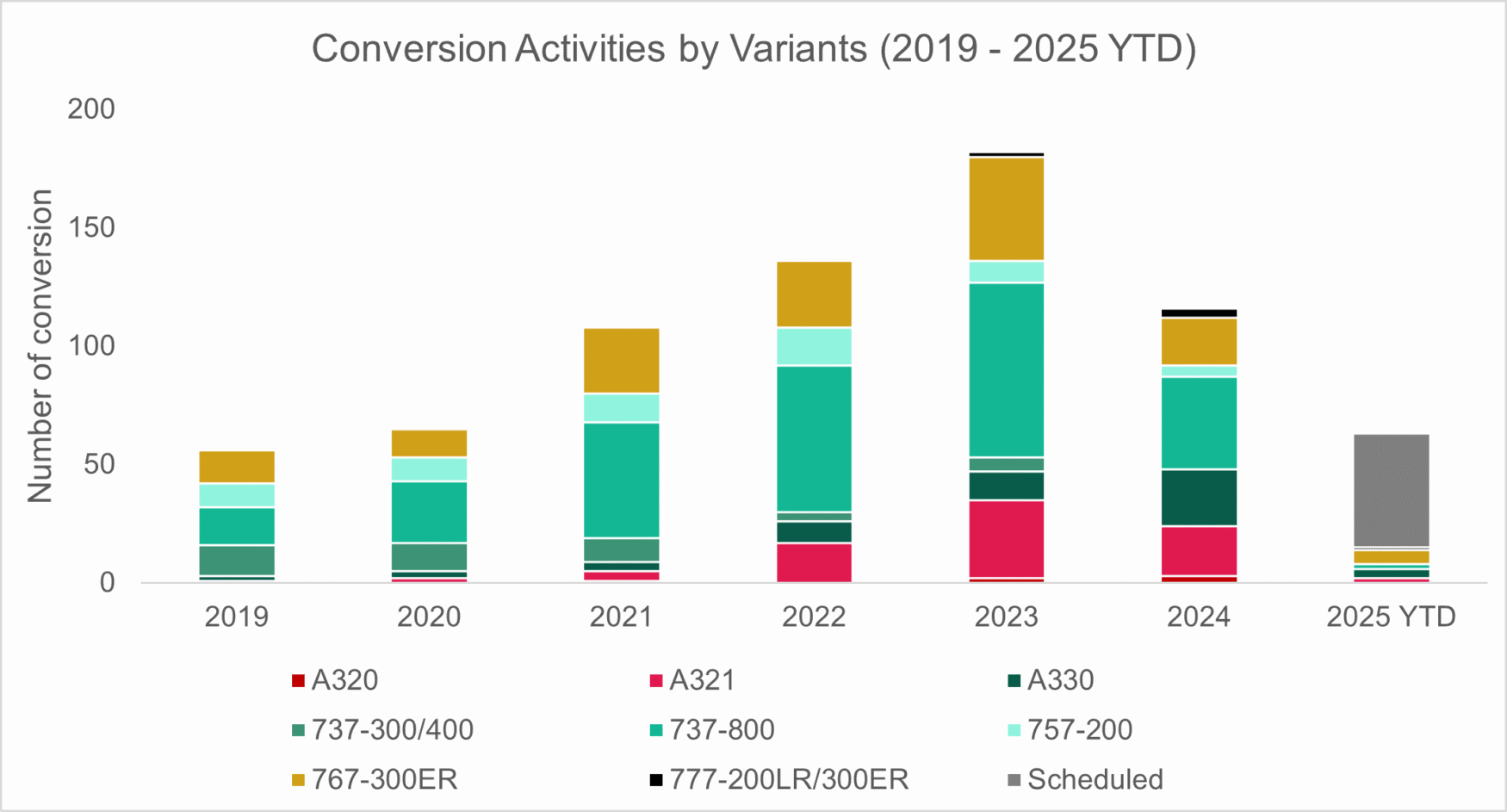
    P2F conversion activity slowed significantly this year, especially for the Boeing 737-800, with only 15 conversions completed. About 48 aircraft, mostly widebody freighters, are scheduled for conversion in 2025. The conversion backlog has dropped to around 320 units, mainly comprising the Boeing 737-800, Airbus A321, Airbus A330 and Boeing 777-300ER. However, some backlog aircraft may return to passenger service due to rising conversion costs, weakening freighter demand, and supplemental type certificate (STC) approval delays.

    Note: Widebody and Narrowbody Freighters only
    Source: Cirium Fleets Analyzer

    On the factory-built freighter side, about 25 new freighter orders have been placed so far in 2025, mostly for the Airbus A350F and Boeing 777-200LRF. Qatar Airways has placed the largest order for the upcoming 777-8F, while the Airbus A350F has attracted a broader customer base, including lessors. With production of the Boeing 767 and 777 set to end in 2027 and current order slots likely sold out, the market may face a potential supply shortage. Ongoing OEM delivery delays and uncertainty surrounding Boeing 777X certification could further contribute to the anticipated production gap in the short to medium term.

    Source: Cirium Core; Press Release

    An analysis of Cirium Market Values of selected key 20-year-old freighters indicates that Market Values have remained resilient over time, particularly for widebody freighters. The only exception has been the Boeing 747-400F, whose decline in value is largely due to its Market Value now being primarily driven by engine. A similar trend is observed in the leasing market. Lease Rates have remained generally robust following the volatility experienced during the pandemic.

    The sustained demand for widebody freighters, combined with continued delays in the delivery of new factory-built freighter, slow progress in the certification of the Boeing 777 P2F conversion programme, rising maintenance costs, and limited MRO slots are all contributing to the resilience of current Market Values. These factors are expected to continue placing upward pressure on freighter valuations until supply-side constraints ease. As such, we anticipate that Market Values will likely remain robust in the near term.

    Note: Value as of June 2025
    Source: Cirium Valuation Analyzer

    In conclusion, the global air cargo market is expected to remain supply-constrained in the near future, especially for widebody capacity. Despite North America’s status as a key air cargo market segment, routes to North America face the most immediate uncertainty due to tariffs, broader structural factors – including limited production capacity, slowing P2F conversions and elevated yield levels – suggesting a prolonged period of moderate demand and a mix of continued tight supply (widebodies) and gradually decreasing oversupply in the short-to-medium term.

  • AI in Travel Tech: Insights From Cirium’s First Networking Event

    As artificial intelligence and automation reshape how we experience travel, industry leaders are gathering to share insights, forge connections, and chart the path forward. Cirium recently hosted its first travel tech networking event, bringing together key voices from across the sector to explore how AI is transforming the traveler experience.

    Held strategically after the Business Travel Show at ExCeL London, this inaugural event created the perfect opportunity for meaningful dialogue between industry peers. The evening combined networking with substantive discussion, featuring an expert panel that dove deep into AI’s current applications and future potential in aviation and travel.

    Setting the Stage for Innovation

    Leanne Mehmet, Sales Manager for Cirium’s Traveller Services Europe, opened the evening by emphasizing the importance of bringing together industry leaders to share knowledge and build relationships. The timing couldn’t have been more relevant, with AI adoption accelerating across every aspect of travel operations.

    The event’s format balanced structured learning with organic networking, allowing attendees to engage with both formal presentations and informal conversations. This approach reflected a broader industry trend toward collaborative problem-solving, where companies share insights to advance the entire sector.

    The AI Panel: Real-world Applications and Future Vision

    The evening’s centerpiece was a panel discussion moderated by Cirium Account Manager Poorva Baderia. The conversation featured three industry experts: Alex Lawrence from Collinson, Micha Van Eijk from Emburse, and Kevin O’Toole from Cirium. Each brought unique perspectives on how AI is currently being implemented and where the technology is heading.

    Making Travel Seamless Through Automation

    Micha Van Eijk delivered what many considered the evening’s most memorable insight: “Automation is all about taking friction from the travellers.” He expanded on this concept by noting, “When you don’t know things went wrong, that is when automation has succeeded.”

    This perspective captures the essence of effective AI implementation in travel. The goal isn’t just to automate processes, but to create such smooth operations that travelers never experience the problems that automation prevents. When flights are rerouted seamlessly, when rebooking happens automatically, and when compensation is processed without traveler intervention, AI has achieved its purpose.

    This approach represents a fundamental shift from reactive customer service to proactive problem prevention. Rather than waiting for travelers to report issues, AI systems can identify and resolve problems before they impact the passenger experience.

    Data-driven Decision Making Without Human Intervention

    Alex Lawrence from Collinson provided concrete examples of how companies are operationalizing AI insights. He explained how Collinson “ingests Cirium’s data in order to push benefits to customers” when disruptions occur, whether through delays or irregular operations.

    Lawrence emphasized that effective automation creates “the environment where we make data driven decisions without having to get involved.” This hands-off approach allows companies to respond to disruptions at scale, processing thousands of flight changes and passenger impacts simultaneously.

    The key to this success lies in the quality and integration of data sources. When systems can access real-time flight information, passenger preferences, and available alternatives, they can make optimal decisions faster than any human operator could manage.

    The Foundation: Unified Data Infrastructure

    Kevin O’Toole from Cirium addressed the fundamental challenge that makes AI necessary in aviation: data fragmentation. His observation that “If the data was already joined up together, then we wouldn’t be here” highlights the core problem that AI solutions are designed to solve.

    O’Toole used this point to showcase Cirium’s Sky Warehouse, which he described as “automation in aviation absolutely personified.” This platform unifies schedules, flight status, CO₂ emissions data, fleet information, fares, weather, and more into a single, standardized, time-aligned resource.

    This unified approach represents the infrastructure layer that enables effective AI applications. Without clean, integrated data, AI systems cannot make reliable decisions or provide consistent user experiences. Sky Warehouse demonstrates how technology companies are solving this foundational challenge.

    Current State of AI Adoption

    The panel discussion revealed that AI in travel technology has moved well beyond experimental phases. Companies are actively using AI for:

    Disruption Management: Automatically rerouting passengers, rebooking flights, and arranging compensation when irregularities occur.

    Predictive Analytics: Using historical data and real-time information to anticipate problems before they affect travelers.

    Personalized Service Delivery: Tailoring offers, communications, and support based on individual traveler profiles and preferences.

    Operational Efficiency: Streamlining internal processes to reduce costs and improve service delivery speed.

    These applications demonstrate that AI has become integral to competitive operations rather than a future possibility.

    Looking Ahead: The Evolution of Travel Experience

    The insights shared point to several key trends shaping the future of travel technology:

    Invisible Automation: The most successful AI implementations will be those that travelers never notice because problems are prevented rather than solved after they occur.

    Integrated Ecosystems: Companies that can provide unified data and seamless system integration will enable better AI applications across the entire travel experience.

    Proactive Service Models: The industry is shifting from reactive customer service to predictive problem prevention, fundamentally changing how companies interact with travelers.

    Collaborative Innovation: Partnerships between data providers, technology companies, and service providers are becoming essential for delivering comprehensive AI solutions.

    The Path Forward for Travel Technology

    The focus on removing friction from the traveler experience, combined with the emphasis on data-driven decision making, shows how companies are balancing technological capability with user needs.

    As AI continues to evolve, conversations like this will play an increasingly important role in shaping industry standards and best practices. The insights shared by experts like Van Eijk, Lawrence, and O’Toole provide a roadmap for companies looking to implement AI solutions effectively.

    The future of travel technology lies not just in individual company innovations, but in the collaborative efforts of an entire industry working together to create better experiences for travelers worldwide.

    For Cirium, this event marked a strategic commitment to fostering meaningful connections across the travel tech landscape. These relationships enable the knowledge sharing and collaboration that drive industry-wide innovation. the traveler experience and optimise travel management.

  • Five Things We Learnt From the 2025 Paris Air Show

    Cirium Ascend Consultancy is trusted by clients across the aviation industry to provide accurate, timely, and insightful aircraft appraisals. The team provides the valuations and analysis the industry relies on to understand the market outlook, evaluate risks and identify opportunities.

    Discover the team’s industry reports & market commentaries. Read their latest expert analysis, viewpoints and updates on Thought Cloud.

    Max Kingsley-Jones Valuations Manager, Cirium Ascend Consultancy


    As ever, there was a lot going on around the Le Bourget chalets and halls, but here are some key takeaways:

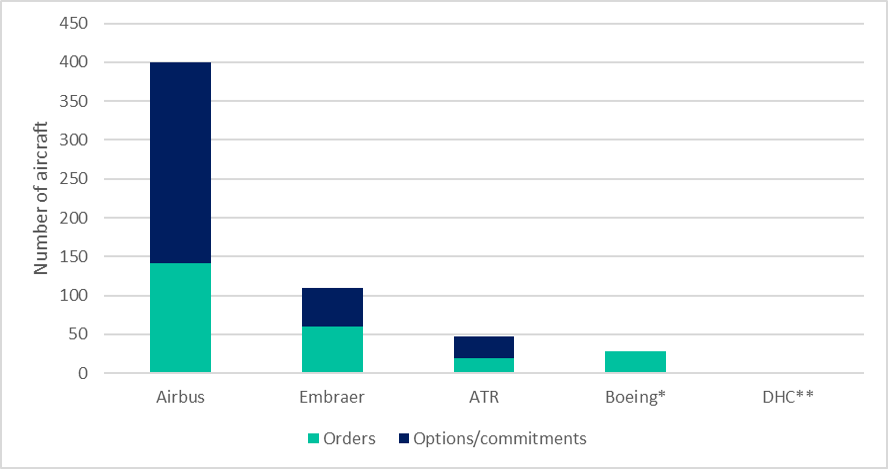
    Airbus’s home run: The “home” OEM made the most noise as is usually the case, announcing some 400 orders and commitments during the show. Boeing, which has traditionally played down its participation in the so-called air-show “order race”, was intentionally quiet this time amid the Air India 787 tragedy which occurred just prior to Le Bourget. Despite Boeing’s low-key approach, total announcements at the show for commercial aircraft amounted to almost 600 orders and commitments.  The show sales tally might have been even higher had anticipated announcements materialised from AirAsia (for “100” small single-aisles – A220s or perhaps E-Jet E2s) and Turkish Airlines (long-expected large order for 737s and Boeing twin-aisles).

    Paris 2025 Commercial Aircraft Orders and Commitments

    Source: Cirium Fleets Analyzer/OEMs (*ANA order, not announced by Boeing; ** two DHC orders)

    Power play: The CFM RISE open-fan powerplant mock-up was a crowd pleaser on Safran’s stand in Le Bourget’s main exhibition hall. The concept is in the news as a potential front-runner to propel Airbus’s proposed next-generation single-aisle. With Airbus saying it aims to launch the new aircraft by the end of this decade, the open-fan architecture of RISE alongside is under evaluation alongside advanced shrouded-fan design concepts from rival engine OEMs. To that point, Pratt & Whitney outlined the progress of its work with fellow RTX company Collins to ground-test and then fly a hybrid-electric version of the A320neo’s PW1100G. Meanwhile the P&W Canada division disclosed that it is working closely with Airbus’s regional arm ATR to study a hybrid-electric powered turboprop derivative, in what is effectively a reboot of the regional aircraft OEM’s Evo project. This reduced-emissions design had previously been slated for a 2030 debut, but the target now is around 2035.

    Big twin: The A350-1000 had a particularly strong show, securing a total of 35 orders and 25 commitments from two clients – Riyadh Air and Starlux Airlines. Sales of the largest A350 variant have been solid this year to date, with the 62 announced so far accounting for two-thirds of the type’s 2025 tally. The variant now holds for almost 40% of the firm backlog for A350 passenger models, which totals around 700 orders. Talk of an A350 stretch has restarted, after previously being mooted a decade ago as the “A350-2000”. A larger derivative of the R-R Trent XWB-powered twinjet, which would pitch Airbus’s biggest aircraft directly at the 777-9, could open the door to an alternative engine option. This could perhaps be an advanced derivative of the Trent, or even a solution from Cincinnati. But would GE have the appetite to support a rival to the GE9X-powered Boeing?

    Regional resurgence: ATR and Embraer announced almost 160 orders and commitments between them. US-based public charter operator JSX placed commitments with ATR for 15 firm and 10 options in a deal touted as a potential signal of a turboprop revival in the USA. But there have already been several false dawns in that regard. Meanwhile Embraer’s ongoing success with its E175 was underlined by a deal from SkyWest Airlines for up to 110 aircraft. The OEM has secured 150 orders since the start of last year for the GE CF34-powered variant and said it expected this market would “continue for many years”. But Embraer was extremely disappointed to lose out to Airbus in a crucial campaign at LOT for small single-aisles, which signed for up to 84 A220s to replace its E-Jet E1s. The Brazilian OEM hinted that “geopolitics” may have helped sway the decision away from the E-Jet E2 in Toulouse’s favour.

    Supply snags: Despite deliveries being 5% down year-on-year in the first five months of 2025 (243 vs 258), Airbus restated its intention to raise shipments this year by around 50 aircraft to at least 820 units. Commercial chief Christian Scherer pointed to “almost 40 gliders” among the A320neo family production system where aircraft have been rolled out but are awaiting powerplants – specifically CFM Leap-1As. “Were it not for those engineless aircraft our delivery performance would be slightly above plan right now,” he said. In the widebody production system, cabin-equipment supply “remains a little bit of a bottleneck”, added Scherer. Meanwhile, the OEM is gearing up to implement the take-over of former Spirit AeroSystems production sites as part of the US primary supplier’s restructuring and merger with Boeing.

  • Cirium Introduces First AI-Powered Solution for On-Time Performance Analysis

    Jeremy Bowen, Chief Executive Officer, Cirium

    London, 24 June 2025: Cirium, the global leader in aviation analytics, has launched OTP AI, a groundbreaking generative AI-powered solution designed to transform how airlines and airports analyze and enhance their On-Time Performance (OTP). This innovative tool addresses long-standing challenges in operational efficiency and disruption management, offering faster, smarter, and more proactive decision-making capabilities.

    OTP AI sets itself apart by addressing the specific challenges airlines and airports face, such as the time-intensive nature of traditional OTP analysis and the struggle to manage cascading delays caused by factors like weather or technical issues. By using advanced generative AI, the platform transforms complex data into precise insights, enabling operators to identify trends, streamline resources, and make swift decisions that minimize delays and improve the overall passenger experience.

    “Operational disruptions, whether caused by weather, strikes, or unforeseen technical issues, can create a ripple effect across the air travel system,” said Jeremy Bowen, CEO of Cirium. “With OTP AI, we’re equipping the industry with the tools to anticipate these challenges, take swift action, and ultimately deliver a better experience for passengers.”

    A New Standard in Operational Efficiency

    This cutting-edge platform enables aviation stakeholders to move beyond reactive problem-solving to predictive decision-making. Airlines and airports can analyze delay propagation, monitor block times, and assess unplanned disruptions with ease. The tool also supports scenario planning, benchmark analysis, and performance reviews, creating a 360-degree view of operational dynamics.

    For example, an airline experiencing cascading delays due to severe weather can use OTP AI to test and identify possible alternative solutions, minimizing passenger impact and operational costs. Airports could similarly optimize resource allocation, ensuring better alignment with real-time conditions.

    By connecting directly to Cirium Core which includes the OTP data, the solution sets a new standard for accuracy and insight across the aviation value chain.

    Driving Results Across the Aviation Industry

    The launch of OTP AI underscores Cirium’s commitment to driving digital transformation in aviation. Through AI-driven insights, the platform aims to enhance situational awareness, improve operational performance, and support industry players in meeting rising demands for agility and efficiency.

    “Many operational teams today lack the tools to anticipate and mitigate disruptions before they escalate,” Bowen added. “Cirium’s latest solution empowers these teams with data-driven intelligence, enabling them to stay ahead of challenges, reduce delays, and improve decision-making across the board.”

    For more information on Cirium’s OTP AI, visit Cirium.com/OTPAI


    For Cirium media inquiries please contact media@cirium.com

    About Cirium 
    Cirium® is the world’s most trusted source of aviation analytics. The company delivers powerful data and cutting-edge analytics to empower a wide spectrum of industry players. It equips airlines, airports, travel enterprises, aircraft manufacturers, and financial entities with the clarity and intelligence they need to optimize their operations, make informed decisions, and accelerate revenue growth. 

    Cirium® is part of LexisNexis® Risk Solutions, a RELX business, which provides information-based analytics and decision tools for professional and business customers.  The shares of RELX PLC are traded on the London, Amsterdam and New York Stock Exchanges using the following ticker symbols: London: REL; Amsterdam: REN; New York: RELX. 

    For more information, follow Cirium® on LinkedIn or visit cirium.com.

  • China Aviation: Airbus & COMAC Rise, Boeing on the Back Foot

    Cirium Ascend Consultancy is trusted by clients across the aviation industry to provide accurate, timely, and insightful aircraft appraisals. The team provides the valuations and analysis the industry relies on to understand the market outlook, evaluate risks and identify opportunities.

    Discover the team’s industry reports & market commentaries. Read their latest expert analysis, viewpoints and updates on Thought Cloud.

    Yuanfei Zhao (Scott) Aviation Analyst
    Yuanfei Zhao (Scott) Aviation Analyst

    Yuanfei Zhao (Scott), Principal Aviation Analyst, Cirium Ascend Consultancy


    Ongoing geopolitical tensions between China and the United States – exacerbated by sanctions, trade tariffs, and escalating diplomatic frictions – have significantly impacted Boeing’s commercial aircraft business in China. These macro-level challenges, compounded by internal setbacks such as the prolonged 737 Max issues, have severely restricted Boeing’s ability to deliver new jets and secure fresh orders from Chinese carriers.

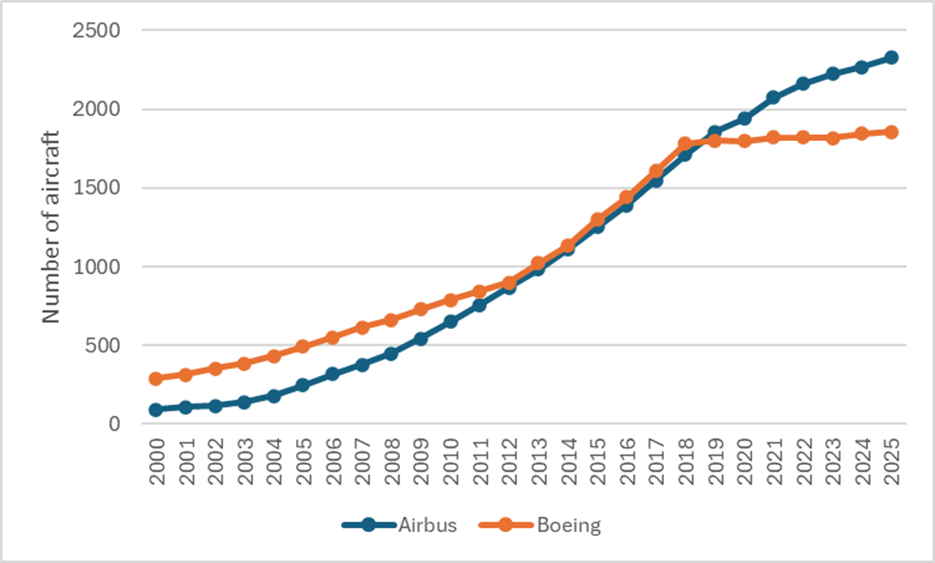
    Against this backdrop, 2019 marked a pivotal turning point in the Chinese aviation market: for the first time, the number of single-aisle and twin-aisle Airbus aircraft surpassed that of Boeing in the region. This lead has continued to grow in subsequent years, reflecting not only evolving commercial preferences but also broader geopolitical shifts influencing airline procurement strategies.

    Chart: Chinese airlines’ in-service and stored fleet trend

    Source: Cirium Core. Data includes in-service and stored single-aisle and twin-aisle passenger and freighter jets

    In early June 2025, reports emerged suggesting that China is preparing to place a major aircraft order with Airbus. While some sources anticipate a commitment of around 300 aircraft, others speculate the total could range between 200 and 500 units, comprising a mix of single-aisle and twin-aisle models. These developments align with an upcoming high-level diplomatic visit to China by key European leaders in July. Industry observers widely expect that a formal purchase agreement may be announced during or shortly after the visit, further reinforcing Europe’s expanding aviation partnership with China.

    If this potential order comes to fruition, it will further widen the market share gap between Airbus and Boeing in China, solidifying Airbus’s position as the leading commercial aircraft supplier in the region.

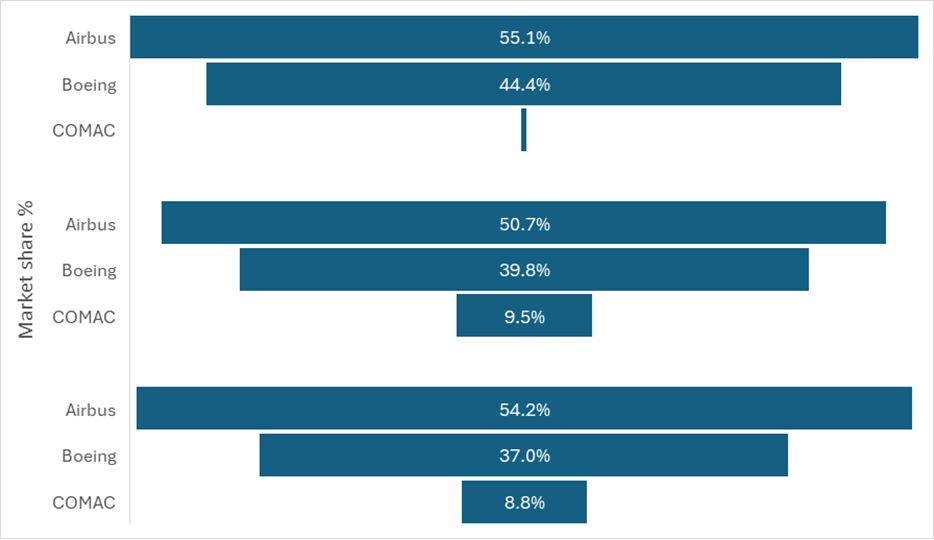
    The accompanying chart below offers a high-level overview of the evolving fleet composition and market dynamics in China, with projected market share changes based on the assumption that all on-order aircraft are delivered. It illustrates three scenarios:

    1. The current in-service and stored fleet operated by Chinese airlines;
    2. The current fleet combined with existing firm aircraft orders; and
    3. The fleet from scenario 2 plus an assumed new Airbus order of 300 single-aisle and 100 twin-aisle aircraft – an average drawn from prevailing market speculation.

    Chart: Chinese fleet share by OEM: scenarios 1, 2 and 3

    Source: Cirium Core. Data includes in-service, stored, and firm orders by airlines for single-aisle and twin-aisle passenger and freighter jets

    It is important to note that this analysis includes only firm orders placed directly by Chinese airlines, excluding those from lessors. The destination and placement of lessor-owned aircraft often fluctuate, making their inclusion uncertain. Additionally, Chinese airlines also have orders that are for unidentified customers by Airbus and Boeing, and these will be additional to this analysis.

    Lessor orders for COMAC aircraft are largely concentrated among Chinese lessors and are expected to be primarily allocated to Chinese airlines in the future. This trend suggests that COMAC’s long-term market share could increase further – alongside anticipated gains for Airbus. Consequently, Boeing’s proportional market share may continue to decline unless there are substantial improvements in its standing within the Chinese market.

    These developments highlight not only a shifting commercial landscape but also the increasingly strategic role that aviation plays in global geopolitics – where aircraft procurement decisions are shaped as much by diplomacy and international alliances as by operational needs and economic considerations.

  • Development of Yuan-Denominated Aircraft Financing Outside China

    Cirium Ascend Consultancy is trusted by clients across the aviation industry to provide accurate, timely, and insightful aircraft appraisals. The team provides the valuations and analysis the industry relies on to understand the market outlook, evaluate risks and identify opportunities.

    Discover the team’s industry reports & market commentaries. Read their latest expert analysis, viewpoints and updates on Thought Cloud.

    Johnny Yung
    Johnny Yung

    Johnny Yung, Senior Aviation Analyst, Cirium Ascend Consultancy


    Aircraft are capital-intensive assets and airlines typically employ a range of financing instruments, including debt issuance, finance leases, and operating leases, to fund their fleet requirements. Recently some operators have begun exploring offshore yuan-denominated financing as an alternative to the conventional US Dollar-based structures. However, adoption outside of China remains limited, with only a few carriers—such as Turkish Airlines and Korean Air—reportedly engaging in such arrangements with AVIC Leasing, CCB Leasing, ICBC Leasing and BOCOM Leasing. Broader uptake among major international airlines is expected to take time.

    What are the strategic and financial motivations behind Turkish Airlines and Korean Air adopting yuan-denominated financing?

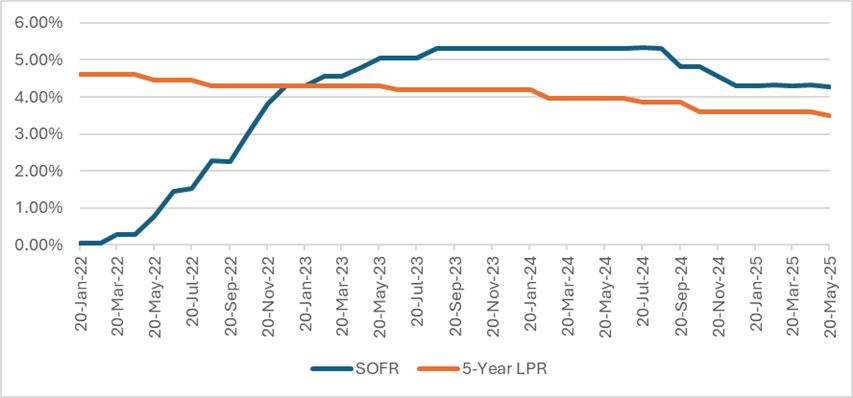
    The interest rate associated with a specific financing arrangement is typically composed of two components: the risk-free rate and the borrower’s risk premium. While the risk premium remains consistent across different financing currencies, the risk-free rate varies depending on the loan tenor and, more critically, the benchmark rate of the chosen currency. When comparing the US Secured Overnight Financing Rate (SOFR) with the People’s Bank of China Loan Prime Rate (LPR), it becomes evident why yuan-denominated financing may offer comparatively lower interest rates.

    Chart 1: The trend of SOFR and 5-Year LPR

    Sources: FOMC, PBOC

    While yuan-denominated financing offers the advantage of lower interest costs, it also introduces potential foreign exchange risk since debt repayments are denominated in yuan, typically not the domestic currency of the airline. Airlines can mitigate this risk by generating yuan revenues.

    According to Cirium FM Traffic data, Korean Air derived approximately USD 470 million for the routes related to China in FY2024. This amount seems adequate to service the debt associated with its yuan-denominated financing for one A350 and one A321neo aircraft. As per Cirium valuations and assuming a 75% loan-to-value, the assets financing requirement here is around USD 162 million.  

    In contrast, Turkish Airlines generated an estimated USD 364 million for China-related routes in FY2024. Although this figure is relatively modest, the airline’s decision to pursue yuan financing for three A350 aircraft is part of a broader strategy to diversify funding sources across multiple currencies. In addition to yuan, Turkish Airlines has secured financing in four other currencies, underscoring its commitment to managing currency risk through diversification.

    Is there potential for increased adoption of yuan-denominated financing in the future?

    Interest rate trend

    According to the Federal Open Market Committee’s (FOMC) most recent projection released in March 2025, the Federal Funds Rate is expected to decline gradually from the current 4.25% to around 3.1% by 2027. As the cost of U.S. dollar funding trends downward, the relative appeal of yuan-denominated financing may diminish, given the narrowing differential in potential interest cost savings. However, if Chinese interest rates were to follow a similar forward trend then interest might sustain.

    China traffic recovery

    As international air traffic to and from China continues to recover, airlines are positioned to generate increased yuan-denominated revenue. The chart below illustrates the gradual restoration of capacity to China by non-Chinese carriers.

    Chart 2: Capacity to/ from China of non-Chinese carriers

    Source: Cirium Core, Schedule

    Beyond serving as a natural hedge against currency risk, the regulatory challenges associated with repatriating yuan – such as the need for official approvals – further incentivise the use of yuan-denominated financing.

    Next potential candidate?

    From a revenue composition perspective, airlines with higher ticket sales originating from China will potentially be the next candidate as it offers natural hedging and lower interest cost, for example Cathay Pacific, which has already entered the offshore yuan bond market with its debut issuance in 2021. In addition, several Middle Eastern and Southeast Asian carriers have expressed interest in exploring yuan-denominated financing, reflecting growing regional engagement with yuan-based funding solutions.