Category: Industry

  • Asia’s Carriers Take Turbulence Head‑On

    Ellis Taylor, Asia Editor, Cirium

    This year’s rankings have been dominated by full-service carriers, many of which have correlated strong on-time performance with robust financial performances, even as passenger yields broadly have stepped back from their post-pandemic highs. 

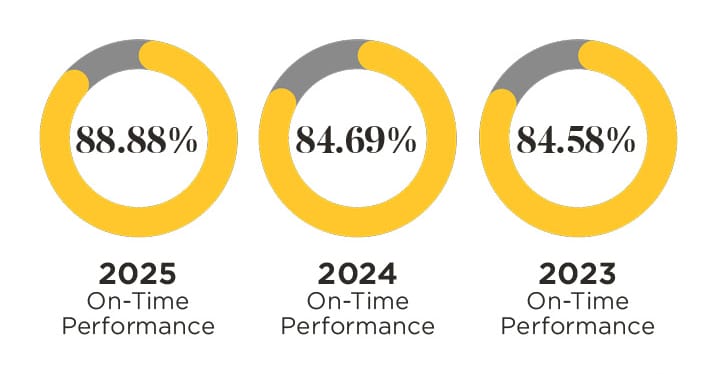
    Philippine Airlines has put in a strong showing to be the top performing carrier in 2025, with an impressive 83.12% of its flights arriving on-time across the year. That is impressive given its home base of Manila Ninoy Aquino International airport is prone to congestion. 

    It has been a significant year for the carrier, which has seen a transition of president and chief operating officers. Richard Nuttall was appointed president of the airline in late May, aided by Carlos Luis Fernandez as vice president and chief operating officer. 

    Just behind PAL, Air New Zealand delivered a significant improvement despite grappling with engine issues that have at times grounded up to six aircraft across its Airbus A320neo family and Boeing 787 fleets. It appears to have proactively managed those issues by adjusting its schedule, and keeping overall capacity flat, while also bringing in wet-leased capacity towards the end of the year. 

    Across the Tasman Sea, Virgin Australia re-enters the top 10 this year, just edging ahead of rival Qantas. Both carriers appear to have benefitted from adding new aircraft that has limited capacity growth but built in greater network resilience. In the case of Qantas, it has been growing back its international capacity as the last of its Airbus A380s re-entered service, while it, too, tapped wet-leased aircraft from Finnair. 

    IndiGo had a strong showing for most of the year, delivering 80% and higher on-time performance rates between June and October before falling back in November and December. That was largely driven by a change in flight crew duty regulations in early December which led to large scale delays and cancellations over successive days, forcing it at one point to cancel all flights from Delhi to reset its operations. That effort proved successful, though, and it quickly scaled its operations back up to over one thousand flights per day with minimal cancellations. 

    Japanese carriers continued their strong showing, albeit with some falls in the rankings. Japan Airlines ceded top place to PAL, falling to fifth, while All Nippon Airways fell from second to third place. Nonetheless, both carriers continued to display solid operational performances, and in the case of ANA that was with many of the fleet availability issues that Air New Zealand faced. 

    Cathay Pacific’s improvement in on-time performance may be partially attributed to the full opening of the three-runway system at its Hong Kong International airport hub. As one of the countries that was later to lift Covid restrictions, the carrier has not put fleet and pilot shortages behind it and has re-emerged as one of the key connecting carriers in Asia. 

    Similarly, Singapore Airlines on had a minor slip in on-time rate year-on-year, but continued to justify its reputation for sterling service while maximising the use of its fleet. 

  • Ascend Consultancy: Appraiser of the Year for the 11th time

    DUBLIN (Jan. 27, 2026) Cirium Ascend Consultancy has been named Appraiser of the Year 2026 in the Airline Economics Aviation 100 Global Leaders Awards, the team’s 11th title in 15 years. The Consultancy is a highly respected division of Cirium, the world’s most trusted source of aviation analytics.

    The Appraiser of the Year award recognizes the aircraft appraisal provider that has demonstrated the greatest contribution to the industry over the past year. The fourth consecutive win reflects the trust placed in the Ascend Consultancy team and their work by their industry peers.

    The Aviation 100 Global Leaders Awards celebrate the best companies, individuals and transactions in the aviation finance and leasing sector. Accolades are awarded based on an industry-wide survey and an expert panel of judges.

    To learn how Cirium Ascend Consultancy’s appraisal and advisory capabilities support the insight and analysis of aviation investments, financial strategies and risk, visit: cirium.com/analytics-services/ascend-consultancy


    For Cirium media inquiries, please contact media@cirium.com.

    About Cirium Ascend Consultancy
    Cirium Ascend Consultancy, a division of Cirium, offers market-leading expertise to help inform and drive successful strategies in the commercial aviation industry. With a global team of seasoned consultants and analysts, Cirium Ascend Consultancy delivers comprehensive data, expert insights, and tailored services that directly impact strategic investments and open avenues for growth in aviation.

    About Cirium 
    Cirium® is the world’s most trusted source of aviation analytics. The company delivers powerful data and cutting-edge analytics to empower a wide spectrum of industry players. It equips airlines, airports, travel enterprises, aircraft manufacturers, and financial entities with the clarity and intelligence they need to optimize their operations, make informed decisions, and accelerate revenue growth. 

    Cirium® is part of LexisNexis® Risk Solutions, a RELX business, which provides information-based analytics and decision tools for professional and business customers.  The shares of RELX PLC are traded on the London, Amsterdam and New York Stock Exchanges using the following ticker symbols: London: REL; Amsterdam: REN; New York: RELX. 

    For more information, follow Cirium® on LinkedIn or visit cirium.com.

  • Transforming investment strategy with granular aviation intelligence

    In an industry defined by high-value assets and complex operational variables, the difference between the certainty needed and the upside sought often lies in the depth of data available. While established financial analysis provides a baseline, it typically lacks the performance variables required to capitalize on market inefficiencies or model scenarios in asset performance accurately.

    For financial investors, navigating the current aviation landscape requires more than just capital; recent Cirium forecasts estimate 46,500 new aircraft worth $3.4 trillion will be delivered globally over the next 20 years. Such market scale amplifies the need for trusted, asset-level data that can be directly integrated into investment thesis. By leveraging Cirium’s proprietary analytics, investors gain a distinct advantage in deal structuring, risk management, scenario modeling, and portfolio optimization.

    Precision in deal origination and structuring

    For debt providers, structuring terms with relevant and granular deal specific data to gain an understanding of risk variables can be transformative. It removes the discomfort of relying on generalized market assumptions. Advanced analytics offer visibility into specific airlines, routes, and aircraft types, drilling down to exact aircraft and engine utilization.

    This level of detail allows for more accurate deal structuring. In place of relying on broad assumptions about asset depreciation, investors can manage investments by tracking performance on multi-level indicators – from airlines and micro- or macro-market dynamics through to exact asset utilization and understanding the CapEx on maintenance events.

    Cirium’s latest 20-year fleet forecast underscores the volume and value of deliveries. The magnitude of opportunity and risk for aviation financiers with single-aisle aircraft projected to account for 71% of the global fleet, understanding the nuances of these delivery patterns is critical for long-term financing.

    This precise data enables the customization of strategy to more accurately reflect the realized risk profile of the collateral. It moves the conversation from general market sentiment to empirical market and asset health overlain by your institutional view, reflecting the necessary pricing and lending covenants. Furthermore, private capital can utilize data-driven insights to facilitate faster and more accurate validation of investment theses, allowing focus on the highest-potential opportunities.

    Predictive power for risk mitigation

    Risk understanding in aviation finance does not yet embrace the anticipation of operational shifts that impact asset value. Hedge funds benefit significantly from predictive capabilities. By analyzing global fleet data, flight schedules, and historical utilization trends, investors (banks, Institutional Investors, NBFIs) can spot early warning signs that traditional financial analysis of creditworthiness might miss.

    The engine market challenge

    Today’s engine market presents unique risks and opportunities. While new-generation engines deliver greater fuel efficiency, they also bring higher fragility, maintenance costs and reliability challenges. Cirium data shows that maintenance costs for newer engine types are expected to remain above those for current-generation engines, despite ongoing advancements.

    As referenced in recent market observations, ongoing reliability issues have meant some airlines have parted-out relatively young aircraft to sustain fleet operations – a phenomenon driving up lease rates and values, especially for well-known engine types like the CFM56.

    For investors, this translates to:

    • Values spiking: Maintenance constraints and supply chain issues are escalating engine and part values.
    • Operational risk: Asset management now demands a nuanced approach, accounting for engine depreciation and secondary market volatility.

    With Cirium’s high-fidelity data, investors can now model and respond to these developments – adjusting exposure by scenario modeling adverse events impact on asset values. This predictive edge is especially critical for managing downside risk in illiquid environments.

    Operational value creation and exit timing

    The value of robust data and analytics extends well beyond the initial transaction. For asset managers and private equity firms, the post-acquisition phase is where returns are realized.

    Investors can track the operational KPIs of their investment in real-time and compare them against global benchmarks. This is crucial for identifying underperformance and implementing corrective strategies, whether it involves broadening the counterparties, ensuring lease agreements are market appropriate, or timing asset disposals and acquisitions to match market developments.

    Monitoring Demand Signals

    While recent fluctuations suggest softening US capacity growth, Cirium data confirms global demand remains solid, with scheduled Available Seat Kilometers (ASKs) growth holding between 4% and 6% throughout the year. This context is vital for portfolio positioning and ongoing investment in aviation.

    Regional disparities – such as the difference between US / Asia-Pacific / European markets – underscores the importance of up-to-date, granular data. Cirium’s schedules, aircraft utilization, traffic, valuations and sentiment insights support evidence-driven pricing and entry/exit timing, ensuring realized value accurately reflects expected investment returns.

    Bridging the gap between finance and operations

    Ultimately, the role of accurate aviation data is the bridge that connects financing requirements and operational or market realities. It is also the element that is often missing. Cirium’s data acts as this bridge, translating complex aviation metrics into actionable financial insights.

    This integration enables investors to move with greater agility and confidence, reducing reliance on anecdotal evidence and replacing it with a credible and independent source of truth that is respected across the industry. Whether deploying capital into infrastructure, managing a financial portfolio of aircraft, or trading aviation-backed securities, access to trusted data ensures that every decision is grounded in reality.

    By integrating Cirium’s intelligence and the latest sector-wide forecasts – including delivery pipelines, engine reliability trends, and global demand signals – financial investors are positioned not just to participate in the market, but to lead with clarity.

    Find out more about how Financial Investors use aviation data.

  • Avianca Scales Connectivity While Cutting Emissions

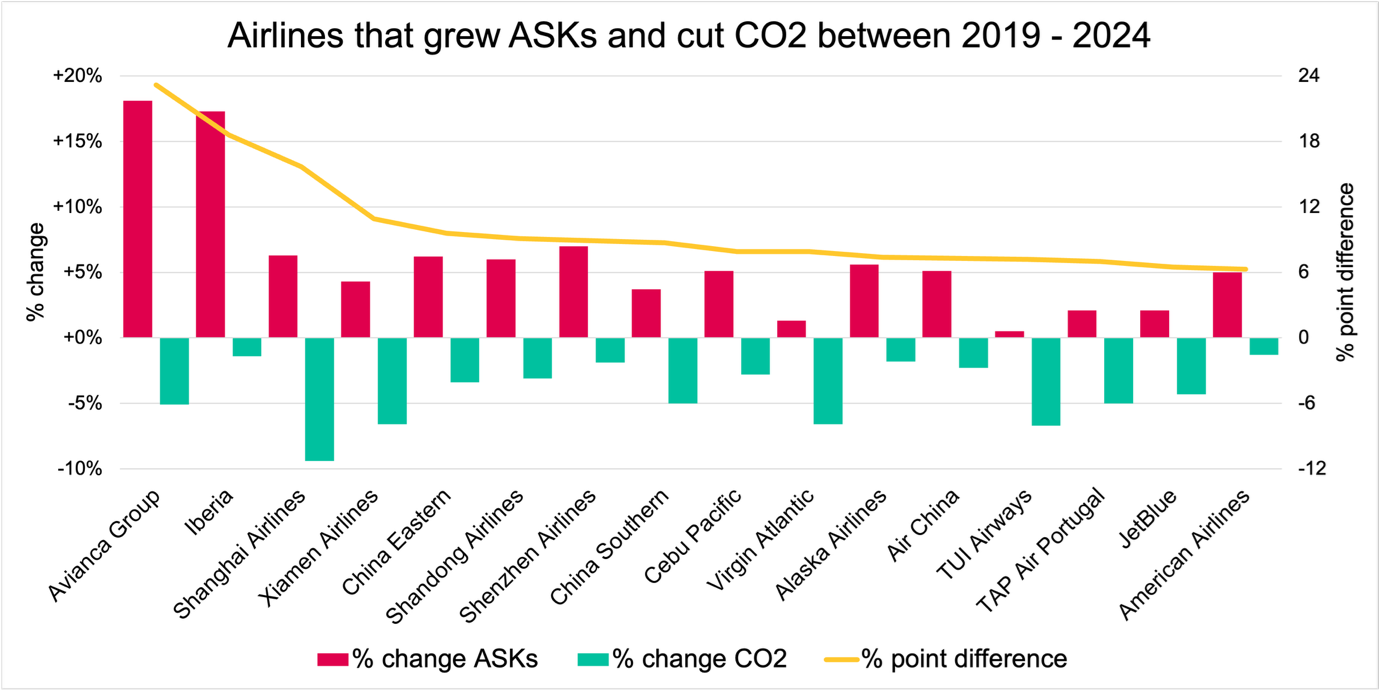
    In commercial aviation, growth and emissions usually move in the same direction. Airlines add more flights, burn more fuel, and produce more carbon. This pattern has held true for decades, which is why Avianca’s performance since 2019 is so striking.

    According to EmeraldSky data, Avianca stands apart from every other large carrier. During the past five years, the airline increased its overall capacity by more than eighteen percent (18.1%) while also reducing total carbon emissions by more than five percent (5.1%). This combination simply does not happen often.

    The natural question is how Avianca achieved something that most airlines still describe as a long-term aspiration rather than an immediate reality.

    A Fleet That Looks Very Different Today

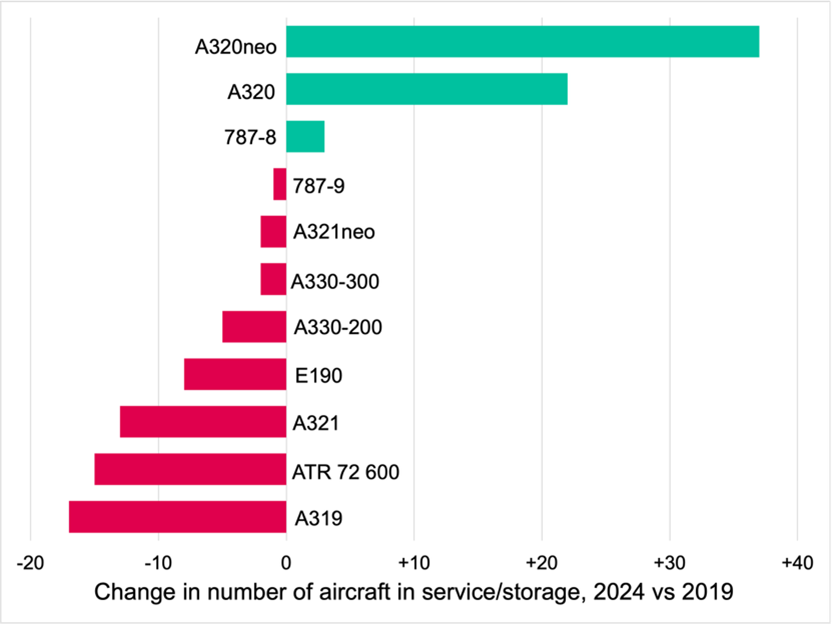
    Every story about emissions begins with the fleet. Avianca made a series of bold and disciplined choices that reshaped the aircraft it flies. Nearly two thirds of its Airbus A319 aircraft left the operation along with its entire group of A321 aircraft. In their place the airline introduced a significantly larger number of A320neo aircraft and additional A320ceo aircraft.

    The long-haul operation changed as well. Older A330 aircraft departed while the Boeing 787 fleet grew. Avianca also left behind its regional jet and turboprop operations, choosing to simplify and focus on aircraft that deliver stronger fuel performance.

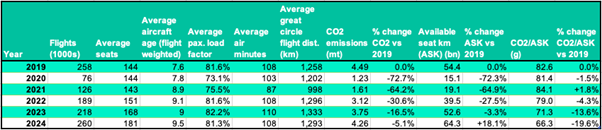
    One of the most important results is the increase in average aircraft size. The typical Avianca aircraft carried 144 seats in 2019. Today that figure is 181. This was achieved by reconfiguring all its fleet, both narrow and wide bodies airplanes. Although the average age of the fleet increased slightly to nine and a half years, which reflects global supply chain issues that affected all airlines, the overall efficiency of the fleet still improved meaningfully.

    More Seats and More Efficiency

    By 2024 Avianca had restored its flight activity to the same level it operated in 2019. The difference is that the airline generated far more capacity because it was flying larger aircraft and flying them slightly farther on average. The removal of turboprop flying also meant that flight time did not materially increase even as stage length grew.

    This resulted in an 18.1% increase in available seat kilometers. At the same time the shift toward newer and more efficient aircraft produced a reduction in absolute carbon emissions of 5.1%.

    When combined, these factors created a major improvement in carbon intensity. Avianca moved from 82.6 grams of carbon per available seat kilometer to 66.3 grams. This represents a reduction of nearly 20%, which very few global airlines have managed to achieve on this scale.

    A Model for Responsible Growth

    Avianca’s experience shows that it is possible to grow and still reduce the environmental impact of flying. It requires discipline in fleet planning, a willingness to retire older aircraft, and a long-term commitment to efficiency.

    The journey for the aviation industry is not finished, but Avianca has shown what is possible when strategy and execution come together with clarity of intent. The airline is not only growing. It is growing in a more responsible way, and that achievement deserves attention.

  • Istanbul Airport wins the 2025 Platinum Award

    Mike Malik, Chief Marketing Officer, Cirium

    That infrastructure milestone, combined with sustained performance across the full year, has earned Istanbul Airport Cirium’s 2025 Platinum Award for the world’s best-performing airport. 

    Istanbul handles over 84 million passengers annually across 330 destinations through 116 airlines. Positioned at the crossroads of Europe, Asia, the Middle East, and Africa, the airport manages dense connectivity patterns, complex wave structures, and high daily aircraft movements. At this intensity, minor disruptions propagate quickly across regions and time zones without active management. 

    In June 2025, ACI Europe’s Airport Industry Connectivity Report named Istanbul Airport the world’s most connected hub, overtaking Frankfurt after a 59% increase in global hub connectivity since 2019. The airport also leads Europe in direct connectivity. 

    The Platinum Award measures more than on-time departure percentages. Cirium’s analysis evaluates delay severity, the airport’s ability to limit prolonged disruption, and how effectively operations preserve schedule integrity across the wider network. Performance is assessed across the full calendar year, not isolated peak periods. 

    Istanbul distinguished itself through consistency across changing seasonal demand and varying congestion levels. The additional airside capacity reduced peak-period congestion and strengthened the airport’s ability to absorb disruption without allowing delays to escalate. 

    Large, complex airports inevitably face weather events, airspace constraints, and downstream delays. What separates strong operations from exceptional ones is the response when pressure builds. Istanbul’s 2025 performance reflected management that limited delay severity and reduced passenger disruption, even during peak demand. 

    The runway upgrade required coordination across multiple stakeholders. Airlines adjusted gate assignments and taxi procedures. Ground handlers modified turnaround sequencing. Air traffic control refined departure spacing. The capacity expansion delivered value because the airport’s operations adapted to use it effectively. 

    This achievement comes as airport performance faces increasing scrutiny. Passenger expectations continue rising, airline networks operate closer to capacity, and tolerance for disruption is diminishing. Airports now play a central role in safeguarding aviation system reliability, with their performance directly influencing airline outcomes and customer trust. 

    Cirium’s Platinum Airport Award provides an independent, data-driven benchmark for excellence. Using globally consistent methodologies and verified operational data, the award recognizes airports that deliver reliable performance at scale across an entire year. 

    By earning the 2025 Platinum Airport Award, Istanbul Airport demonstrates that scale and complexity can coexist with consistency and control. The combination of infrastructure investment and operational discipline sets a clear benchmark for major hub airports navigating sustained pressure on global aviation infrastructure. We congratulate Istanbul Airport’s management and operational teams for earning this prestigious distinction. 

  • Transforming SCL: Connecting Chile to the Globe

    Lydia Webb, Marketing Director – Americas & Strategic Programs, Cirium

    SCL has recently undergone significant modernization, including the opening of its new 248,400 m² international Terminal 2. This expansion more than doubled the airport’s annual passenger capacity from 16 million to 38 million, establishing it as one of South America’s most advanced aviation facilities. 

    SCL is a vital asset for Chile’s economy, connectivity, and infrastructure. It serves as Latin America’s gateway to Oceania, with routes to Sydney, Melbourne, Auckland, and Easter Island. The airport also serves as a long-haul hub for global carriers like Air France and British Airways. It also houses Chile’s major airlines, maintenance operations, and the Chilean Air Force’s 2nd Air Brigade.  

    An Economic Pillar for the Chilean Economy  

    Tourism is a major economic pillar for Chile, and SCL directly influences visitor inflows. Early 2025 saw the airport handle over five million passengers in just two months, a 4.4% increase compared to 2024. International arrivals surged—particularly from Brazil, Argentina, and Peru—reflecting growing demand for regional tourism and business travel.  By functioning as the primary entry point for international travelers, SCL directly feeds revenue into Chile’s national and local economies. 

    The airport is at the center of one of the largest infrastructure expansions in Chile’s history—a $4 billion program aimed at tripling capacity by 2050.  This longterm project will help reshape Chile’s role in global aviation and commerce by increasing operational capacity to 84 million passengers and 125 operations per hour, three times its current levels.  

    Commitment to OnTime Performance  

    Santiago Arturo Merino Benítez International Airport made significant strides in operational performance during 2024–2025, despite capacity pressures and ongoing modernization. As Chile’s busiest airport, SCL improved its on-time performance (OTP) to 87.04% in 2025, a 4.20% improvement from 2024, even while managing rapid growth in international travel.  

    Looking Ahead 

    SCL’s operational performance is projected to continue its upward trend. This will be driven by several strategic initiatives including the construction of a third runway and terminal and the introduction of a light rail for improved access.  

    SCL’s strategic investments underscore its commitment to operational excellence. This proactive approach not only addresses current demands but also solidifies its position as a forward-thinking, high-performing facility prepared to meet future challenges.  

  • North America Knows Resiliency:  Delta Air Lines is Proof

    Scott McCartney, Aviation Consultant and Adjunct Professor
    Duke University

    For airlines, the word of the year was resiliency. Carriers faced delays from telecommunications equipment failures in control towers at the busiest airports in the country, including Newark, Denver, Houston, Atlanta and Dallas-Fort Worth. In some cases, controllers couldn’t talk to pilots for terrifying minutes, forcing diversions and ground stops.  

    In all, the FAA said flight-delay minutes due to equipment issues were about 300% higher in 2025 than the average of 2010-2024. On top of that, a six-week U.S. government shutdown led to shortages of air-traffic controllers and widespread delays and schedule reductions. 

    Delta Air Lines remained #1 in North America in 2025, but its on-time arrival rate was down more than two percentage points from the previous year. United Airlines, hit hard by multiple telecommunication outages affecting its Newark International Airport hub, dropped from second-place in North America in 2024 to fourth place in 2025. 

    There were some improvements. Seattle-based Alaska Airlines, which was largely isolated from much of the FAA equipment failures, moved up to #2 from third-place the previous year. Even more remarkable was a major improvement by Spirit Airlines, achieved third-place despite a return to bankruptcy-court protection during the year. Spirit posted an on-time rate of 78.83%, up from about 76.05%, as employees clearly stayed focused on running the airline reliably even as its financial future was uncertain. 

    Canadian airlines also showed significant reliability improvement, with both WestJet and Air Canada posting roughly two-percentage-point increases in on-time performance. 

    American Airlines has been trying hard for years to improve its reliability and catch up to Delta and United. But American took a step backwards in 2025 with all the ATC outages, including a cut telecommunications cable near the Dallas Fort Worth International Airport, its largest hub, that disrupted flights on a busy weekend. The FAA said a backup system failed along with the primary system. American was so frustrated that it issued a statement blasting the telecommunications provider for not responding to the problem with appropriate urgency. 

    For the year, American dropped to #6 from #4 as it got fewer than 77% of its flights to the gate on-time, down from just under 78% in 2024. 

  • Aeromexico Defends Global On-Time Performance Title 

    Mike Malik, Chief Marketing Officer, Cirium

    This recognition places the airline among a very small group of carriers that have demonstrated the ability to sustain world-leading operational performance over multiple years. Aeromexico’s achievement reflects an organization that has turned operational reliability into a meaningful and enduring strength.

    While many airlines see natural swings in their performance from one year to the next, Aeromexico continues to show that consistency at the highest level requires more than intention. It demands investment in the right infrastructure, disciplined execution across thousands of daily operational moments, and leadership that makes operational performance a strategic priority even during periods of market pressure. 

    The airline entered 2025 building on its position as the world’s most on time global airline in 2024, when it delivered an 86.70% on time performance across nearly 197,000 flights. In 2025, Aeromexico has elevated its performance to 90.02 percent, with each month holding close to or above the 90% level and no extended periods of decline. February reached nearly 93% and the consistently strong results through the autumn months reinforce not a single award year but a pattern of sustained and repeatable operational excellence. 

    Strategic Resilience in a Challenging Year 

    Operational excellence was only one part of Aeromexico’s 2025 performance. The airline reported its second-best third quarter in history, generating $1.4 billion in revenue with a 31 percent adjusted EBITDA margin. These financial results were delivered despite significant external pressures, reinforcing the carrier’s premium positioning and disciplined network strategy. 

    A critical milestone came in November, when a federal appeals court granted a stay on the U.S. Department of Transportation’s order to unwind the Aeromexico–Delta Joint Venture. The decision preserved seamless connectivity for millions of passengers and protected strategic revenue flows that support the airline’s long-term network plans. 

    Building Tomorrow’s Network 

    Aeromexico also signaled confidence in future demand with its recent expansion announcements. The new Mexico City–Barcelona service, operating six times weekly, and the first-ever Monterrey–Paris route represent thoughtfully chosen additions to the transatlantic network. These routes are supported by codeshare partnerships, including the strengthened SkyTeam connection with SAS, which broadens one-stop access between Mexico and Scandinavia. 

    The significance of these decisions lies in their timing. Expanding long-haul international operations while also sustaining industry-leading on-time performance is uncommon. Executing both simultaneously suggests a mature operational foundation and measured resource planning. 

    Leadership That Delivers 

    Aeromexico also signaled confidence in future demand with its recent expansion announcements. The new Mexico City–Barcelona service, operating six times weekly, and the first-ever Monterrey–Paris route represent thoughtfully chosen additions to the transatlantic network. These routes are supported by codeshare partnerships, including the strengthened SkyTeam connection with SAS, which broadens one-stop access between Mexico and Scandinavia. 

    Under the strategic direction of CEO Andrés Conesa and the operational leadership of COO Santiago Diago, Aeromexico has built a culture where reliability is embedded across the organization. Front-line teams, operational planners, and leaders have worked together to create a system built on coordination, accountability, and continuous improvement. 

    Sustaining an on-time performance level above 85% across domestic, regional, and long-haul international operations is challenging. Achieving it across an entire year reflects an organization with strong processes, clear priorities, and a disciplined approach to service delivery. 

    Cirium congratulates the entire Aeromexico team on earning back-to-back Global On-Time Performance titles. The achievement highlights a commitment to operational excellence that benefits passengers, strengthens competitiveness, and sets a standard for the global airline industry. 

  • The Red Bird Soars

    Lydia Webb, Marketing Director – Americas & Strategic Programs, Cirium

    In 2024, Virgin Atlantic reported an OTP of 74.02% and did not qualify for the top 20 ranking in the Europe region based on total flight volume. However, this year, the airline not only met the qualifications but also secured the #4 position in the region with an impressive 83.45% OTP across 26,359 flights; a 9.43 percentage points gain over last year.  This accomplishment extends beyond the European context, positioning Virgin Atlantic among the leading airlines globally. It further highlights the organization’s commitment to overcoming challenges and continuously improving its operational standards. 

    Virgin Atlantic consistently mainted high on-time performance scores throughout 2025, registering OTPs above 80% – except January and December.  The airline is committed to being a challenger and a leader in its field and have made significant investments in fleet modernization, premium experience for guests, its people, and the communities it serves. 

    A Year for Change 

    In 2025, Virgin Atlantic focused on improving its on-time performance and underwent major developments across the business. The airline formed new interline and codeshare agreement with Caribbean Airlines, expanded its network and also joined a strategic partnership with IndiGo, Delta Air Lines, and Air France-KLM to link India’s expanding economy with North America and Europe.  

    The airline also announced a partnership with Joby Aviation, to provide zero-emission, short-range trips between Virgin Atlantic’s hubs at Heathrow and Manchester Airport and other regional destinations. 

    To complete its fleet modernization initiative, Virgin Atlantic Airways secured $745 million in financing from Apollo-managed funds, leveraging its London Heathrow slots. The funds will strengthen the airline’s finances and support upgrades, including Boeing 787-9 refurbishments, new Airbus A330neo aircraft with expanded premium cabins and Retreat Suites from 2026, and fleet-wide Starlink-powered Wi-Fi.  Virgin Atlantic will be the first UK airline to introduce free, streaming-quality, unlimited Wi-Fi throughout its fleet, using Starlink technology, with rollout completing in 2027. 

    Leading Into The Future 

    Virgin Atlantic’s Board has announced that Shai Weiss will step down as CEO at the end of 2025, and Corneel Koster will take over the position. Koster, who was formerly Chief Customer and Operating Officer, played a key role in overseeing operations, enhancing customer experience, guiding the airline through the pandemic, introducing the A330neo aircraft, and advancing digital transformation initiatives. Under Koster’s leadership, the airline aims to keep its commitments and achieve new standards in operational performance. 

    A Job Well Done 

    In today’s highly competitive airline industry, maintaining an on-time performance above 80% for domestic, regional, and long-haul flights is no easy task—especially if the starting point falls short of that benchmark. Virgin Atlantic has demonstrated through its accomplishments why it stands out as both a challenger and an industry leader. The airline’s dedication to improvement has not gone unnoticed. Cirium extends its congratulations to the entire Virgin Atlantic team for earning the title of Most-Improved Airline of the year—a recognition that is truly well earned. We look forward to seeing even greater achievements in the future. 

  • Iberia Express: Three Years at the Summit of European Punctuality

    Dr. David Price, Senior Data Analyst, Cirium

    In 2025, Iberia Express achieved an outstanding arrival OTP of 88.94 % across 37,119 total flights operated, a testament to its unwavering commitment to operational excellence and customer trust. 

    This year’s recognition is particularly significant given the challenging landscape for European aviation. Iberia Express’s performance stands out against a backdrop of notable disruptions, including a major power outage that affected air travel across the Iberian Peninsula and a global software issue impacting the Airbus A320 family—aircraft that comprise the entirety of the airline’s fleet. These events led to widespread delays and operational constraints for carriers throughout the region. 

    Despite these headwinds, Iberia Express maintained its hallmark punctuality. The airline’s ability to deliver reliable operations in the face of disruption reflects a strong foundation of effective planning, robust processes, and a commitment to high standards throughout its organization. Madrid-Barajas Adolfo Suárez Airport, serving as the airline’s strategic hub, plays a central role in supporting operational continuity, while close collaboration within the Iberia Group and IAG provided additional resilience and flexibility during challenging periods. 

    The commitment and expertise of Iberia Express’s operational teams have been instrumental in sustaining exceptional performance. From flight crews to ground staff, there can be no doubt that the dedication and professionalism of their employees have contributed to the airline’s ability to sustain high performance standards over multiple years, helping ensure passengers can rely on timely arrivals and departures even during periods of disruption. 

    So, as Iberia Express celebrates its third consecutive European OTP crown, it stands as a symbol of Spanish reliability and innovation. The airline’s achievements not only reflect its own strengths but also raise the bar for the entire industry. Congratulations to the Iberia Express team for their continued leadership in punctuality and for delivering exceptional value to travellers year after year. 

  • The Increasing Significance of Timely Performance

    Lydia Webb, Marketing Director – Americas & Strategic Programs, Cirium

    It is a foundational element that directly influences an airline’s brand reputation, operational stability, and financial health. As the industry becomes increasingly competitive, the strategic value of maintaining high OTP has never been more significant. 

    For airlines, excelling in on-time performance creates a ripple effect of positive outcomes. It strengthens passenger loyalty, streamlines complex operations, provides a distinct competitive edge, and generates substantial cost savings.  

    Improved Passenger Loyalty and Satisfaction 

    The modern traveler expects reliability, and a consistent record of on-time arrivals and departures allows airlines to meet this expectation effectively. This foundation of trust directly contributes to increased customer loyalty. When passengers can rely on an airline to deliver them to their destinations as scheduled, their overall travel experience is enhanced. Each timely flight reinforces the airline’s commitment to dependable service, which is essential for establishing and retaining passenger trust. Punctuality holds particular significance for business travelers, enabling them to plan meetings and commitments with assurance. Leisure travelers also benefit from reduced stress and uncertainty associated with reliable service. Over time, such operational consistency cultivates a loyal customer base that is more likely to choose the airline in the future and endorse it to others. 

    Enhanced Global Brand Recognition 

    A strong record of on-time performance serves as an effective marketing advantage for airlines. Consistently high OTP rankings attract favorable media coverage and help build a dependable reputation, influencing how both customers and industry partners view the airline worldwide. When a brand is recognized for its punctuality, it is often seen as professional, well-organized, and attentive to customer needs, making it stand out in a competitive market. Maintaining excellent OTP not only develops a positive brand image but also signals a commitment to high standards and respect for passengers’ time. This reputation may be the deciding factor for travelers choosing between flights with similar prices. An airline known for its timeliness also tends to be associated with high quality across other elements of service, such as safety and customer support, ultimately strengthening its brand and market position. 

    Driving Operational Efficiency 

    On-time performance isn’t just about how customers view an airline—it reflects the overall efficiency of its operations. When every part of the system, from ground staff to scheduling, runs smoothly together, high punctuality is achieved. Prioritizing on-time departures and arrivals pushes airlines to refine their processes, making everything work better. Because airline networks are so interconnected, even one delay can cause problems across many flights and connections.  

    Optimized Aircraft Utilization and Crew Scheduling 

    Aircraft are among an airline’s most valuable assets, and maximizing their use is essential for profitability. Punctuality ensures that planes adhere to their intended schedules, minimizing costly time on the ground and allowing for tighter turnarounds. This optimization allows carriers to fly more segments per day with the same number of aircraft. 

    Similarly, on-time operations lead to more stable and predictable crew schedules. Delays can cause a cascade of crewing issues, violating mandatory rest periods and requiring last-minute substitutions. By minimizing disruptions, airlines can improve crew quality of life, reduce sick leave, and avoid the operational complexities associated with re-assigning flight crews. 

    Gaining a Competitive Advantage 

    In an industry where ticket prices and in-flight amenities are often comparable, on-time performance has emerged as a key differentiator. Airlines that outperform their rivals in this metric can leverage it to attract and retain customers, ultimately increasing their market share. On-time performance data is publicly available and widely reported, allowing for direct comparison and benchmarking among competitors. Airlines use this data to gauge their own performance against the industry and identify areas for improvement. Consistently ranking at the top of these leaderboards provides tangible proof of operational excellence, which can be highlighted in marketing campaigns to attract discerning travelers. 

    Realizing Significant Cost Savings 

    High on-time performance brings significant financial advantages. Although it takes investment in both technology and process improvements to achieve punctuality, the savings from fewer delays often far exceed these upfront costs. Flight delays are costly—extra time spent taxiing or waiting in holding patterns consumes more fuel. Sticking to schedules helps airlines cut down on this unnecessary fuel use. Operating efficiently also lowers overtime costs for ground crews, gate agents, and other staff who must stay late when flights run behind. When flights are on time, resource management becomes smoother and more cost effective. Another major expense of delays is compensating passengers; airlines might have to offer meal vouchers, hotel stays, or even cash depending on how long people are kept waiting and what regulations apply. Delays can also mean extra work for agents rebooking travelers stranded by missed connections. By keeping flights running on time, airlines can substantially lower these expenses, safeguard their revenue, and reduce negative customer service incidents linked with disruptions. 

    The strategic importance of on-time performance in the aviation industry cannot be overstated.

    It is a critical metric that influences nearly every aspect of an airline’s business, from the passenger experience to financial results. By delivering reliable, punctual service, airlines can foster deep-seated customer loyalty and enhance their global brand reputation.

    In a landscape defined by tight margins and high customer expectations, on-time performance is not just a goal—it is a fundamental component of a successful and sustainable aviation strategy. 

  • Qatar Airways’ 2025 Platinum Performance: What the Data Shows 

    Mike Malik, Chief Marketing Officer, Cirium

    The Platinum recognition goes to one carrier annually based on a proprietary algorithm that weighs reliability, operational precision, disruption recovery, and performance at scale. The question is straightforward: which airline demonstrates the strongest operational control and consistency when you look at the complete picture. 

    The Performance Case 

    Qatar Airways delivered 84.42 percent on-time performance in 2025 under Cirium’s methodology, up from 82.83 percent in 2024 across roughly 198,303 flights.

    That improvement matters because it came on top of an already strong base while maintaining completion factor close to 100 percent. Improving OTP when you’re already in the low 80s is harder than moving from the 70s—there’s less margin for gains, and the operational discipline required is tighter. 

    The scale context makes the numbers more meaningful. Qatar operates a tightly banked hub at Hamad International Airport serving over 170 destinations, running long haul and multistop journeys across multiple regions and time zones. Each connection bank multiplies operational risk because aircraft positioning, crew availability, passenger flows, and ground services all must align repeatedly throughout the day. Keeping delays and cancellations low in that environment requires precision that most network carriers struggle to maintain. 

    What Qatar Actually Did 

    The execution comes down to realistic planning and disciplined operations control. Qatar built turn times and connection windows that work in practice, not just on paper. When disruptions hit in 2025, including airspace constraints from geopolitical issues, weather volatility, and aircraft availability problems, the carrier protected key connection flows and used operational data to retime and reroute during irregular operations. 

    That approach kept cancellations low and gave passengers a higher probability of completing their journey as booked, even on difficult days. The completion factor numbers confirm this wasn’t theoretical; Qatar got passengers where they needed to go. 

    The A30 numbers tell the recovery story more clearly.  Qatar Airways maintains one of the lowest A30 rates among global network carriers which means very few flights arrive more than 30 minutes late. That metric reveals operational discipline that goes beyond preventing delays; it’s about containing them when they occur. In a banked hub operation where one delay can cascade through multiple connections, keeping severe delays low requires tight control over recovery decisions such as aircraft swaps, crew repositioning, passenger reprotection, and ground coordination. Qatar’s A30 performance indicates they’re making those decisions well under pressure, consistently. 

    The operational focus appears to be a deliberate priority backed by investment in schedule planning, day of operations control, and analytics capabilities. You can see it in how Hamad International’s operations coordinate with the airline’s schedule, and the hub has grown over the past few years without the reliability of degradation that typically comes with expansion.  

    What This Signals 

    Looking at 2025’s operational data across global carriers, Qatar’s performance demonstrates that a large, complex network can still be run with discipline and predictability in a volatile environment. That’s not a given anymore. Many network carriers have accepted that operational variability is simply the cost of scale and complexity. 

    Qatar’s numbers suggest otherwise. The combination of high OTP, near-perfect completion, and performance improvement year over year at this scale indicates that operational control remains achievable when it’s treated as non-negotiable rather than a metric to track. 

    For the industry, that’s the real takeaway. Network complexity and operational volatility are facts, but they don’t have to determine outcomes. Qatar Airways proved that in 2025. 

  • Fleet metrics confirm strong rebound for Airbus’s legacy big twin

    Cirium Ascend Consultancy is trusted by clients across the aviation industry to provide accurate, timely, and insightful aircraft appraisals. The team provides the valuations and analysis the industry relies on to understand the market outlook, evaluate risks and identify opportunities.

    Discover the team’s industry reports & market commentaries. Read their latest expert analysis, viewpoints and updates on Thought Cloud.

    Team Perspective

    Max Kingsley-Jones, Head of Advisory, Cirium Ascend Consultancy

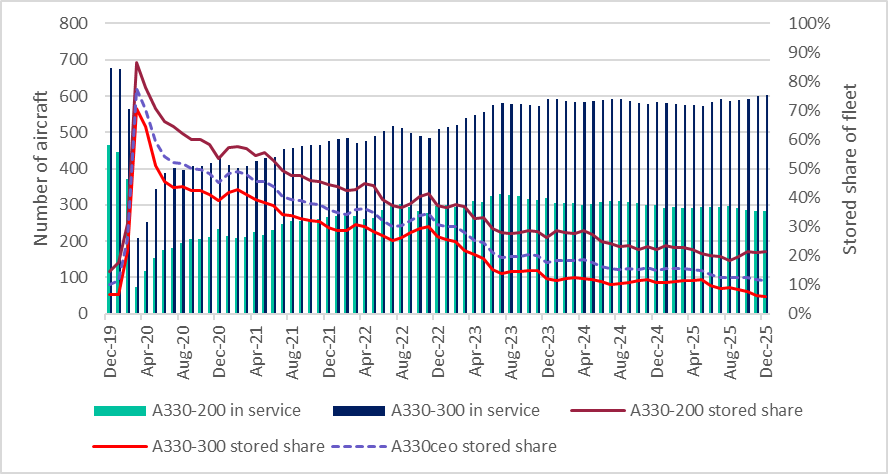
    The Airbus A330ceo’s recovery momentum has continued through 2025, with the -200/300 combined in-service passenger fleet now at 88% of the total inventory. Meanwhile, the number of A330 freighters in service – including both converted aircraft and factory freighters – is close to passing the 100-aircraft mark.

    The A330-300 recovery has fared particularly well, with the in-service passenger fleet having just nudged above 600 units, according to Cirium data (chart 1). This the highest it has been since the Covid crisis began and just 10% below the 680 aircraft in-service tally back in late 2019.

    Just 6% of the passenger -300 fleet remains stored, compared with 21% of the -200’s, which is not enjoying the same strength of recovery as its bigger sister. The in-service -200 passenger fleet is now at around 280 aircraft, having peaked at 330 in mid-2023. The current -200 operating fleet is two-fifths behind its pre-Covid level of 460 aircraft.

    Chart 1: A330 passenger fleet recovery trend

    Source: Cirium Fleets Analyzer

    The ongoing deficit of passenger widebodies has been driving the recovery of the passenger A330ceo market, bolstering Market Values and Lease Rates over the last couple of years. Most recently, Cirium increased Market Values for both the A330-200 and the -300 High Gross Weight variants in September 2025 by 12% on a fleet-weighted average basis.

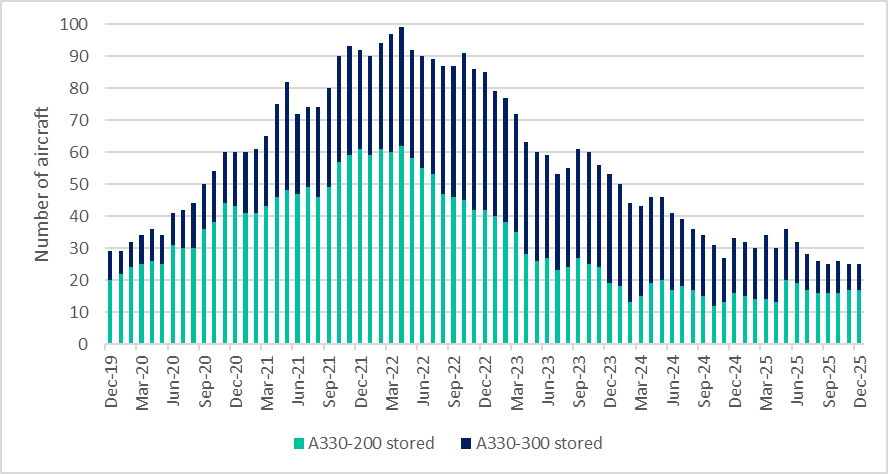
    The -200/300’s combined storage inventory (115 aircraft) is now less than 12% of the passenger A330ceo’s total fleet. The 26% decline in the stored inventory through 2025 (from 155 aircraft) has been driven by several factors, including: aircraft being returned to passenger service; being converted to freighters or being parted out. Cirium has so far recorded a total of 25 A330ceo passenger retirements for 2025, including 16 -200s and nine -300s.

    Chart 2: Lessor-managed passenger A330ceo stored inventory

    Source: Cirium Fleets Analyzer

    The number of stored passenger A330ceos managed by lessors has declined by 25% over last 12 months and now stands at just 25 aircraft (chart 2). This total includes 17 A330-200s and only eight -300s. The lessor-stored tally had peaked in Q2 2022 at around 100 aircraft, and the inventory decline is another good measure of the current health of the A330 market.

    On the cargo front, Cirium data shows that the A330 full-freighter fleet has risen by a fifth over the last 12 months to 97 aircraft, including 38 -200 factory freighters and 59 EFW-converted aircraft (21 -200P2Fs and 38 -300P2Fs). Cirium recorded 13 A330 freighter conversions in 2025 and shows at least 11 more scheduled in 2026, including the first of up to 30 -300BDSFs by Israel Aerospace Industries for lessor Avolon.

    Probably the biggest issue that the A330 conversion market faces is the lack of feedstock due to the strength of demand for passenger aircraft. Given Airbus and Boeing look set to face continuing issues for the next 2-3 years at least in achieving significant increases in widebody deliveries, it’s hard to see any near-term softening of the A330 passenger market – barring of course any unforeseen external factors.

  • Aeromexico Named Most On-Time Airline; Qatar Airways Wins Platinum

    LONDON (Jan. 2, 2026) – Aeromexico maintained a 90.02% on-time performance to claim the world’s most on-time global airline title for the second consecutive year, according to Cirium’s 2025 On-Time Performance Review released today. 

    The Mexican carrier becomes only the second airline to achieve consecutive global wins since Cirium launched the program in 2009, operating 188,859 flights across 23 countries while maintaining industry-leading schedule reliability.

    Aeromexico Holds Global Lead; Regional Champions Crowned 

    Aeromexico secured the global airline title with 90.02% on-time performance, holding off strong competition from Saudia in second place with 86.53% and SAS with 86.09% in third. The margin between first and third place was 3.93 percentage points, reflecting rising operational standards across the industry. 

    Regional winners included: 

    • North America: Delta Air Lines won for the fifth consecutive year with 80.90% on-time performance 
    • Europe: Iberia Express (International Airlines Group) defended its title for the third consecutive year with 88.94% performance
    • Asia-Pacific: Philippine Airlines claimed the regional title for the first time with 83.12% on-time performance
    • Latin America: Copa Airlines achieved its 11th win, the most of any airline since Cirium’s program launched in 2009 with 90.75% on-time performance 
    • Middle East and Africa: Safair topped the regional rankings with 91.06% on-time performance

    Qatar Airways Wins Airline Platinum Award 

    Qatar Airways captured Cirium’s Platinum Award, recognizing the Doha-based carrier’s operational excellence across its global hub network. The airline achieved 84.42% on-time performance across more than 198,303 flights spanning six continents. 

    Virgin Atlantic Claims Inaugural ‘Most Improved’ Award 

    Virgin Atlantic won Cirium’s new ‘Most Improved’ award, demonstrating the largest year-over-year operational performance gain among global carriers. The UK-based airline improved its on-time performance from 74.02% in 2024 to 83.45% in 2025—a 9.44 percentage point increase year-over-year. 

    The new award recognizes airlines that have achieved meaningful operational scale (minimum 70% baseline performance) while delivering substantial improvements, ensuring the honor reflects genuine operational excellence, rather than recovery from poor prior performance. 

    Strong Global Airport Performance in 2025 

    Santiago Arturo Merino Benitez International Airport wins the Large Airport category, with 87.04% of flights departing on time.

    Panama’s Tocumen International Airport won the Medium Airport category, with 93.34% of flights departing on time. Ecuador’s Guayaquil José Joaquín de Olmedo International Airport claimed the Small Airport title for the second year in a row, with 91.47% of flights departing on time. 

    Istanbul Airport won Cirium’s Airport Platinum Award, which evaluates operational complexity, passenger impact during disruptions, and growth trajectory. Last year’s Airport Platinum winner was El Dorado International Airport in Bogotá, Colombia. 

    Industry Context and Analysis 

    About the On-Time Performance Review 

    Now in its 17th year, the Cirium On-Time Performance Review analyzes flight data from over 600 real-time sources including airlines, airports, global distribution systems, and civil aviation authorities. An independent advisory board of aviation industry veterans provides oversight and guidance. 

    An on-time flight arrives within 14:59 minutes of scheduled gate arrival time. Airport punctuality measures flights departing within 14:59 minutes of scheduled departure time. The Platinum Awards for both airlines and airports consider operational complexity, network scale, passenger impact during disruptions, and consistency throughout the year. 

    The Most Improved award, introduced in 2025, requires carriers to demonstrate at least 70% baseline on-time performance in the prior year to ensure recognition reflects operational excellence rather than recovery from poor performance. 

    Complete 2025 Rankings 

    Top 10 Global Airlines

    RankingAirlineOn-Time ArrivalsTotal Flights
    1(AM) Aeromexico90.02%188,859
    2(SV) Saudia86.53%202,864
    3(SK) SAS86.09%249,674
    4(AD) Azul85.18%304,625
    5(QR) Qatar Airways84.42%198,303
    6(IB) Iberia83.52%188,447
    7(LA) LATAM Airlines82.40%580,707
    8(AV) Avianca81.73%266,921
    9(TK) Turkish Airlines81.41%421,087
    10(DL) Delta Air Lines80.90%1,800,086

    Top 10 North American Airlines

    RankingAirlineOn-Time ArrivalsTotal Flights
    1(DL) Delta Air Lines80.90%1,800,086
    2(AS) Alaska Airlines79.20%453,031
    3(NK) Spirit Airlines78.83%218,265
    4(UA) United Airlines78.77%1,732,450
    5(WN) Southwest Airlines77.04%1,422,405
    6(AA) American Airlines76.43%2,259,576
    7(B6) JetBlue74.66%313,318
    8(WS) WestJet73.58%205,501
    9(AC) Air Canada73.26%383,819
    10(F9) Frontier Airlines72.14%208,987

    Top 10 European Airlines

    RankingAirlineOn-Time ArrivalsTotal Flights
    1(I2) Iberia Express88.94%37,119
    2(SK) SAS86.09%249,674
    3(OS) Austrian83.74%124,457
    4(IB) Iberia83.52%188,447
    5(VS) Virgin Atlantic83.45%26,359
    6(FI) Icelandair83.23%39,425
    7(VY) Vueling82.20%228,611
    8(TK) Turkish Airlines81.41%421,090
    9(D8, DY) Norwegian80.96%150,784
    10(AY) Finnair79.67%116,652

    Top 9 Latin American Airlines 

    RankingAirlineOn-Time ArrivalsTotal Flights
    1(CM) Copa Airlines90.75%133,748
    2(AM) Aeromexico90.02%188,859
    3(G3) Gol87.75%238,182
    4(AD) Azul85.18%304,625
    5(LA) LATAM Airlines82.40%580,707
    6(H2) Sky Airline82.39%55,116
    7(AV) Avianca81.73%266,921
    8(JA) JetSmart Chile76.91%90,460
    9(AR) Aerolineas Argentinas76.54%107,490
    Only 9 airlines qualified in the region  

    Top 10 Asia-Pacific Airlines

    RankingAirlineOn-Time ArrivalsTotal Flights
    1(PR) Philippine Airlines83.12%116,268
    2(NZ) Air New Zealand79.29%171,216
    3(NH) ANA78.88%309,998
    4(SQ) Singapore Airlines78.58%121,293
    5(JL) JAL78.25%313,410
    6(6E) IndiGo78.12%802,418
    7(CX) Cathay Pacific76.78%119,193
    8(VA) Virgin Australia76.54%155,038
    9(QF) Qantas76.51%276,859
    10(KE) Korean Air75.34%133,252

    Top 10 Middle East and Africa Airlines 

    RankingAirlineOn-Time ArrivalsTotal Flights
    1(FA) Safair91.06%62,805
    2(RJ) Royal Jordanian90.73%37,524
    3(F3) Flyadeal86.54%69,971
    4(SV) Saudia86.53%202,864
    5(4Z) Airlink84.47%84,361
    6(QR) Qatar Airways84.42%198,303
    7(WY) Oman Air83.10%38,828
    8(SA) South African Airways81.26%24,461
    9(EY) Etihad Airways81.06%100,620
    10(KU) Kuwait Airways79.50%29,977

    Top 10 Large Airports

    RankingAirportOn-Time DeparturesTotal Flights
    1(SCL) Santiago Arturo Merino Benitez Intl Airport87.04%153,326
    2(RUH) Riyadh King Khalid International Airport86.81%264,614
    3(MEX) Mexico City Benito Juarez International Airport86.55%295,737
    4(HNL) Honolulu International Airport86.51%156,139
    5(OSL) Oslo Gardermoen Airport86.00%204,882
    6(LIM) Lima Jorge Chavez International Airport85.54%183,137
    7(SLC) Salt Lake City International Airport85.04%243,848
    8(CPH) Copenhagen Airport84.72%236,903
    9(DOH) Doha Hamad International Airport84.70%251,864
    10(ARN) Stockholm Arlanda Airport83.59%181,238

    Top 10 Medium Airports

    RankingAirportOn-Time DeparturesTotal Flights
    1(PTY) Panama City Tocumen International Airport93.34%148,065
    2(BSB) Brasilia International Airport88.36%114,481
    3(JNB) Johannesburg O.R. Tambo International Airport86.22%189,542
    4(ITM) Osaka Itami International Airport86.04%136,489
    5(DMM) Dammam King Fahd International Airport85.15%94,768
    6(GIG) Rio de Janeiro Galeao International Airport85.13%115,384
    7(PDX) Portland International Airport85.02%159,964
    8(VCP) Viracopos-Campinas International Airport84.55%111,758
    9(SJC) San Jose Mineta International Airport83.66%99,182
    10(CNF) Belo Horizonte International Airport83.57%113,857

    Top 10 Small Airports

    RankingAirportOn Time DeparturesTotal Flights
    1(GYE) Guayaquil Jose Joaquin de Olmedo Intl Airport91.47%34,068
    2(SAL) El Salvador International Airport90.28%47,203
    3(SDU) Rio de Janeiro Santos Dumont Airport89.67%58,303
    4(SVG) Stavanger Airport89.55%38,894
    5(UIO) Quito Mariscal Sucre International Airport89.45%42,911
    6(CPT) Cape Town International Airport88.72%82,030
    7(KOA) Ellison Onizuka Kona Intl Airport at Keahole88.48%32,702
    8(SSA) Salvador International Airport87.32%55,594
    9(TRD) Trondheim Airport86.95%47,291
    10(AMM) Amman Queen Alia International Airport86.82%76,734

    Cirium’s full 2025 On-Time Performance Review is available at www.cirium.com/on-time-performance.


    For Cirium media inquiries please contact media@cirium.com

    Notes to editors 
    *An on-time flight is defined as a flight that arrives within 15 minutes of the scheduled gate arrival. For an airport, it is defined as departing within 15 minutes of its scheduled departure. 

    About Cirium 
    Cirium® is the world’s most trusted source of aviation analytics. The company delivers powerful data and cutting-edge analytics to empower a wide spectrum of industry players. It equips airlines, airports, travel enterprises, aircraft manufacturers, and financial entities with the clarity and intelligence they need to optimize their operations, make informed decisions, and accelerate revenue growth. 

    Cirium® is part of LexisNexis® Risk Solutions, a RELX business, which provides information-based analytics and decision tools for professional and business customers.  The shares of RELX PLC are traded on the London, Amsterdam and New York Stock Exchanges using the following ticker symbols: London: REL; Amsterdam: REN; New York: RELX. 

    For more information, follow Cirium® on LinkedIn or visit cirium.com.