





























Mike Malik, Chief Marketing Officer, Cirium
The Platinum recognition goes to one carrier annually based on a proprietary algorithm that weighs reliability, operational precision, disruption recovery, and performance at scale. The question is straightforward: which airline demonstrates the strongest operational control and consistency when you look at the complete picture.
The Performance Case
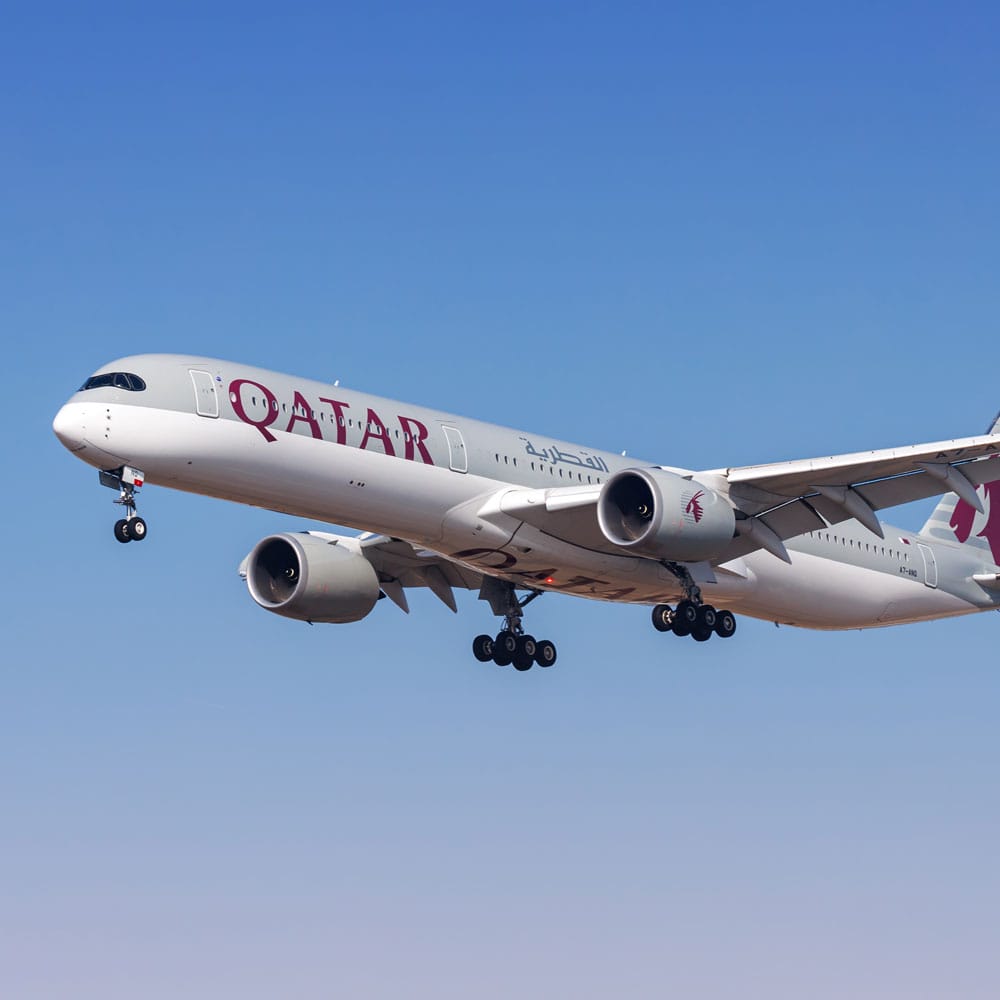
Qatar Airways delivered 84.42 percent on-time performance in 2025 under Cirium’s methodology, up from 82.83 percent in 2024 across roughly 198,303 flights.
That improvement matters because it came on top of an already strong base while maintaining completion factor close to 100 percent. Improving OTP when you’re already in the low 80s is harder than moving from the 70s—there’s less margin for gains, and the operational discipline required is tighter.
The scale context makes the numbers more meaningful. Qatar operates a tightly banked hub at Hamad International Airport serving over 170 destinations, running long haul and multistop journeys across multiple regions and time zones. Each connection bank multiplies operational risk because aircraft positioning, crew availability, passenger flows, and ground services all must align repeatedly throughout the day. Keeping delays and cancellations low in that environment requires precision that most network carriers struggle to maintain.
What Qatar Actually Did
The execution comes down to realistic planning and disciplined operations control. Qatar built turn times and connection windows that work in practice, not just on paper. When disruptions hit in 2025, including airspace constraints from geopolitical issues, weather volatility, and aircraft availability problems, the carrier protected key connection flows and used operational data to retime and reroute during irregular operations.
That approach kept cancellations low and gave passengers a higher probability of completing their journey as booked, even on difficult days. The completion factor numbers confirm this wasn’t theoretical; Qatar got passengers where they needed to go.
The A30 numbers tell the recovery story more clearly. Qatar Airways maintains one of the lowest A30 rates among global network carriers which means very few flights arrive more than 30 minutes late. That metric reveals operational discipline that goes beyond preventing delays; it’s about containing them when they occur. In a banked hub operation where one delay can cascade through multiple connections, keeping severe delays low requires tight control over recovery decisions such as aircraft swaps, crew repositioning, passenger reprotection, and ground coordination. Qatar’s A30 performance indicates they’re making those decisions well under pressure, consistently.
The operational focus appears to be a deliberate priority backed by investment in schedule planning, day of operations control, and analytics capabilities. You can see it in how Hamad International’s operations coordinate with the airline’s schedule, and the hub has grown over the past few years without the reliability of degradation that typically comes with expansion.
What This Signals
Looking at 2025’s operational data across global carriers, Qatar’s performance demonstrates that a large, complex network can still be run with discipline and predictability in a volatile environment. That’s not a given anymore. Many network carriers have accepted that operational variability is simply the cost of scale and complexity.
Qatar’s numbers suggest otherwise. The combination of high OTP, near-perfect completion, and performance improvement year over year at this scale indicates that operational control remains achievable when it’s treated as non-negotiable rather than a metric to track.
For the industry, that’s the real takeaway. Network complexity and operational volatility are facts, but they don’t have to determine outcomes. Qatar Airways proved that in 2025.