




























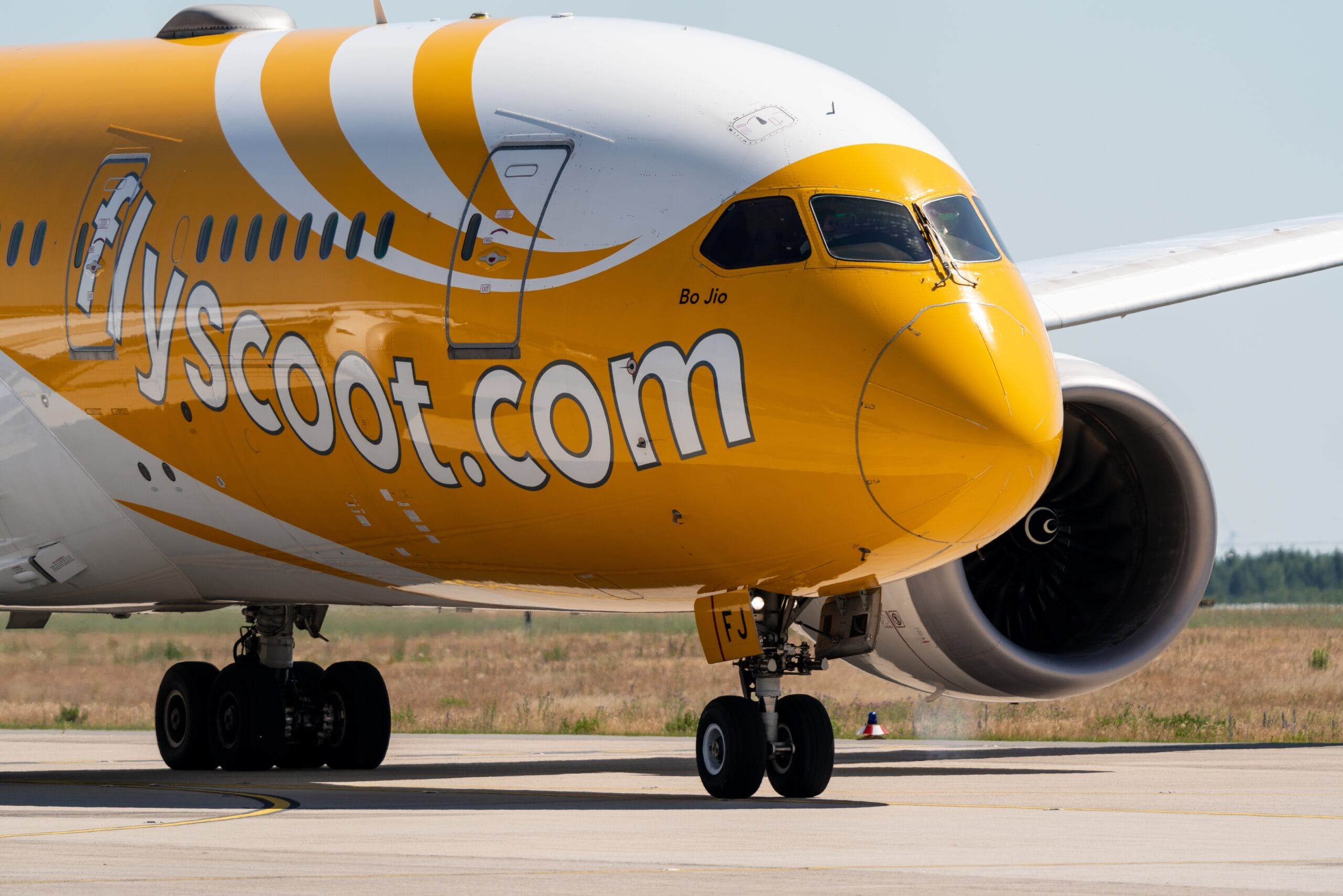
Scoot recorded 51.0 grams of CO2 per available seat kilometer in 2025, the lowest figure of any carrier in the Cirium Flight Emissions Review and a Gold tier position under the new Emerald Performance Tier, ahead of Wizz Air at 52.9g and of TUI Airways, Air Europa and Frontier Airlines behind it.
What makes the result interesting is that Scoot’s aircraft average 6.7 years, roughly two years older than the fleets of Wizz Air and Frontier, both of which finished lower down the table. Fleet renewal is normally the first explanation offered for a strong emissions intensity figure, and in this case it explains very little.
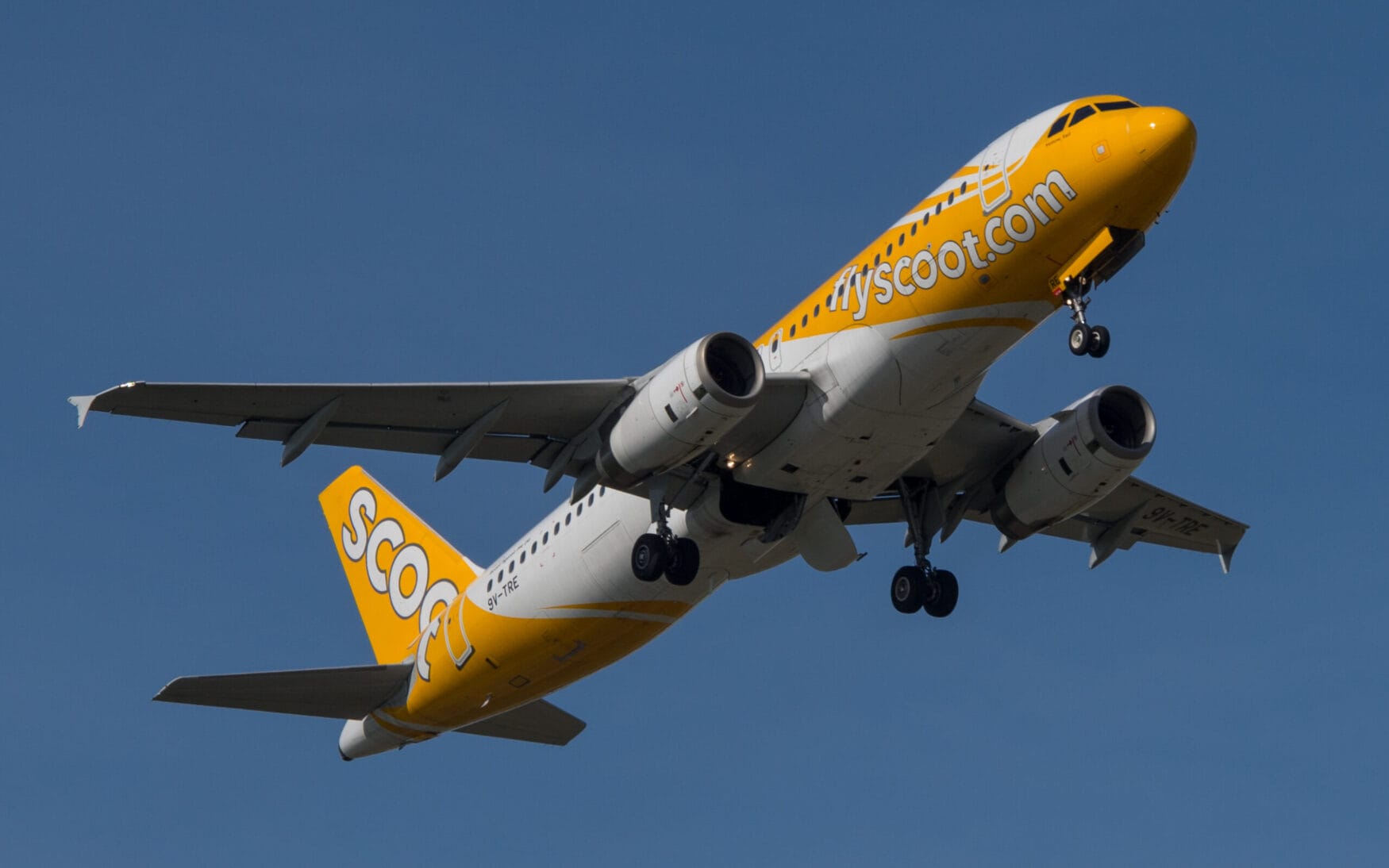
Scoot flies from Singapore Changi across Southeast Asia and into India, China, Japan and Australia, pairing Boeing 787s on the longer sectors with A320-family aircraft on the shorter ones, which gives it a network covering a wide span of stage lengths and demand profiles with aircraft matched to each rather than to a single template.

Where the advantage comes from
At 242 seats, Scoot carries more passengers on the average aircraft than any other carrier in the Gold tier, and it flies them an average of 2,157 kilometers per sector, several hundred kilometers further than the carriers immediately behind it.
Both factors work in the same direction, since a higher seat count spreads the same fuel burn across more available seat kilometers and a longer sector spreads the fuel penalty of takeoff and climb across more of them again. Between them they are enough to offset a two-year disadvantage in fleet age against carriers operating some of the youngest aircraft in commercial aviation.

The Cirium Flight Emissions Review 2025 is here!
Explore the latest operational insights and actionable intelligence helping aviation stakeholders drive efficiency and sustainability progress.
Neither figure is incidental to the result. Cabin configuration and network design are decisions an airline makes deliberately and then lives with for years, and Scoot’s numbers reflect a consistent view about what its aircraft are for: matching gauge to route demand, configuring cabins to carry the traffic those routes generate, and holding to that as the network expands.
Other results in the Review point the same way. Jet2 reaches 57.9g in the Western Europe table with a fleet averaging 13.6 years, compensating through longer average sectors, while Virgin Atlantic reaches 54.5g on sectors averaging 6,566 kilometers, which places a long-haul widebody operator in the Silver tier alongside short-haul, high-density carriers. Neither of those results depends on operating new aircraft.
Efficiency while growing
Scoot flew 9.1% more flights in 2025 than in 2024 while holding its emissions intensity essentially flat at a movement of 0.1%, which is a harder combination to achieve than the flat figure alone suggests. Growth usually costs an airline efficiency, because thinner routes get added to the schedule and sectors end up flown with aircraft that were not the right choice for the mission. Adding close to a tenth more flying and staying at the top of the table means the discipline held while the network was still moving.
The margins across the Gold and Silver tiers are narrow, with only a few grams separating the top ten carriers, and the tiers were introduced this year because those differences are difficult for a general audience to read from a spreadsheet. Scoot’s position within them rests on the operational choices behind the number rather than on the age of its fleet.
Why the comparison holds
Figures like these are only worth anything if every carrier has been measured the same way. EmeraldSky applies a single methodology across the industry, built on actual flight tracking data rather than great-circle approximations, and it accounts for taxi time, ground delays and routing changes that simpler models leave out. The 2025 edition also separates the fuel burn attributable to belly cargo from passenger emissions, removing a distortion that had been penalizing long-haul widebody operators. The methodology is assured under ISAE 3000 by PricewaterhouseCoopers and accredited by the Rocky Mountain Institute under the Pegasus Guidelines.
Measured on that basis, Scoot finished ahead of carriers with newer aircraft and larger operations, which is an achievement built on how the airline chooses to fly rather than on what it happens to own.