




























Jonathan Robins, Aviation Reporter, Cirium
Running an airline anywhere is a tricky undertaking, but doing so in the Middle East and Africa (MEA) brings its own unique challenges. Hot and harsh conditions result in vast maintenance requirements for engines and equipment. Aircraft often spend far longer on the ground than in more temperate regions. Then, this year at least, there has been vast geopolitical disruption. Meanwhile competition is fierce. But there are advantages too. The Middle East’s position at the centre of the world makes it an ideal transfer location for the Gulf carriers, who funnel vast numbers of people around the globe, particularly between Europe and Asia. Their stellar earnings since the pandemic are a testament to the success of this strategy.
Alongside this, the region is seeing an explosion in air travel demand to, from, and within it. The domestic Saudi Arabian route from Jeddah to Riyadh, for example, is set to become the busiest air corridor in the world by the end of the decade, industry insiders believe, and perhaps well before that.
IATA, notably, says that at $29, profit per passenger will be higher in the Middle East next year than anywhere else. That compares with just $7.90 globally.
Aviation in Africa lacks the scale of its Middle Eastern rivals. The continent’s airlines lament the extra costs of doing business which includes higher prices for leases, MRO, fuel and insurance. Then there are the wild swings of local currencies, stranded earnings, and problems in retaining skilled staff – many of whom are wooed by the deep pockets of the Gulf. Yet, as the rankings show, there are successes here too, underpinned by an emerging middle class that is seeing Africans fly at scale for the first time.
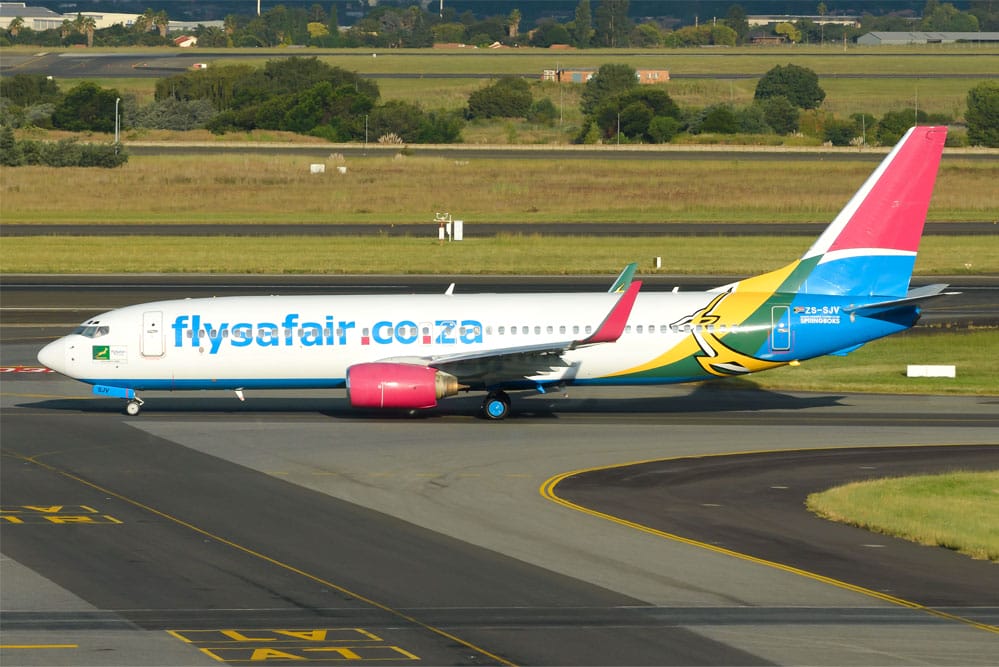
Topping this year’s OTP rankings is South Africa’s Safair.
Following closely are Aeromexico, Gol, Azul, and LATAM Airlines, reinforcing the region’s reputation for reliability and efficiency.
Long a leader in performance, Safair has developed a reputation for precise scheduling and rapid 30-minute turnarounds as befit its low-cost business model, with a heavy use of real-time data. Alongside this, built-in contingency planning enables them to bounce-back rapidly when disruption does occur.
It notes that its performance has been underpinned by “strategic investments” in advanced scheduling, as well as “data-driven decision-making, and fleet management practices.”
Meanwhile the use of a single aircraft type – the Boeing 737 – has helped to keep maintenance costs down and reduce complexity, enabling flexibility between crews and bolstering utilisation rates. This all filters through to its reliability.
Safair has also embedded OTP into its corporate culture, linking employee incentives to their achievements and making it a key performance indicator, meaning that all staff are focussed on getting flights out on time.
Close behind is Royal Jordanian. The carrier is undergoing a strategic shift towards inbound tourism and becoming the main player in the Levant region. “That’s obviously a market which we want to dominate in the future,” commercial chief Karim Makhlouf said in November.
It plans a fleet expansion from around 23 aircraft currently to 41 by 2028, amid a longer-term goal of 52 by 2032. Passenger numbers are targeted to grow from 3 million to 7.1 million by 2028.
Makhlouf added that amid a growth spurt and restructuring it is “super difficult” to make money, but that it had recently reported a nine-month sustainable profit of around $43 million, “which for an airline like Royal Jordanian is quite a significant achievement.”